Get Full Government Meeting Transcripts, Videos, & Alerts Forever!
Get email alerts on the Elementary Education topic
No spam. Unsubscribe anytime.
Beekman Elementary principal highlights collaborative learning, data‑driven instruction and community partnerships
Summary
Beekman Elementary Principal reviewed school practices including professional learning communities, flexible groupings using I‑Ready data, enrichment and community partnerships that support personalized instruction and student engagement.
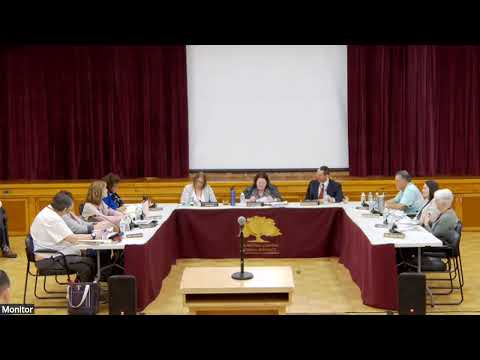
Beekman Elementary Principal Mr. Quaranto summarized initiatives the school uses to promote collaboration, personalized instruction and community engagement, telling the Arlington Central School District Board that staff, families and partners are central to student success.
The presentation outlined school practices the principal said are embedded in the building’s learning community: use of a Compass Points activity to improve teacher collaboration; structured professional learning community (PLC) meetings guided by four critical questions about student learning; ongoing use of I‑Ready and common formative assessments to form flexible small groups; an extended flex model that coordinates academic intervention providers, related services and teaching assistants to support targeted instruction; and enrichment opportunities including art projects, stop‑motion animation and partnerships with Marist College and Arlington High School student mentors.
Why it matters: The principal described how the school’s model places data and adult collaboration at the center of instruction to raise student outcomes, while also emphasizing social‑emotional programs, family engagement and service projects.
Details from the presentation: - Data and flexible groupings: Fifth‑grade teams reportedly review i‑Ready benchmark and common formative assessments and cycle students through targeted small groups; the principal said groups sometimes involve ‘‘8 to 10 adults’’ to serve students across multiple small groups on a rotating schedule. - Intervention structures: Academic intervention services (AIS), related service providers (OT, PT, speech), special area teachers and teaching assistants take part in purposeful flex groupings. - Enrichment: Examples included art integration with green screen and stop‑motion animation, a Padlet of student work curated by the art teacher, and musical/theatrical enrichment driven by the music department. - Student leadership and peer programs: The school uses fifth‑grade safety patrollers, buddy class pairings across grade levels, and partnerships with high‑school mentors (Arlington Athletic Council and My Brother’s Keeper) and Marist College teacher‑preparation students. - Family engagement and PTA support: The principal credited the PTA with funding programs and the Color Run fundraiser that supports arts and experiential projects; the school also runs traditions such as ‘‘Cram the Classroom’’ (a food drive), Kickball for Life and an autism awareness walk.
Board members asked about operations and supports. In response to a question about food insecurity, the principal said the school relies on social workers and school counselors to coordinate supports and that the building does not run a formal weekend backpack program but deploys internal resources and community supports for families in need. On attendance, the principal said illness season had temporarily lowered daily attendance but that overall student engagement and event‑driven attendance are improving.
"By increasing awareness of each other's perspectives, teachers developed a deeper sense of respect and appreciation for their colleagues," Quaranto said, describing the Compass Points work. "By making data driven decisions in real time, we're creating a learning environment where every child has the opportunity to thrive."