Get Full Government Meeting Transcripts, Videos, & Alerts Forever!
Get email alerts on the Board Training And Governance topic
No spam. Unsubscribe anytime.
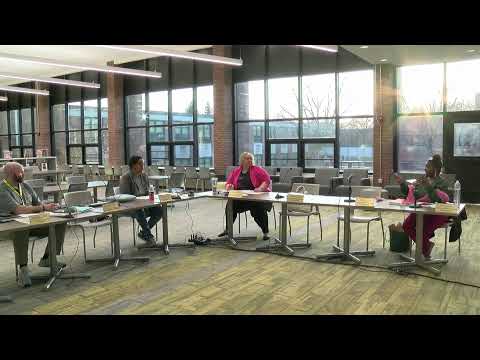
South Euclid-Lyndhurst board reviews OSBA conference takeaways, discusses recusal rules and public‑engagement practices
Summary
At a recent meeting the South Euclid‑Lyndhurst City School Board reviewed lessons from the Ohio School Boards Association Capital Conference and discussed stronger recusal protocols for agenda items, a uniform public‑comment time limit, written council reports as public records, and outreach strategies for senior voters.
South Euclid‑Lyndhurst City School Board members on a recent agenda debriefed lessons from the Ohio School Boards Association (OSBA) Capital Conference and discussed several procedural changes, emphasizing clearer recusal rules, uniform public‑comment timing and more consistent, written reports to city councils.
Board members said training sessions at the conference covered topics including board president duties, legal scenarios involving conflicts of interest, legislative engagement and public‑participation rules. Members discussed adopting a “no‑surprise” approach so that questions raised before meetings are answered in advance, reducing the chance of one board member arriving at a meeting sharply at odds with others.
The discussion focused on several practical items the board could adopt. Members favored tighter handling of recusal: when a conflict involves a specific agenda item, the recommendation from conference sessions was to remove the conflicted member from voting on that agenda item (not the entire meeting), and, in some scenarios, to separate a subitem so it can be handled independently. Board members reiterated that recusal is required when family relationships or direct financial interests are involved.
Conference presenters also urged strict, consistent enforcement of the public‑comment time limit to avoid claims of unequal treatment. Board members described OSBA guidance that if the board sets a two‑minute limit, that limit should be applied uniformly even in meetings with few attendees to reduce legal risk.
Members discussed communications practices recommended at the conference, including having superintendent and treasurer brief the board on professional development takeaways and considering a short review period with legal counsel before posting certain communications publicly. Several members said that once information is published it cannot be “taken back,” and legal review can reduce exposure to challenges.
The board discussed how it presents to municipal councils and whether reports given at council meetings should be recorded as formal, written public records. Members said city council agenda items and minutes are the council’s public record, but recommended the board prepare a short, consistent written “board report” (for example: building updates, superintendent/treasurer points, and a brief highlights list) so that information presented to councils is uniform and easily retrievable.
Board members also raised community outreach items on which they said the conference offered ideas: targeted engagement with reliable voting blocs such as senior citizens, revived paper building‑profile sheets for older residents who do not use digital channels, and a parent advisory or committee to increase parent voice. Members noted OSBA award opportunities, including the biennial Distinction Award, and suggested tracking points and submitting an application by August.
Several members emphasized mentorship and onboarding for new board members, recommending a written board handbook and a short list of “three monthly takeaways” to help newcomers prioritize information. The group discussed the value of exchanging best practices with other districts and noted some conference sessions focus on legal scenarios and conflict‑of‑interest management, which board members found directly applicable.
Administrative follow‑ups mentioned in the meeting included documenting any changes to how the board reports at council meetings, preparing a board handbook/worksheet to aid new members, and exploring outreach materials for seniors and other community groups. No policy change was adopted at the meeting; the items discussed were described as takeaways and recommendations for potential future action.
The meeting concluded with a motion to adjourn that was moved, seconded and approved by voice vote.