Get Full Government Meeting Transcripts, Videos, & Alerts Forever!
Get email alerts on the Utilities Master Plan topic
No spam. Unsubscribe anytime.
Orem’s utilities master plans outline major water, sewer and storm projects and signal likely rate and fee decisions
Summary
Consultants warned Orem’s water, sewer and storm systems will require tens of millions of dollars in capital work in the next decade and that officials will need to balance subsidized loans, bond finance and rate adjustments to pay for storage, wells, reclamation‑facility upgrades and stormwater protections.
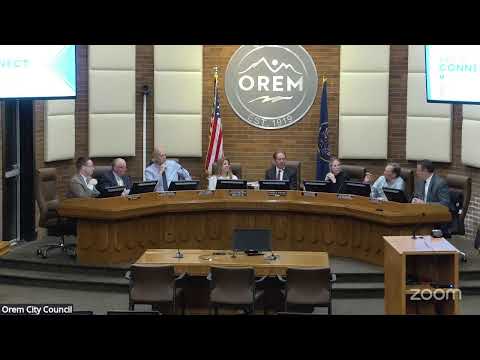
Orem officials and consulting engineers presented citywide water, sewer and stormwater master plan updates at a council work session and described a multiyear capital investment program that will require financing decisions in the coming months.
Keith Larson, the consultant leading the utilities master-plan update, told the council the city remains supply‑secure on an annual basis and that conservation trends reduce projected demand, but the system faces localized pressure shortfalls at present and rising asset-replacement costs because of construction inflation.
Master-plan findings - Water: Consultants said a central pressure “saddle” would be addressed with a new 10-million-gallon tank in the central zone, one additional well in the north and several pipelines and booster‑station improvements. Without those improvements, the model projects pressure noncompliance in parts of the central service area by build-out. Consultants said an upgraded storage/distribution strategy would reduce dependence on transmission from the northeast source. - Sewer: Engineers said projected sewer flows are within the current water-reclamation facility’s capacity when Vineyard and Linden flows are accounted for under existing agreements, but that the plant requires near-term rehabilitation and that 2026 contains a heavy set of collection-system and plant investments. Staff said reuse and pipeline relining will remain priorities. - Stormwater: The plan recommends removal of groundwater infiltration sumps in high-priority well-protection zones (250‑day capture zones) and piping stormwater outside those zones; replacement of portions of the West Union Canal and West Smith Ditch with trunk facilities; and a prioritized list of storm pipelines (north end and southwest area identified) to address flooding and to protect culinary wells.
Costs and timing Consultants warned that construction cost inflation has roughly doubled infrastructure prices versus five years ago; their capital plan shows a front-loaded spending peak in 2026, with an itemized $40 million near-term demand (sewer plant-heavy). They presented a 10-year capital program that bundles water storage (10 M gallons), new wells, distribution pipelines, sewer collection-system liners, and reclamation-facility improvements. The plan includes a continued program of pipeline rehabilitation using cured-in-place liners where feasible.
Financing and rates City staff told the council they plan a multipronged financing strategy: pursue federally subsidized loans that several other Utah entities have recently obtained at very low interest (staff cited a recent Salt Lake City $350 million loan at a subsidized 1.74 percent rate), combine subsidized debt if obtained with traditional bonding, evaluate rate adjustments and update impact fees. Staff said a public rate-and-fee proposal with the city’s financial consultant is scheduled for follow-up work sessions and two public presentations, with an impact-fee review planned for April.
Public outreach Consultants said master-plan outreach included prior public meetings and engagement with the Public Works Advisory Commission. Staff said they will bring the financial adviser to council and present fee-change options in late March and early April and anticipate adoption of the master plans as a consent item at a future council meeting once public review concludes.
Council discussion and next steps Council members asked about localized pressure deficits, the tradeoffs of bonding versus pay‑as‑you‑go, options for lining versus open cut for older pipes, and how plan choices affect residents’ monthly bills. Consultants and staff said the plan represents a responsible middle path focused on progress over perfection: phase investments, pursue subsidized financing and spread rate changes over time to avoid sharp spikes while preserving system sustainability.
The city scheduled follow-up presentations with the financial advisor (two upcoming sessions) and indicated it would return with draft rate and impact-fee recommendations in early April.
No formal vote was taken at the work session; the presentation functioned as an informational policy briefing to guide upcoming financial and ordinance work.