Get Full Government Meeting Transcripts, Videos, & Alerts Forever!
Get email alerts on the Green Purchasing topic
No spam. Unsubscribe anytime.
New Rochelle staff outline Green Purchasing adoption and citywide sustainability framework
Summary
City staff presented the state27s Green Purchasing Communities program and a revised GreenNR sustainability plan, and council members pressed officials about potential costs, tracking and next steps for direct-pay clean-energy priorities.
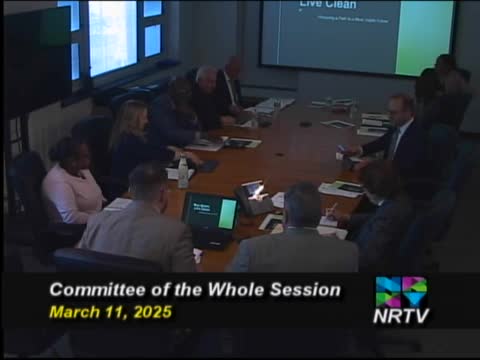
Deputy Finance Commissioner Adam Ross and Department of Development officials presented the Green Purchasing Communities program and the updated GreenNR sustainability plan to the New Rochelle City Council Committee of the Whole, outlining how the city could adopt state-verified green purchasing specifications and pursue direct-pay clean-energy funding for resilient facilities.
The presentation explained that the state27s program, aligned with Executive Order 22, provides approved product specifications and vendor lists that municipal purchasers can reference. "If you shrunk the Earth to the size of an apple, the atmosphere would be thinner than the apple's skin," Ross said in opening remarks about the rationale for sustainability measures. He described the adoption process as a two-step change to city purchasing policy that would give staff a preference for state-identified green options while allowing exceptions for budget or practicality.
Council members focused questions on the likely cost difference when choosing green products and on how the city would track spending under the program. Ross said the state27s approach identifies green alternatives and that local policy would allow procurement to favor green alternatives when they are "practical and cost comparative." He noted New York27s procurement rules include exceptions for recycled products under General Municipal Law A7 104-a and that the Green Purchasing specifications are intended to be imported into RFPs so vendors know what the city seeks. Ross said the allowed price differential is typically capped in the policy language at roughly 10 to 15 percent for reasonably competitive procurements.
Deputy Commissioner Seth Kaye and staff described the GreenNR plan as a "living document" that adds a new theme on climate leadership, resiliency and racial equity to the 2011 plan. Kaye said GreenNR aims to coordinate capital project planning, identify grant opportunities and set an annual reporting cadence. He and Grant Administrator Nick Soufas outlined direct-pay funding priorities the city will pursue, including resilience hubs and cooling centers with solar, battery storage and electric vehicle chargers; a planned solar array for the Intermodal Transit Center; building decarbonization for smaller multifamily properties; and workforce and technical-assistance programs for nonprofit partners.
Council members asked how the city would verify vendors' sustainability claims. Ross and Kaye said New York State27s vetting process for approved products is detailed and frequently updated; Kaye agreed to report back with information on certifications and vetting criteria. Ross also said the city27s financial systems can tag purchases with a Green Purchasing code so staff can export and review green spending monthly or quarterly.
The presentation included program examples and grant streams the city plans to pursue, such as the Climate Smart Communities certification pathway, NYSERDA clean-energy programs and federal direct-pay incentives under the Inflation Reduction Act. Kaye said those funding sources can reduce upfront costs for projects designed to both serve community needs and generate or save energy.
City staff said they plan follow-up actions including drafting the purchasing-policy language for council review next month, scheduling workshops and providing technical assistance for nonprofits and houses of worship that may seek direct-pay funding. Ross and Kaye said staff will also provide periodic updates: "I can do an update anytime," Ross told council members who asked for six-month progress reports.
The council did not take a formal vote on policy adoption at the meeting; staff said the policy amendment would return for formal consideration in a future meeting.