Get Full Government Meeting Transcripts, Videos, & Alerts Forever!
Get email alerts on the Antisemitism Resolution topic
No spam. Unsubscribe anytime.
El Cajon council directs staff to return with anti‑antisemitism resolution after heated public comment
Summary
El Cajon City Council voted 4-1 to send a draft resolution addressing antisemitism back to staff for revision after more than an hour of public comment split over whether to include the IHRA working definition.
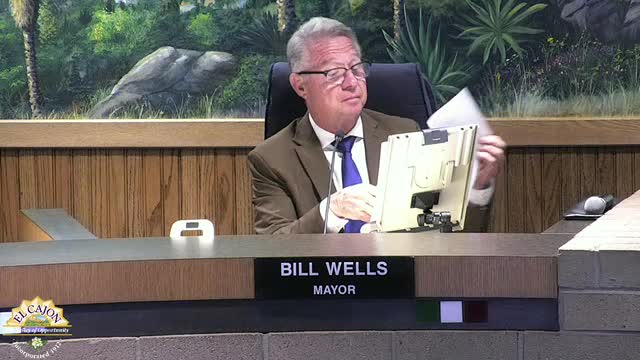
Mayor Bill Wells and the El Cajon City Council on Tuesday directed city staff to return with a revised resolution addressing antisemitism, voting 4-1 to send the draft back for edits after an extended public comment period divided over whether to adopt the International Holocaust Remembrance Alliance working definition of antisemitism.
The council’s vote sends a “strikeout” version of the draft back to staff so members can review any changes before the item returns for a formal vote. Mayor Wells said he wants the revised document to remove references the council cannot verify and to show, in tracked changes, what was altered.
Why it matters: The item drew large turnout and sharply divergent views from El Cajon residents and local advocacy groups. Supporters urged the council to adopt a formal definition to help government officials identify and respond to antisemitic incidents. Opponents said the IHRA working definition conflates criticism of Israel with antisemitism and could chill protected speech.
Public comment lasted more than an hour. Vicky Estrella told the council, "You cannot conflate Zionism with Judaism," arguing that criticism of the State of Israel is not the same as hatred of Jewish people. Jamal Khanj urged the council to "reject IHRA definition of antisemitism," saying the definition has been used to label legitimate political speech as hate speech. Liat, introducing herself as director of the Antisemitism Task Force at Stand With Us, said the IHRA text "does not limit free speech whatsoever" and urged adoption to help officials identify bias and criminal conduct.
Council discussion mixed concern for free speech with concern about rising antisemitic incidents. Mayor Wells cited a national statistic, saying reported antisemitic hate crimes in the U.S. "have got a 360%" increase since Oct. 7. Several council members, including those who voted to send the draft back, said they wanted more time and community input. Councilmember Michelle Mitchell cast the lone no vote, expressing worries that adopting the IHRA language could broaden the city's role in national policy debates and potentially suppress dissent.
City staff told the council they would prepare a marked-up version of the draft resolution showing deletions and additions, and said they may remove references to international bodies that the staff cannot independently confirm. Mayor Wells and other council members said they want the city to work with multiple local organizations and for staff to return with clearer, narrower language.
The council opened the item for public comment and received at least 13 speaker cards and multiple emailed statements for the record. Speakers included representatives and members of Jewish Voice for Peace, the Council on American–Islamic Relations, Stand With Us, and other community advocates and residents.
Next steps: Staff will return the marked-up draft for council consideration at a future meeting; the council set no definitive adoption date but said the item will return for a formal vote after review.