Get Full Government Meeting Transcripts, Videos, & Alerts Forever!
Get email alerts on the Zoning Map Changes topic
No spam. Unsubscribe anytime.
Planning commission recommends denial of Cortez Street rezoning after residents raise concerns about keeping animals and neighborhood character
Summary
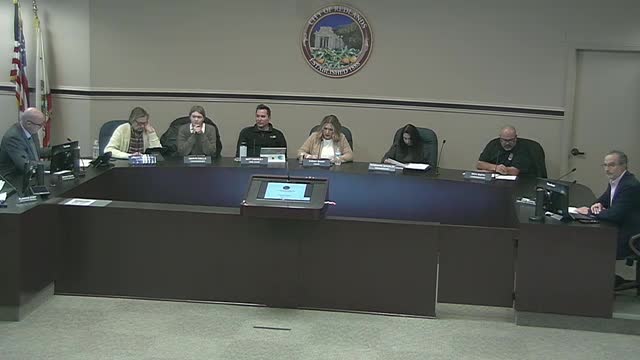
The Redlands Planning Commission on March 11 recommended denial to the City Council of Zone Change No. 480, a staff-initiated proposal to rezone parcels along Cortez Street from A-1 agricultural to R-E residential estate.
The Redlands Planning Commission on March 11, 2025 voted to recommend denial to the City Council of Zone Change No. 480, a staff-initiated proposal to rezone parcels along Cortez Street from A-1 (agricultural) to R-E (residential estate).
Proposal and staff rationale
Planning staff presented the rezoning as an effort to reconcile the city’s zoning map with its General Plan land-use designation (the staff report described the General Plan designation as very low-density residential). Staff said the area is largely surrounded by residential development and public open space and that rezoning the properties would promote map consistency.
Staff noted the site area was described in the agenda materials as 18 parcels totaling about 5 acres; in the staff presentation there was also a reference to the site as consisting of 16 lots, eight of which are vacant and eight containing single-family homes. The transcript contains both figures; the number of parcels/lots differs between the agenda and staff presentation. Staff also said the property is accessed by Cortez Street, a privately owned road, and that future developments would still be subject to environmental review when a project is proposed. Staff advised that the rezoning would qualify for a CEQA “common-sense” exemption (cited in the transcript as “section 15,061 B 3”).
Public comments and concerns
Multiple residents spoke against the rezoning, saying the change would alter the rural character they value and could affect their ability to keep animals such as chickens. Jessica Batra Serrada and Marcela Juarez (residents) said they moved to the area for its agricultural and rural qualities; Andy Holder (resident) noted that residential zoning carries different rules for animal keeping and that code enforcement in the city is complaint-driven.
Staff and director responses
Planning staff and the director explained that agricultural zoning permits some uses that residential zoning would not, but also noted practical constraints: the A-1 agricultural standards include large setback requirements (staff read a 100-foot setback standard for certain poultry keeping under A-1), and many of the lots in the tract are small (staff cited typical lot dimensions of approximately 126 by 126 feet), which would make keeping animals under those setback standards effectively infeasible. Staff also reiterated that the city’s code-enforcement program operates on a complaint basis and that the rezoning itself does not authorize physical development.
Commission deliberations and action
Several commissioners said they could not make the required findings that the rezoning would serve the public health, safety and general welfare and noted the residents’ concerns about lifestyle changes. Vice Chair Ensley moved to recommend denial of the proposed rezoning (the motion as read referred to Resolution No. 1698 recommending denial); Commissioner Smith seconded. The commission voted in favor of the recommendation to deny by voice vote and the motion carried.
Next steps and implications
Because the commission recommended denial to the City Council, the rezoning proposal will not advance as presented; staff said the matter can be revisited in the future if conditions change or more properties develop as residential. The commission’s vote leaves the zoning/general-plan inconsistency in place for the affected parcels.
Why it matters
The decision preserves the current agricultural zoning for the parcels along Cortez Street and reflects neighborhood concerns about rural character and animal keeping. The hearing highlighted a tension between map consistency and individual property-owner expectations about allowable uses; it also surfaced a numerical inconsistency in the record (agenda vs. staff presentation) about the number of parcels/lots affected.