Get Full Government Meeting Transcripts, Videos, & Alerts Forever!
Get email alerts on the State Highway 71 Median Project topic
No spam. Unsubscribe anytime.
TxDOT outlines State Highway 71 median plan to BKF City Council; safety gains weighed against congestion and business access
Summary
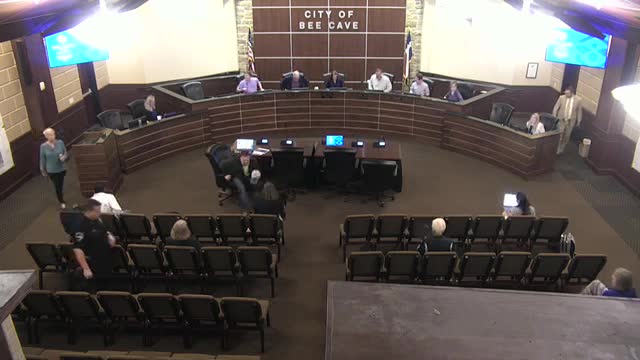
The BKF City Council on March 11 received an update from the Texas Department of Transportation on a proposed median project for State Highway 71 that TxDOT officials say is designed to reduce severe and head‑on crashes; council members and first responders raised concerns about added congestion, access for large‑equipment businesses and emergency response times.
The BKF City Council on March 11 received an update from the Texas Department of Transportation on a proposed median project for State Highway 71 that TxDOT officials say is designed to reduce severe and head-on crashes; council members and first responders raised concerns about added congestion, access for businesses that move large equipment and impacts on emergency response times.
TxDOT area engineer Willie Samora described layout changes made after public meetings — including restored left-in access at Caprock Summit, additional U-turn accommodations near Duke Covert Drive, a partial-access solution at the Hamilton Pool Road/ Bee Creek Drive area to serve youth fields and a decision to end medians before the second H-E-B driveway — and said the project was driven by a crash analysis and heat maps. Samora said the project is scheduled to be advertised for bid in May or June 2025 and that roughly $3,000,000 has been invested to reach the current design.
Councilmembers pressed TxDOT on trade-offs between safety and mobility. Several members singled out the Hamilton Pool Road intersection as the corridor's most acute problem, asking for clearer level-of-service and intersection-specific modeling and whether storage lengths could be extended rather than providing U-turn movements. Fire department leadership warned that longer backups could impede emergency response. A resident who spoke during public comment urged caution on introducing U-turns, calling them “an accident waiting to happen.” Samora said TxDOT’s underlying study showed one fatality on the corridor in 2021 and that previous installs of similar medians in Lakeway produced an 75–80% reduction in severe crashes, though minor crashes initially increased.
TxDOT presentation and design changes Willie Samora, identified as the TxDOT area engineer, walked council through before-and-after schematics and a public‑feedback summary. Key changes Samora described: - Caprock Summit: restored left‑in access that accommodates existing homes on the south side and potential development north of 71. - Duke Covert Drive: median pulled back slightly to allow left turns and U‑turn movements for drivers who want to reverse direction. - Hamilton Pool Road / Bee Creek Drive: a partial‑movement design allowing left‑in to the youth fields, right‑out for the fields and the service station, and U‑turns at a nearby location rather than full two‑way left‑turn access. Samora said the layout reflects a safety balance and that providing both extended left‑turn storage and a U‑turn would be unsafe in that location. - H‑E‑B and Uplands Ridge: TxDOT plans to end medians before the second H‑E‑B driveway to preserve existing access there and to leave a small two‑way left turn segment at Uplands Ridge.
Data, modeling and safety claims Samora repeatedly referenced a TxDOT corridor study and heat maps. He said the study documents crash types and severities, noting one fatality in 2021 and an elevated share of suspected severe injuries and possible injuries across the corridor. Samora told council the Lakeway median example showed a 75–80% reduction in severe crashes after medians were installed, while minor crashes rose, and he offered to provide the underlying tables (for example, “Table 1, page 11” and “Table 6” in the report) to council staff for review.
Council members asked for clearer, intersection‑level modeling for Hamilton Pool Road. Samora said Table 6 in the study provides a level‑of‑service comparison for several coordinated intersections but acknowledged Hamilton Pool Road had been treated as an isolated intersection in the modeling and that he would follow up with traffic engineers to provide the specific Hamilton Pool level‑of‑service figures.
Access, business and driveway concerns Council asked about the impact on businesses that use large equipment and trailers. Councilmembers and a resident identified a rental equipment yard (referred to in the presentation) near the Hamilton Pool/ Bee Creek area as having operational constraints if access is limited. Samora said curb profiles for the first 200 feet of each median approach are designed with short curb heights to reduce the risk of trailers getting stuck, but he confirmed there would not be unlimited direct access for all driveways in the revised design. Councilmembers suggested shared driveways or combined access as potential long‑term solutions, and Samora said TxDOT had discussed combined access with property owners but that easements and property‑owner agreements would be required.
Emergency response and traffic operations Fire department leadership — identified in the meeting as the Fire Chief — told council the corridor is a major source of intersection collisions and expressed concern that increased queuing could slow fire and emergency medical response. “The more congestion, the harder it’s gonna be for us to get there,” the chief said, describing routine congestion near the Hamilton Pool intersection and saying officers and crews report similar problems daily. Samora and councilmembers noted that signal‑timing adjustments could help in part, but said timing alone would not fully resolve capacity constraints.
Public comment and local reaction A resident, John Wickens of 5008 Pyrenees Pass, told council he opposed U‑turn designs and described U‑turn points as “an accident waiting to happen,” citing his experience with similar medians in Lakeway. Several councilmembers said community reaction in Lakeway had been contentious at first but had calmed over time; Samora reiterated that medians aim to reduce severe crashes, not eliminate minor collisions.
Funding and next steps Samora said the project is funded through the Highway Safety Improvement Program and that those funds are earmarked for crash‑reduction projects. He said if the city formally withdrew support for the corridor median project, the district would likely reallocate the funds to another safety project in the fiscal year. He asked council to provide formal direction if the city's position had changed. Samora said TxDOT expects to let the project for bid in May or June 2025 and start construction roughly two months after letting.
No formal action on the median project was taken by the council at the March 11 special session. The only recorded council action during the meeting was a unanimous procedural motion to adjourn. Samora said TxDOT can modify U‑turn provisions during construction if needed, but he urged the council to provide a clear, written policy direction if it wants the department to change course.
Ending Council members said they want more intersection‑specific data, especially for Hamilton Pool Road, before taking a formal position. TxDOT committed to providing the cited tables and follow up with traffic engineers about the Hamilton Pool modeling. The council did not take a vote on the highway design during the special session; the meeting adjourned after a short public comment period and procedural adjournment vote.