Get Full Government Meeting Transcripts, Videos, & Alerts Forever!
Get email alerts on the Infrastructure Public Works topic
No spam. Unsubscribe anytime.
Derby public works director reviews projects, water and wastewater plans, parks upgrades
Summary
Public Works Director Robert Mendoza briefed the Derby City Council on staffing, asset management, water and wastewater upgrades, parks projects and conservation efforts, and responded to council questions about reusing treated effluent water.
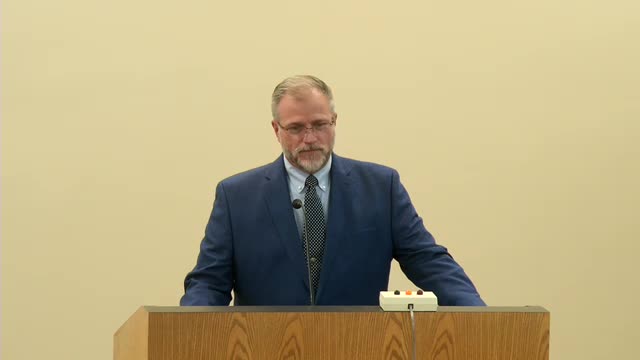
Robert Mendoza, Derby’s director of public works, told the City Council on March 11 that his department is focusing on asset management, water‑use efficiency and a slate of park and infrastructure projects while expanding a work‑based learning apprentice program.
Mendoza opened the annual public works presentation by summarizing the department’s scope and staff: “If you drive on it, play on it, walk on it, flush it or drink it, it’s us,” he said, describing a team the presentation counted as about 63.5 employees and multiple divisions including streets, utilities, parks, forestry and fleet.
The presentation outlined near‑term and multi‑year projects. Mendoza said Cartograph asset‑management Phase 1 (facilities, utilities and administration) is complete and Phase 2 (streets, fleet and parks) is under way. He described ongoing work at the wastewater treatment plant (Phase 1 and Phase 1a) aimed at equipment replacements and process upgrades; the slides presented a new bar screen and biofilter as components intended to improve treatment and odors over multiple years.
Mendoza highlighted parks investments including planned Hyde Park improvements (schematic design underway) and Dukarski Park Phase 2 construction. He said Hyde Park design work will include a large spray/splash pad, expanded playground, new parking and relocation of an existing shelter. Other items called out were a new skate‑park half‑pipe, a D’Arc (state park space) project with equipment arriving on site, and additions such as more restrooms and pickleball courts tied to the Derby Difference sales tax program.
On water and utilities, Assistant Director Dylan Curtis’s slides showed roughly 8,045 service orders handled in the past year, 75 new water services, 128 line repairs and about 151 miles of water main in the system. Mendoza and Curtis said the wastewater plant currently produces roughly 1,800,000 gallons of treated effluent per day; council members asked whether that effluent could be captured for irrigation. Curtis said reuse is feasible but requires dedicated infrastructure and investment, and Mendoza estimated a reuse system would be a substantial capital project (he referenced a prior million‑dollar estimate discussed in council workshops).
Mendoza also reviewed operational statistics: streets crews performed 181 asphalt repairs and 20 curb/gutter repairs; street sweeper crews drove more than 2,000 miles and removed about 400 tons of debris; sign and signal crews completed 97 sign repairs and replaced about 321 signs; code enforcement recorded 1,120 environmental cases, 82 zoning violations and 50 vehicle‑on‑property cases; parks staff manage roughly 20 developed parks, 14 green spaces and about 510 acres; facilities staff processed about 1,289 maintenance requests; and fleet consumed about 94,897 gallons of fuel. Forestry work included about 51 trees planted, roughly 2,100 pruned and about 848 removals (the removals were primarily in creeks and streams to mitigate blockages).
Mendoza described the department’s work‑based learning apprenticeship with USD 260 as a recruitment pipeline: seven graduates in the first year and four students currently participating across utilities, streets and parks, with at least one apprentice expected to become a full‑time hire.
The presentation noted ongoing energy‑management work with Schneider Electric (building automation system controls), and a number of professional recognitions for staff who serve on industry committees. Council members praised the department’s “culture” and responsiveness during recent snow events.
Mendoza closed by asking for council input on upcoming public engagement for park designs and saying staff will continue to provide live data as the Cartograph system is populated.
Mendoza concluded the presentation and stood for questions.