Get Full Government Meeting Transcripts, Videos, & Alerts Forever!
Get email alerts on the Digital Privacy topic
No spam. Unsubscribe anytime.
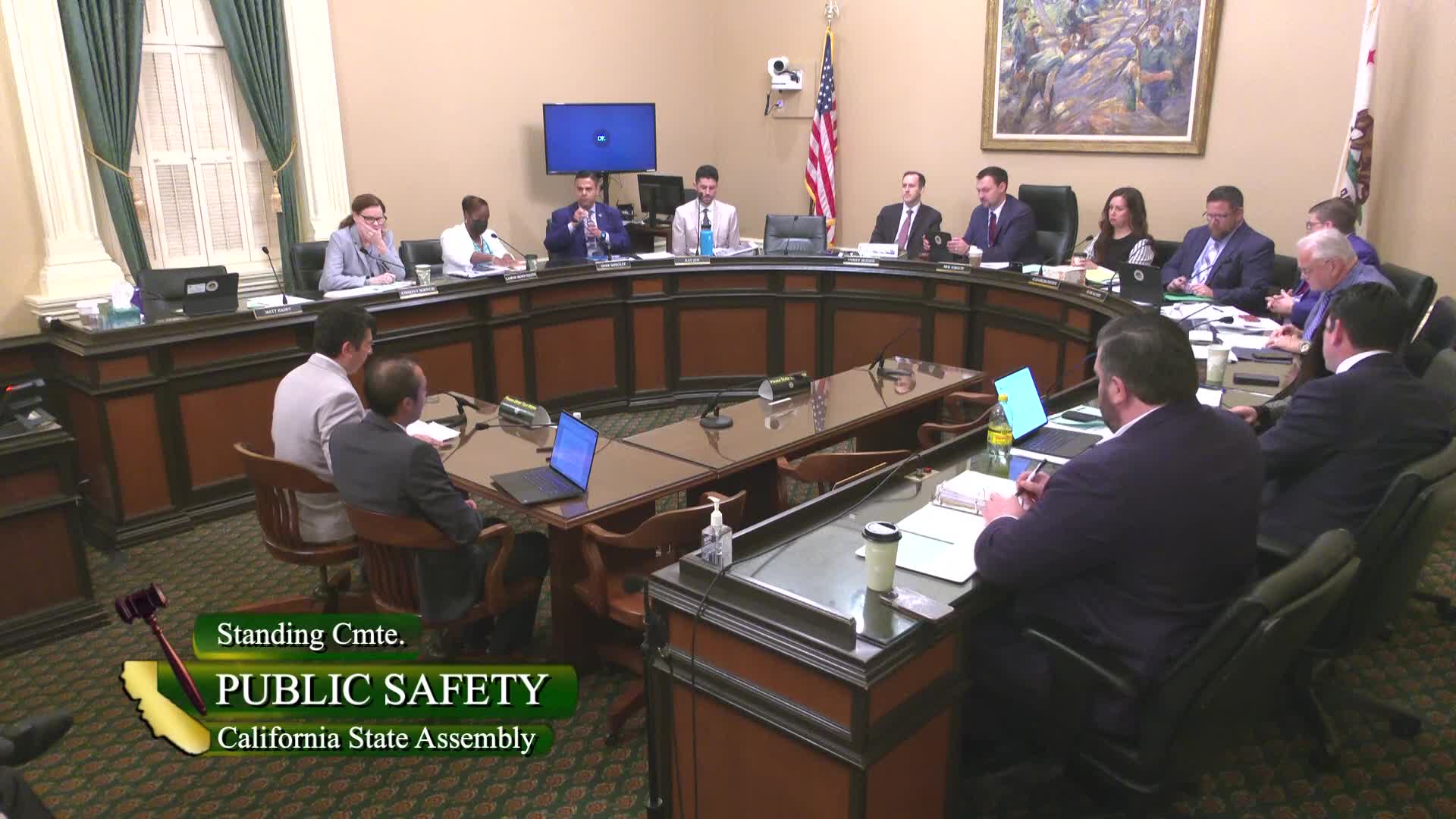
Committee approves AB 358 to let victims consent to inspection of tracking or surveillance devices
Summary
AB 358 (the "Trace Amendment") would allow law enforcement to inspect tracking or surveillance devices found in a person's residence, automobile, or personal property with the explicit consent of the person who found the device. The committee passed the bill as amended after debate over Fourth Amendment protections and scope.
Assemblymember Miguel Santiago Alvarez presented AB 358 as a narrow change to CalECPA (California Electronic Communications Privacy Act) to allow law enforcement to inspect tracking or surveillance devices found in private spaces when the device is discovered by the occupant and the occupant consents to inspection. Alvarez said the bill "ensures survivors of stalking, domestic violence, and harassment are not left defenseless" and that the change is limited and victim‑centered.
Joel Madero, deputy district attorney and director of a task force prosecuting technology crimes, described situations where victims finding spy cameras or tracking devices were prevented by CalECPA's warrant rules from allowing law enforcement to quickly inspect the device. Madero said evidence can be lost because perpetrators can remotely erase or disable devices. He called AB 358 a narrow exception that aligns CalECPA with Fourth Amendment expectations where the finder has no reasonable expectation of privacy in a planted device.
Opponents (ACLU of Northern California, Electronic Frontier Foundation, public-defender offices) urged caution, arguing CalECPA and the Fourth Amendment already provide a warrant process and that warrants can be obtained rapidly; they warned that a broad exception could undermine digital-privacy protections for phones and personal devices. The chair and author accepted an amendment to clarify the exception applies to a "tracking or surveillance device" and said that change would narrow the scope.
After brief additional late public comment, the committee voted to pass AB 358 as amended. The chair explained the amended language explicitly narrows the exception to tracking or surveillance devices located on a person's property and said he did not find the amendment to run afoul of state constitutional protections.