Get Full Government Meeting Transcripts, Videos, & Alerts Forever!
Get email alerts on the Student Food Insecurity topic
No spam. Unsubscribe anytime.
Students report food insecurity on UC and community college campuses; advocates urge streamlined CalFresh access and campus supports
Summary
UC Student Association and campus advocates told the committee students rely on CalFresh, campus food pantries and basic-needs centers; speakers urged streamlined enrollment, targeted outreach and funding for student-focused programs for undocumented and other ineligible students.
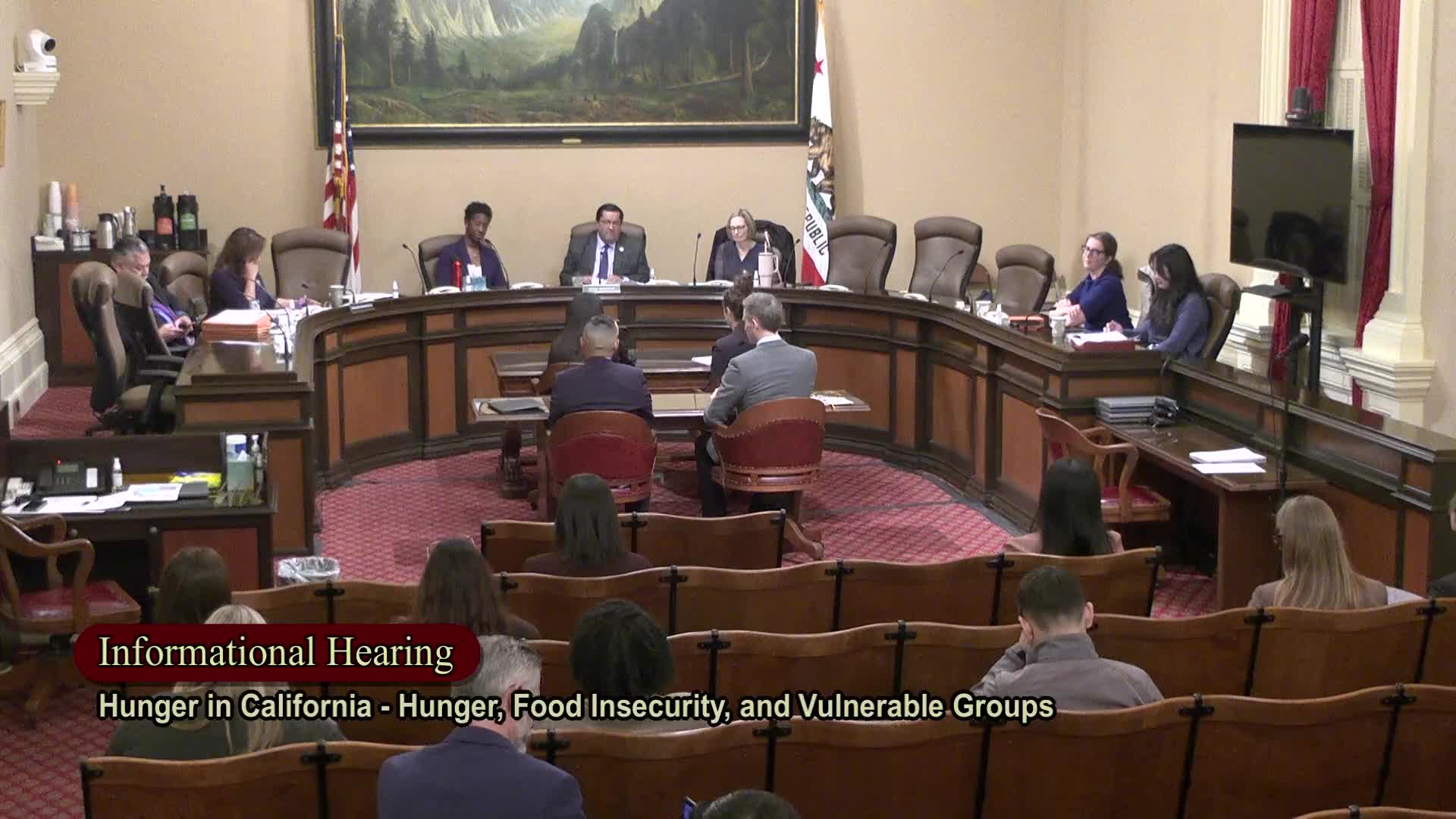
A student leader and higher-education advocates told the Senate Committee on Human Services that food insecurity is widespread among college students across California and that many students who would benefit from CalFresh do not enroll because of information gaps, administrative complexity or immigration status restrictions.
Yamileth (Camilleth) Maldonado, a fourth-year undergraduate at UC Berkeley and vice chair for government relations at the UC Student Association, described her experience relying on CalFresh to afford groceries while attending school and urged state and campus leaders to expand basic-needs supports. "CalFresh has played a significant role in my educational journey at UC Berkeley," Maldonado said, and she recommended scaling programs like UC Davis's Aggie Fresh systemwide to reach undocumented students and others who do not qualify for federal SNAP.
Why it matters: Witnesses said food insecurity undermines students' academic performance and health. Maldonado cited systemwide surveys showing high rates of food hardship—43% of undergraduates and 35% of graduate students in the UC system reported food insecurity in one survey—and said community colleges and CSUs report even higher rates.
Barriers and recommendations
- Administrative barriers: Maldonado and campus advocates said outreach emails and notices often fail to provide clear instructions and that campus basic-needs centers are under-resourced. Students asked for clearer, centralized online applications, more staff for one-on-one help, and integration between financial-aid/college onboarding processes and benefit screening.
- Targeted programs: Witnesses urged the legislature to support CFAP expansion for undocumented older adults, sustain CalFood purchases to support campus pantry supply, and fund efforts like Aggie Fresh that provide grocery assistance for students who do not qualify for federal benefits.
Ending
Advocates recommended state investments in a single statewide Sunbucks web application, continued CalFood funding at $60,000,000 ongoing, support for AB 79 (student CalFresh outreach) and strengthened campus basic-needs centers to improve outreach and enrollment for students.