Get Full Government Meeting Transcripts, Videos, & Alerts Forever!
Get email alerts on the Cfap And Pilots topic
No spam. Unsubscribe anytime.
State outlines CFAP expansion and pilots; minimum-nutrition pilot set to begin January 2026
Summary
CDSS detailed timelines and parameters for the California Food Assistance Program expansion and three state pilots — fruit & vegetable incentive, drinking water benefit and a minimum nutrition benefit for older adults and people with disabilities — and described automation and outreach milestones tied to BenefitsCal and CalSAWS.
State officials told the Senate Committee on Human Services they are on track to implement a set of state-funded supplements and pilots that aim to extend food assistance beyond federal CalFresh, while automation work paused and will resume next year to meet a 2027 CFAP expansion effective date.
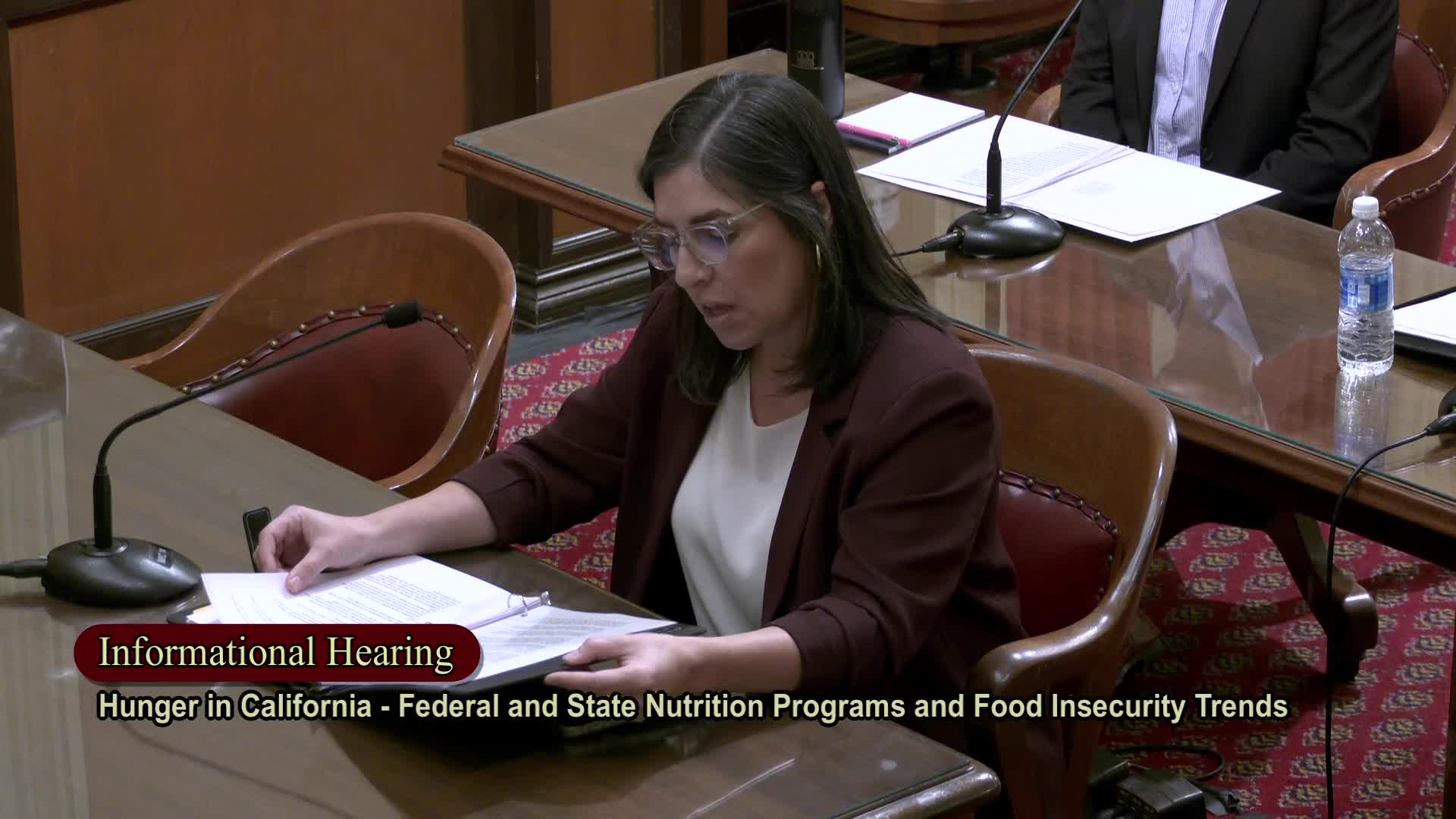
Alexis Fernandez Garcia, deputy director at the California Department of Social Services (CDSS), said the California Food Assistance Program (CFAP), which provides state-funded food benefits to noncitizens ineligible for federal CalFresh, was expanded by the 2022 budget and will be further expanded to serve all Californians age 55 and older regardless of immigration status on Oct. 1, 2027. "We released general policy guidance in 2023, and we are on track to publish all the remaining guidance, by the end of this year, '25, to meet the automation timeline," Fernandez Garcia told the committee.
Pilots described by CDSS
- Fruit and vegetable incentive pilot: Launched February 2023, provides a 1:1 incentive for purchases of qualifying fruits and vegetables up to $60 per household per calendar month at participating retailers and farmers markets. CDSS said $10,000,000 was allocated in the 2024–25 budget act to continue the pilot; the program served an additional 88,765 households and issued over $7,300,000 in incentives before funds were wound down in January 2025 due to rapid uptake. CDSS said 4 farmers markets and 92 retail locations participated.
- Drinking water pilot: Launched March 2022 in select Kern County ZIP codes, provides $50 per month to CalFresh households in areas with unsafe water systems. CDSS reported the pilot serves 673 households, issues roughly $83,000 per month and has about $1,500,000 remaining, which the department expects will sustain the pilot through August 2026.
- Minimum nutrition benefit pilot: Designed to raise the state-funded supplement for a subset of recipients so the total minimum monthly allotment reaches at least $60. The pilot targets households eligible under the Elderly Simplified Application Project—households with only older adults or people with disabilities and no earned income. CDSS expects about 36,000 statewide eligible households; benefit supplements will vary from $1 to $59, with an anticipated most common supplement of about $37 and an average of about $32. The pilot is expected to begin Jan. 1, 2026, and provide up to 12 months of additional benefits.
Automation, outreach and timing
Fernandez Garcia said automation efforts for CFAP and related processes were paused as of June 2025 but will resume in June 2026 to meet the October 2027 implementation date for CFAP expansion. The department said it will publish remaining policy guidance in 2025 and release an outreach RFP for expansion-related outreach contracts.
Committee members asked about sustainment and budget risk. Fernandez Garcia said most pilots described are currently funded and planned to continue except the fruit and vegetable pilot, which had been wound down pending new funding.
Ending
State officials asked the committee for continued engagement during the automation and outreach phase and said they will provide implementation updates. Several committee members urged lawmakers to plan for contingencies if federal nutrition funding is reduced.