Get Full Government Meeting Transcripts, Videos, & Alerts Forever!
Get email alerts on the Calfresh Snap Enrollment topic
No spam. Unsubscribe anytime.
CalFresh reach climbs to 81% even as food insecurity persists across California
Summary
State and independent researchers told the Senate Committee on Human Services that CalFresh participation has increased substantially, but hunger remains elevated and the state is rolling out pilots and automation while monitoring federal threats to SNAP funding.
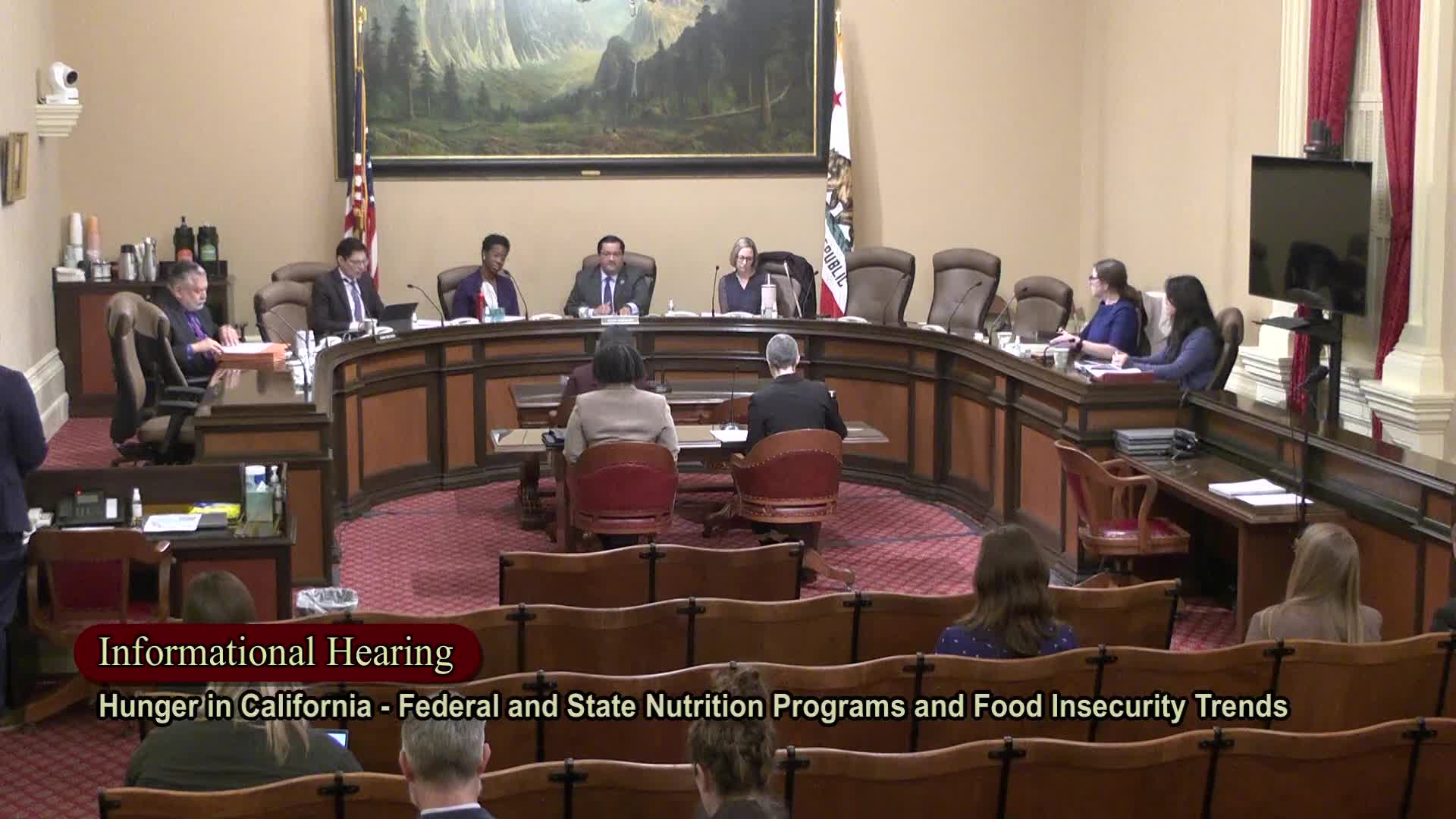
California state and nonprofit witnesses told the Senate Committee on Human Services that participation in CalFresh—the state's SNAP program—has risen sharply but food insecurity remains a persistent problem, and the state is deploying a series of pilots and administrative changes as it watches potential federal funding cuts.
CalFresh participation has increased to an estimated 81% of eligible Californians, up from 67% two years earlier, Alexis Fernandez Garcia, deputy director of the Family Engagement and Empowerment Division at the California Department of Social Services, told the committee. "CalFresh is largely regarded as one of the most effective tools to combat poverty and food insecurity and routinely reduces food insecurity by 20 to 30%," Fernandez Garcia said.
The improvement in reach reflects investments in outreach, technology and administrative options, officials said. Tess Thorman, a researcher at the Public Policy Institute of California (PPIC), described the underlying scale: "In California, 1,800,000 households, about 13%, experienced food insecurity at some point in 2023," she testified, and other survey measures suggest an elevated prevalence since the pandemic.
Why it matters: CalFresh is the largest anti-hunger safety net in the state and is credited with pulling roughly 1,100,000 Californians out of poverty in 2023, according to state testimony citing PPIC analysis. Committee members pressed state officials on efforts to simplify enrollment and on the new statewide portal BenefitsCal and the planned retirement of GetCalFresh.
Supporting details and debate
- Enrollment and access: Fernandez Garcia said the department launched a single statewide eligibility system (CalSAWS) and the new portal BenefitsCal. She estimated a BenefitsCal application could take "anywhere between half an hour and 60 minutes depending on how many programs you're applying for," while the former CalFresh-only application averaged about 12 minutes. Senators urged the department to reduce application time and explore staged intake to avoid dropoff.
- Disparities: Fernandez Garcia and other witnesses noted remaining participation gaps by language (Spanish, Chinese, Vietnamese), age groups, and Asian American subgroups. Thorman said children and households with children remain more likely to experience food insecurity than households without children.
- Role of local partners: County and food bank witnesses described outreach and on-the-ground enrollment help. Monique Meisenheimer, intake program manager for San Joaquin County, described outreach in schools and community centers and said the county provides expedited services when people present in person.
- Federal uncertainty: Multiple witnesses warned that proposed federal SNAP changes would strain the state's safety net. Fernandez Garcia said the department is "monitoring the situation very carefully" and is committed to mitigating harm where possible.
Ending
Committee members signaled intent to follow up on enrollment timing, continued outreach to underenrolled communities and contingency planning should federal SNAP funding change. State officials said they will continue partnerships with counties, advocates and community groups while implementing the new eligibility system and benefits portal.