Get Full Government Meeting Transcripts, Videos, & Alerts Forever!
Get email alerts on the Special Education Staffing And Services topic
No spam. Unsubscribe anytime.
Davidson County schools approve contracted special-education staffing, parents press for better inclusion
Summary
Following public comments from parents and local clinicians about gaps in special-education services, the Davidson County Board of Education approved service agreements with staffing firms and an outside applied behavior analysis provider to fill exceptional children positions for the 2024–25 school year.
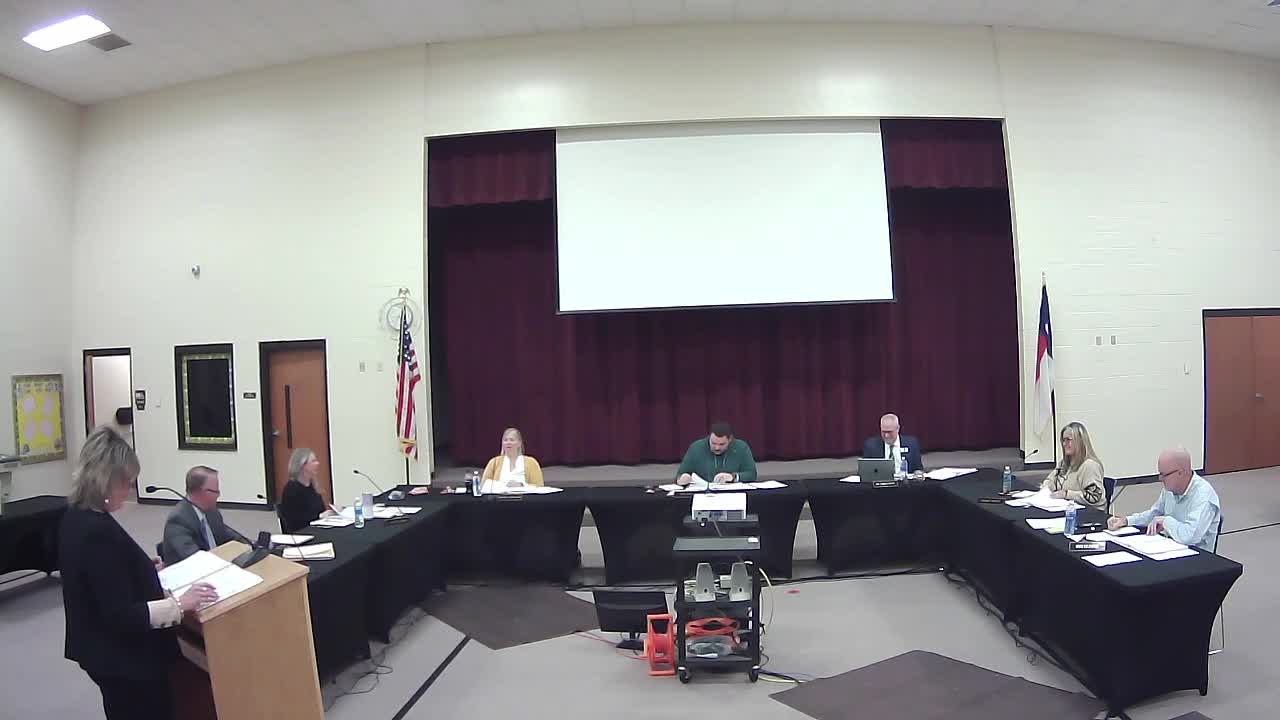
The Davidson County Board of Education on March 3 approved contracts to bring temporary special-education staff into classrooms while parents and local health professionals urged longer-term fixes to inclusion and special-education services.
Board members voted to approve a service agreement with Emergis Healthcare Staffing Inc. to recruit and place an exceptional children (EC) classroom teacher for extended-content standards programs and a part-time speech-language pathologist serving two schools. Superintendent Dr. Slate and staff said the district will pay for those contract services using Medicaid funds and set a not-to-exceed cap of $78,000 for the remainder of the 2024–25 school year. Board members separately approved a Soliant Health LLC agreement for an EC teacher at West Davidson High School, capped at $37,000 and likewise funded by Medicaid program receipts.
The staffing approvals followed public comments from parents and clinicians describing operational problems and student impacts. “The district has failed to provide proper training on inclusion and how to better accommodate students with special needs,” said Jessica Robbins, a parent, who described what she called inconsistent implementation of individualized education programs and placement decisions that separated her child from same-age peers. Robbins said school decisions had limited her child’s access to grade-level instruction.
District staff described a statewide shortage of qualified special-education teachers that has driven districts to use contracting firms. “Our colleges and universities are just not turning out the number of candidates that are needed,” said Dr. Coley (staff member), who presented the contracts. Coley told the board that contractors cover payroll taxes, insurance and workers’ compensation from the hourly rate and that the district will set compensation parameters that prospective hires must meet. “If it were to be filled tomorrow until the end of the year, it will not exceed $78,000,” Coley said of the Emergis arrangement.
The board also approved a memorandum of agreement allowing Alight Behavioral Therapy LLC to provide applied behavior analysis (ABA) services in schools when families contract privately for those services. Dr. Coley said principals report positive classroom outcomes when ABA therapists work in school, because students do not miss instructional time.
Board members and staff framed the contracts as short-term steps while the district pursues longer-term solutions. In discussion, staff noted contracted services will be paid from Medicaid reimbursements allocated to the exceptional-children program, not general fund classroom salaries. Board members asked staff to seek more detail from the vendors about the breakdown of pay and administrative costs.
The votes on the staffing contracts were approved by voice vote with no recorded opposition.
The board did not take any additional policy action on inclusion during the meeting; district staff were asked to continue outreach to families and said they would provide additional information on hiring costs and vendor fee structures in a board brief.
Coley and other staff emphasized that recruiting and retaining qualified special-education teachers is a systemic issue across North Carolina and not unique to Davidson County; trustees discussed the potential long-term trade-offs between using contractors and funding direct hires with benefits.