
Panel backs bill to let Maryland small employers access large-group health plans through PEOs
Get AI-powered insights, summaries, and transcripts
Sign Up Free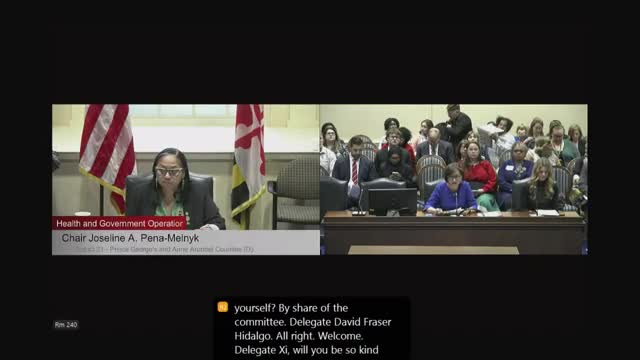
Summary
House Health and Government Operations Committee Chair Jocelyn Pena Milnick and members heard testimony on House Bill 1439 on March 19, a bill from Delegate Lily Chi that would permit small employers with fewer than 50 workers to access large-group health plans through professional employer organizations, or PEOs.
House Health and Government Operations Committee Chair Jocelyn Pena Milnick and members heard testimony on House Bill 1439 on March 19, a bill from Delegate Lily Chi that would permit small employers with fewer than 50 workers to access large-group health plans through professional employer organizations, or PEOs.
Delegate Lily Chi, sponsor of HB 1439, told the committee the proposal is voluntary for employers and “would allow small businesses with under 50 employees to have the same health benefits offered to their workers as larger employers through professional employer organizations.” She referred to a Maryland Insurance Administration study submitted in January finding “no conclusive data to draw a direct causation between allowing small businesses to purchase large group health insurance through PEOs and a harmful effect on the small group market.”
Supporters — including the National Association of Professional Employer Organizations (NAPEO), brokers and several small-business representatives — urged the committees to approve the bill as a tool to reduce costs and expand benefits. Caitlin McDonough of NAPEO said plans available through PEOs would remain ACA-compliant and “this doesn't prohibit an employee from opting in to get their own individual coverage through the exchange.” Ari Winn of Benefit Mall said PEO-sponsored plans often offer “rich plans” with “low co-pays, lower deductibles” and national networks useful for multi-state employers. Kenneth Sanchez, a Maryland business owner, said PEOs could “pull these smaller firms into larger risk groups to slash health insurance costs and deliver big company benefits.”
Speakers representing insurance agents and advisors supported the bill with amendments. Bryson Popham of the National Association of Benefits and Insurance Professionals said he supports the concept but proposed that the Maryland Insurance Administration (MIA) conduct an ongoing study and report on any impact to the small group market to monitor for adverse selection. Brett Leininger of the National Association of Insurance and Financial Advisors urged added disclosures and contract flexibility so employers can cancel a health-insurance portion of a PEO contract with notice.
Committee members questioned how carriers would be regulated when plans under a PEO include employees who live in multiple states. McDonough and panelists told the committee carriers offering coverage would still be licensed and regulated in Maryland when they do business in the state. Several members pressed for transparency on contracting, pharmacy benefit manager arrangements, and the exchange of claims or underwriting data when small employers join larger pooled arrangements.
No formal action or vote on the bill was recorded during the hearing. Witnesses offered competing proposals for amendments — including sunset or study provisions — and committee members repeatedly urged stronger disclosure language and regulatory reporting requirements to protect the existing small-group market.
The committee concluded the HB 1439 hearing and moved on to other bills on the docket. The bill remains under committee consideration.