Get Full Government Meeting Transcripts, Videos, & Alerts Forever!
Get email alerts on the Stop The Bleed topic
No spam. Unsubscribe anytime.
Young advocate and trauma surgeons push ‘Stop the Bleed’ kits and training for schools and public buildings
Summary
A 13‑year‑old bleeding‑disorder patient and trauma surgeons urged the committee to require bleeding‑control kits and training in schools and public buildings, saying early bystander intervention can prevent deaths from hemorrhage.
A 13‑year‑old testifier with a rare bleeding disorder and trauma surgeons told the Public Safety and Security Committee Tuesday that requiring bleeding‑control kits and training in schools and public buildings would save lives.
Waylon Page, a Hatfield resident and patient who has a platelet dysfunction, described episodes when bleeding continued for hours and recounted seeing hemorrhage control kits at a conference out of state. "With these kits, it would be a huge impact in the state of Connecticut," he told the committee. "This bill is not just 1 side working on this. This is a bipartisan bill that's good for everyone's health."
Nut Graf: The testimony connected the state measure to the national Stop the Bleed campaign launched after Sandy Hook and the Boston Marathon bombing. Trauma surgeon Dr. Shay Gregg said 40% of trauma deaths are due to hemorrhage and many happen before patients reach hospital care; bystanders trained to use tourniquets, gauze and other hemorrhage controls can dramatically change outcomes for extremity and some junctional bleeding.
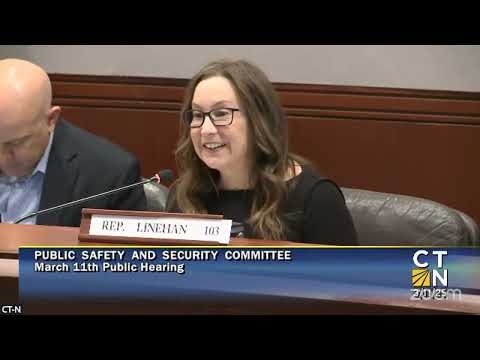
Surgeons and emergency clinicians on the panel described real‑world cases where immediate tourniquet or packing stopped life‑threatening bleeding and allowed patients to reach the hospital in stable condition. Committee members and witnesses discussed logistics and costs; proponents said training is short (about one hour), widely available, and that philanthropic or industry partners may help fund kits. Representative Linehan said trainers are already available in Connecticut; witnesses said 70,000 trainers exist worldwide and that the training is free.
Ending: The committee heard bipartisan praise for the proposal and for the young advocate who travelled to Washington, D.C., to press the issue. No vote was taken Tuesday; witnesses urged the committee to advance the bill to provide kits and training in public settings where response time matters most.