Get Full Government Meeting Transcripts, Videos, & Alerts Forever!
Get email alerts on the Ems Paramedic Supplemental Uconn topic
No spam. Unsubscribe anytime.
UConn, firefighters press committee to allow UCFD paramedics to provide ALS on Storrs campus
Summary
University of Connecticut officials and union representatives told the Public Safety and Security Committee they want UConn Fire Department paramedics authorized to provide supplemental advanced life support on the Storrs campus to shorten response times for critical medical calls.
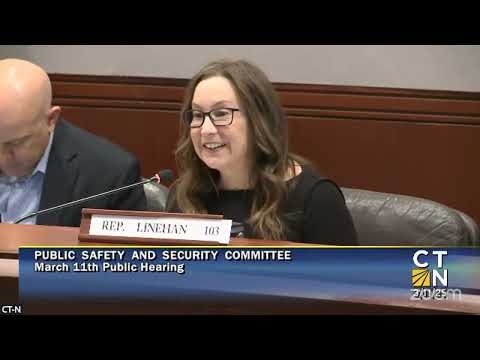
The University of Connecticut and the International Association of Firefighters pushed lawmakers Tuesday to allow UConn Fire Department paramedics to offer supplemental advanced life support (ALS) services on the Storrs campus under House Bill 7201.
UConn Chief of Staff Michelle Williams and Interim Fire Chief Christopher Renshaw told the Public Safety and Security Committee that UCFD regularly staffs personnel certified at the paramedic level on the Storrs campus but currently may only provide basic life support there because of existing regulatory limits. "The ability of our personnel to provide this level of care increases the likelihood of life‑saving emergency medical services when minutes, if not seconds, count the most," Williams said.
Nut Graf: Proponents say the change would allow UConn paramedics already on site to deliver faster ALS care for students, employees and visitors when the primary ALS provider that covers the campus, Wyndham Community Memorial Hospital, is delayed or unavailable. Witnesses told the committee UCFD response times on campus can be about 3 minutes, compared with an average 9–12 minutes for Wyndham paramedics when they respond from off campus.
Committee members heard that UCFD collectively responded to 3,048 EMS calls in 2024, with 887 from the Storrs station alone. Christopher Renshaw said that firefighters assigned to Storrs are often licensed paramedics who currently are limited to BLS care by existing Department of Public Health service‑area arrangements. "There are times where the call volume exceeds the resources that are provided," Representative Josh Howard said during questioning, and Renshaw answered that supplemental UCFD paramedic coverage would add resources rather than take them away.
Union and first‑responder witnesses backed the request. Frank Duncan, an IAFF Local S15 member, told the committee that having UConn paramedics operate to their licensed scope on Storrs campus would ‘‘immediately decrease those response times for critical life‑saving care.’’ Dan Starvesh, president of IAFF Local S15, said UCFD had filed an application with the Office of Emergency Medical Services (OEMS) the prior week and urged the committee to clear regulatory uncertainty that proponents said has delayed past proposals.
Opponents and some committee members urged following the state OEMS/DPH review process and questioned whether a legislative fix was necessary. Members asked if the department had already applied for regulatory approval; witnesses said UConn submitted an OEMS application and OEMS had begun review. Committee members also asked whether the proposal would displace Wyndham or other regional ALS providers; witnesses said the UCFD request is supplemental and would not remove Wyndham’s role as the primary ALS provider and receiving hospital.
Ending: The committee took testimony but did not take formal action during the hearing. Proponents asked lawmakers to either back the bill or otherwise clarify state rules so UCFD paramedics can deliver ALS care immediately when they are first on scene. If passed, the change would aim to shorten ALS response gaps on the Storrs campus while preserving regional EMS arrangements.