
Kansas Children’s Cabinet warns tobacco‑settlement decline threatens early‑childhood programs
Get AI-powered insights, summaries, and transcripts
Sign Up Free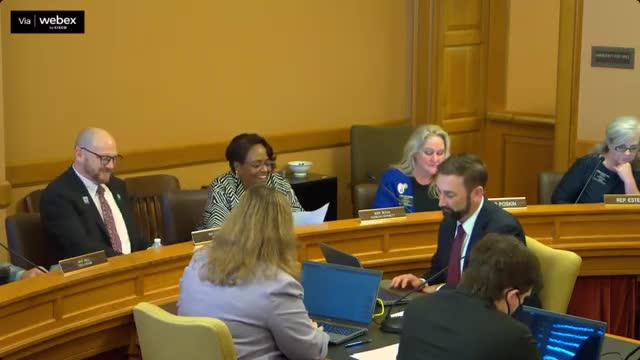
Summary
Melissa Rooker, executive director of the Kansas Children’s Cabinet, told the Committee on K‑12 Education Budget that declining tobacco‑settlement annuity payments and special transfers from the Key Fund have created a budget gap that could force cuts to the Children’s Initiative Fund if alternative revenue is not secured.
Melissa Rooker, executive director of the Kansas Children’s Cabinet, told the Committee on K‑12 Education Budget at an informational briefing that declining tobacco‑settlement annuity payments are putting the Children’s Initiative Fund (CIF) under “structural” pressure and could force cuts or reallocation of programs if alternative funding is not found.
"We are in a downward trend," Rooker said, adding that "it's all, 100% of our funding for the Children's Initiative Fund is sourced from the tobacco settlement agreement." She told legislators the Cabinet is preparing the FY26 budget with a target of about $54 million and will present FY26 grant recommendations at the Cabinet’s April meeting and perform budget work at the board’s June meeting.
The nut graf: The Cabinet oversees CIF dollars that historically come from a tobacco‑settlement annuity directed into the Kansas Endowment for Youth (the Key Fund). Rooker said the annuity has fallen in recent years — a trend she traces to changes such as Tobacco 21 and to vaping products not being included in the original settlement — and that special transfers from the Key Fund into the State General Fund and other accounts have reduced the funds available to the CIF. That combination, she said, created an FY25 budget gap filled from the Key Fund balance and left a smaller ending balance heading into FY26.
Most important facts: Rooker presented line‑item figures showing how CIF and related funding flows to state agencies and programs. Examples she cited include transfers from the CIF to support agency matches and programs: $5,033,000 to the Department for Children and Families (DCF) for state match on the Child Care Development Block Grant; roughly $5.8 million to KDHE for Part C services; $1,600,000 for maternal child health home visiting; $1,000,000 for tobacco‑use prevention; and roughly $120,000 to the Kansas SIDS network. KSDE receives $9.4 million for the Parents as Teachers program and $4.2 million for the Kansas Preschool Pilot Program, Rooker said. The Cabinet itself administers the Dolly Parton Imagination Library ($1.5 million) and the Early Childhood Block Grant (about $23 million), which Rooker said currently supports 26 grantees serving 63 counties and roughly 8,000 children.
Rooker outlined several federal funding streams the Cabinet manages or helps lead: the formula Community‑Based Child Abuse Prevention (CBCAP) funds (about $1.4 million to Kansas), the competitive Preschool Development Grant (about $7 million annually in the current award), pandemic relief funds administered for childcare capacity projects and 10 ARPA‑funded multipurpose community facility projects that, by federal agreement, must include child care. She said those federal and one‑time pandemic relief dollars generally are fully encumbered and not ongoing revenue for the CIF.
Committee members pressed for specifics. Representative Steele asked about a statute he cited ("38 21 0 4" as noted in committee) that he said prohibits use of the Key Fund for primary economic development objectives; he and Rooker clarified that some projects (for example, multipurpose facilities tied to ARPA capital awards) are funded by federal ARPA allocations, not by the tobacco annuity. Steele also asked for usage metrics for an 1‑800 helpline hosted by Kansas Children’s Service League; Rooker said those metrics are reported to the Cabinet and she would provide them to committee staff.
Representative Hill and others pressed on governance and transfers: who decides annual transfers from the Key Fund to the CIF, and who authorized recent shifts using CIF resources in place of State General Fund (SGF) funds. Rooker responded that the legislature determines the amount appropriated each year and that the Cabinet makes recommendations; she said the House appropriations process last year consolidated the CIF line items to simplify review, but that conference committee and budget decisions moved funds in ways that expanded CIF obligations. Rooker also noted special transfers exceeding $1.7 million in FY25: about $500,000 to the Attorney General’s Office and about $1.2 million to the Department of Revenue for tobacco‑settlement compliance and enforcement, which are treated as special transfers off the top of the Key Fund before CIF appropriations.
On program evaluation and accountability, Rooker said statute requires an annual evaluation. The Cabinet contracts with university partners — the KU Center for Public Partnerships and Research for CIF‑portfolio accountability and Wichita State University for the Common Measures Initiative tied to Early Childhood Block Grant recipients. Rooker described a competitive RFP process, outside reviewers, published annual reports and three evaluation periods for preschool grantees (fall, winter, spring) that measure pre‑literacy and pre‑numeracy outcomes. She said the Cabinet has served nearly 50,000 children since 2018 through CIF programs and that the Imagination Library enrolls about 45% of eligible children (about 77,000 children).
Dr. Harwood of KSDE described how preschool programs intersect with K‑12, noting that "kindergarten teachers don't expect students to come in reading," and outlining the distinctions among special‑education preschool, preschool at‑risk, non‑qualifying district pre‑K, Kansas Preschool Pilot grants (funded by CIF and TANF), and Parents as Teachers (a CIF‑supported line item that requires a local match). He gave counts from the most recent audited year for various school‑delivered preschool categories and said data integration work with KSDE’s longitudinal data system is underway to better track long‑term outcomes for children served by early‑childhood programs.
What the Cabinet will do next: Rooker said the Cabinet will bring a slate of FY26 Early Childhood Block Grant recommendations at its April board meeting, will conduct budget work in June, and will publish its annual report in December. She urged attention to the declining annuity and cautioned that if lawmakers choose to continue shifting SGF obligations onto the Key Fund, the Cabinet will face difficult decisions about which line items to cut.
Ending: Committee members asked for follow‑up data and documents (for example, a map of ARPA multipurpose facility awards and helpline call metrics); Rooker said she would provide those to committee staff. The Cabinet’s board will continue scheduled review and evaluation work this spring before the legislature completes final FY26 appropriations.