Get Full Government Meeting Transcripts, Videos, & Alerts Forever!
Get email alerts on the Health Insurance Breast Cancer Screening topic
No spam. Unsubscribe anytime.
Idaho committee advances bill to require insurers to cover supplemental breast screening for high‑risk patients
Summary
The Senate Health and Welfare Committee voted to send House Bill 134 to the floor with a recommended do‑pass. The bill would require health plans regulated by the state to cover supplemental breast imaging — MRI, contrast mammography or ultrasound — for people clinically identified as high risk.
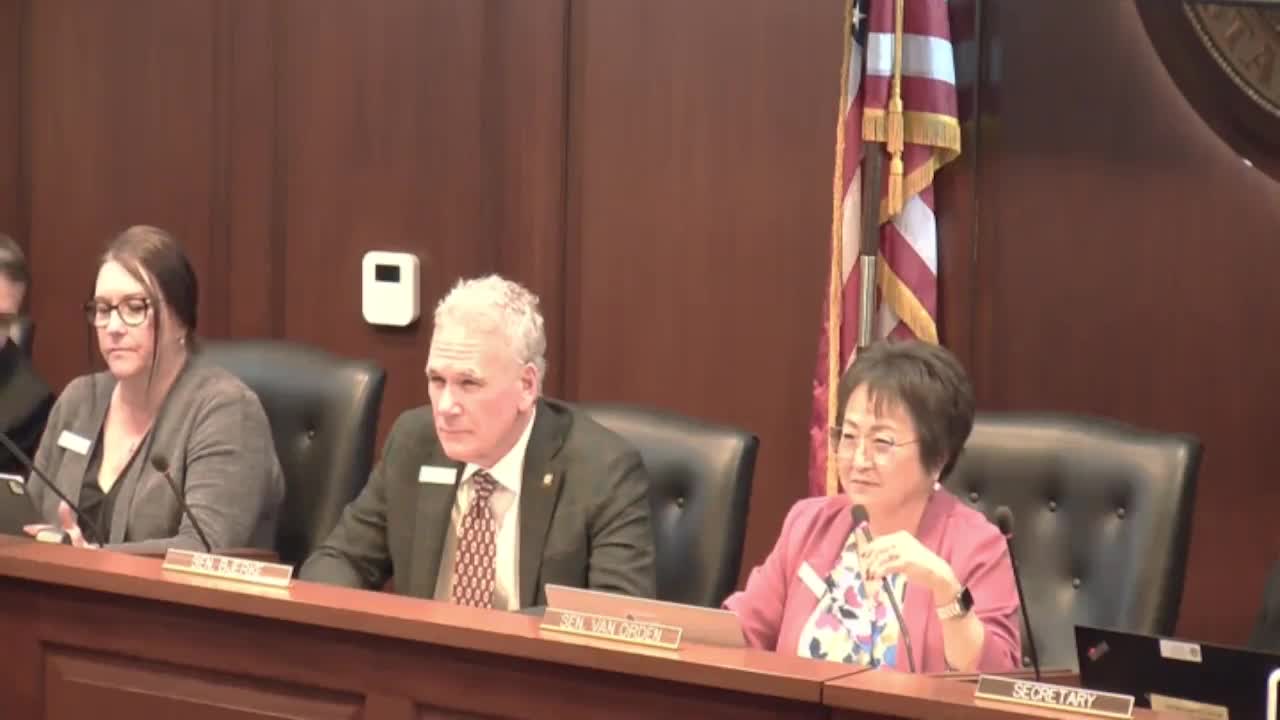
BOISE — The Idaho Senate Health and Welfare Committee voted to send House Bill 134 to the Senate floor with a do‑pass recommendation after testimony from bill sponsors and several physicians who said supplemental breast imaging can detect cancers mammograms miss.
The bill, introduced by Representatives Brooke Green (D‑Boise) and Healy (R‑District 15), would require Idaho health insurance plans other than Medicaid and self‑insured plans regulated under federal law to cover supplemental breast cancer screening — specifically MRI, contrast enhanced mammography or whole‑breast ultrasound — for patients clinically identified as high risk due to factors such as BRCA1/2 gene mutations, prior chest radiation or extremely dense breast tissue.
Supporters told the committee the change is intended to align benefits with current medical practice for high‑risk patients and to ensure payment parity with routine mammography. “This legislation … ensures imaging is used only for patients who clinically require it,” Representative Brooke Green said. She added the bill is targeted to those who meet clinical criteria and is not intended to expand screening to the general population.
Three physicians testified in support. Dr. Barbara White, a fellowship‑trained breast radiologist in Meridian, told the committee that mammography alone detects about 70–80% of breast cancers but that adjunct screening can increase detection to roughly 95% and is particularly important for women with dense breast tissue. “Without access to these additional screening options, women are at risk of having their cancers go undetected until it's more advanced and harder to treat,” White said.
Dr. Aime Smith, a breast cancer surgeon who runs a high‑risk clinic, emphasized the importance of stratifying patients by risk and said roughly 6–10% of breast cancer patients have hereditary risk factors. “I would not want to do this supplemental imaging for somebody at average risk,” Smith said, adding that focused criteria reduce the risk of over‑testing and false positives.
Dr. Rhiannon Menon, a breast surgeon who said she treats patients statewide, said cost was a significant barrier: diagnostic mammograms can cost about $800 out of pocket and MRIs about $3,000 out of pocket for the patients she sees. She said many high‑risk patients forgo recommended imaging because of cost. “In my clinic, just about every single day, I see a woman … and they say, 'it's not something that I can afford,'” Menon said.
Representative Healy and Green also addressed the bill’s fiscal implications. Representative Healy said a fiscal note to the state plan had been estimated at roughly $36,000 to $72,000, citing analysis the sponsors said had been run by the state regents; earlier testimony referenced a broader fiscal range for the state between $300,000 and $600,000 but sponsors said the state plan’s share would be lower.
Committee members questioned why insurers were not already covering these services if early detection saves costs. Green and the physicians said insurers sometimes apply the services to deductibles as diagnostic care rather than as preventive coverage, which can leave patients with substantial out‑of‑pocket cost. “We’re asking that this become a screening,” Representative Healy said, describing the goal of moving eligible patients’ imaging to the preventive tier so it is not subject to a large deductible.
After public testimony and sponsor remarks, Senator Lenny moved and Senator Keizer seconded that House Bill 134 be sent to the Senate floor with a do‑pass recommendation. The committee voice‑voted in favor; no opposition was recorded on the transcript.
The bill’s proponents framed it as a narrowly targeted, bipartisan measure intended to improve early detection for clinically high‑risk patients and reduce long‑term treatment costs. Opponents or insurers did not present opposing testimony on the record during this hearing; sponsors said payers they met with were neutral and that some concessions had been made in drafting.
The committee adjourned and the bill will proceed to the next Senate stage for consideration by the full body.