Get Full Government Meeting Transcripts, Videos, & Alerts Forever!
Get email alerts on the Hemp Regulation topic
No spam. Unsubscribe anytime.
Senate Judiciary amends hemp bill to ban THCA, THCP; advances measure to finance after heated testimony
Summary
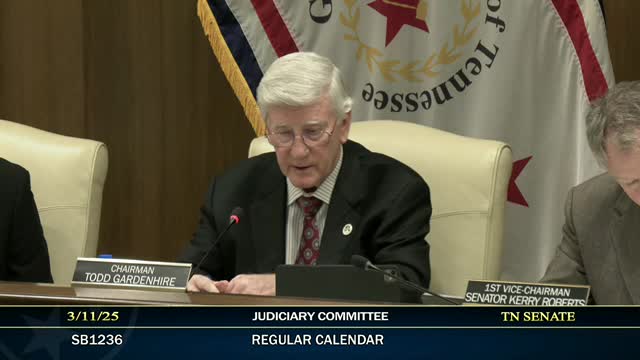
After extended testimony from hemp labs and retailers, the Senate Judiciary Committee amended and voted to send a bill to finance that would remove THCA and THCP from authorized hemp-derived cannabinoids and create a class A misdemeanor for knowingly manufacturing or selling products containing them.
Senate Judiciary members voted to send an amended bill to the Finance Committee after debating a proposal that would remove certain hemp-derived cannabinoids from Tennessee's authorized list and criminalize sales of products containing them.
Sponsor Senator Mike Hale introduced Senate Bill 12-36 as amended, saying the measure focuses on public safety and aligns Tennessee law with federal drug definitions. Patrick Powell, policy director at the Tennessee Bureau of Investigation, told the committee the bill’s definitions largely mirror federal regulations in the Code of Federal Regulations and said the Bureau had worked with sponsors to align criminal definitions with the state's hemp program overseen by the Department of Agriculture.
The bill drew detailed opposition from industry witnesses who warned of major economic and agricultural impacts. John Kearns, cofounder of New Bloom Labs, told the committee that banning THCA would “drastically diverge” from the 2018 Farm Bill’s federal hemp definition and could make harvest of legally grown hemp crops impossible because THCA occurs naturally in the plant. Joshua Lardy, chief compliance officer for Apotheca, a multi‑state hemp retailer, said THCA products accounted for about 80% of his company’s February sales and warned removing THCA would push consumers to neighboring states or the gray market. Devin Aracena, founder of Canvast, echoed those concerns and urged a more targeted approach that distinguishes naturally occurring compounds from those created by chemical conversion.
Committee members pressed both sides on enforcement and fiscal effects. Senator Roberts cited a corrected fiscal note and asked whether the bill would eliminate roughly $68 million in annual sales tied to THCA products; witnesses said that figure referred specifically to THCA sales and that, including other cannabinoids, the total impact cited in the fiscal work was approximately $75 million. Department of Agriculture input was described in committee as a deferral while the Department and TBI discussed language to preserve the state’s hemp program.
The committee adopted a technical amendment on the bill and then voted. The roll call showed six aye votes and three no votes; the committee then referred the bill to the Finance Committee for further consideration.
The measure now goes to Finance, where members can review fiscal estimates and potential language changes requested by agricultural regulators and law enforcement.