Get Full Government Meeting Transcripts, Videos, & Alerts Forever!
Get email alerts on the Immigration Public Benefits topic
No spam. Unsubscribe anytime.
Committee advances bill limiting some public benefits to people with lawful presence, sparking debate on child and public-health impacts
Summary
House Bill 135, which would require proof of lawful presence for many public benefits while preserving emergency care and certain narrow exceptions, was sent to the House floor with a do-pass recommendation after extended testimony and a recorded roll-call vote of 10-5.
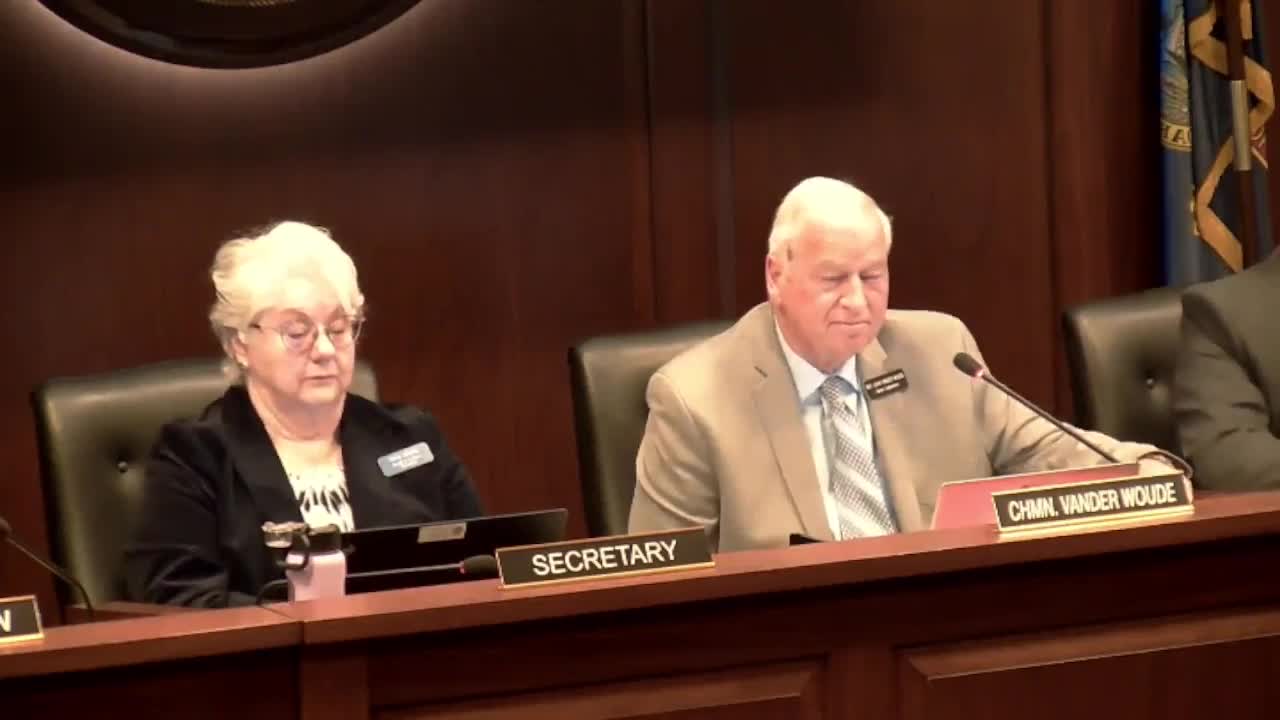
The House Health and Welfare Committee voted 10-5 to send House Bill 135 to the House floor with a do-pass recommendation after more than an hour of testimony and questions from committee members.
Representative Jordan Redmond, District 3, presented HB 135 as a measure to remove nonemergency health-care benefits and some social benefits from people who are in the state without lawful presence. Redmond said emergency care and actions “necessary to protect life and public safety” would remain available, and that the bill is intended to conserve limited taxpayer resources and act as a deterrent to unlawful migration.
Multiple witnesses and committee members debated the bill’s scope and unintended consequences. Clint Hostetler, a co-sponsor, and Josh Tanner, a co-sponsor and state representative, offered fiscal and policy arguments for the bill; Tanner told the committee the bill responds in part to temporary rule changes and to perceived federal rule expansions. Nicholas Kleinworth of the Idaho Freedom Foundation urged support, saying “citizenship means something” and citing an Idaho Department of Health and Welfare figure that, he said, placed costs for health care for noncitizens at roughly $45.6 million since 2020 (Kleinworth presented this figure as the Department’s data in testimony).
Opposition testimony focused on hunger, children’s access to nutrition, and implementation challenges. Randy Ford, president and CEO of the Idaho Food Bank, said the bill would increase food insecurity and administrative burdens for charitable partners and noted that some government nutrition programs administered by partner organizations could be affected. Ford said charitable food cannot replace government-funded nutrition programs.
Committee members asked detailed questions about who would be eligible for exceptions (for example, prenatal and postnatal care and treatment for contagious diseases), recordkeeping and billing implications for hospitals, and whether children who are U.S. citizens would be able to receive benefits when their parents lack lawful presence. Representative Rubell moved a substitute motion to keep the bill in committee; that motion failed on a recorded voice/roll call. Representative Levitt moved to send the bill to the floor with a do-pass recommendation; the committee approved that motion on a roll-call vote (10 yes, 5 no).
The transcript records extensive back-and-forth on policy, fiscal estimates, and moral and practical considerations; members and witnesses differed about whether the bill would reduce costs or shift costs to hospitals, insurers and charitable organizations. The committee recorded the roll-call vote and advanced HB 135 to the floor with a do-pass recommendation.