Get Full Government Meeting Transcripts, Videos, & Alerts Forever!
Get email alerts on the Budget And Capital Improvements topic
No spam. Unsubscribe anytime.
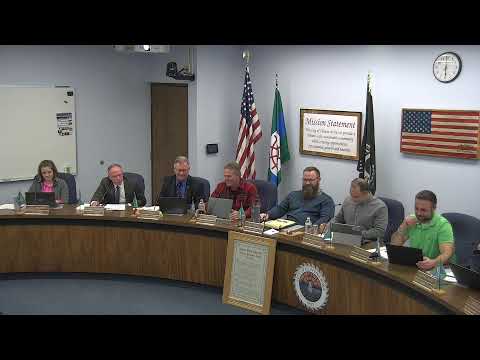
Clinton City Council adopts FY2026 capital improvement plan amid debate over borrowing and property tax impacts
Summary
The Clinton City Council adopted a $15.27 million-plus capital improvement plan for fiscal year 2026 after extended debate about borrowing levels, potential cuts of roughly $1 million, and the prospect of next year's levy increasing by about $2 per $1,000 of assessed value if valuations hold steady.
The Clinton City Council on March 11 adopted the city's Fiscal Year 2026 capital improvement plan (CIP) after lengthy discussion about borrowing levels, pavement management priorities and the potential impact on the property tax levy.
The resolution to adopt the CIP was moved by Council member Detterman and adopted by roll call. Council members discussed cutting roughly $950,000 to $1 million from the draft plan and suggested options including reducing pavement management funding, delaying traffic-signal projects and cutting some equipment purchases.
Council members and staff said the choices now will affect the city's debt-service levy next year. Council member Sealy said the city's prior buy-down of debt had kept the levy lower for the current year; without similar measures next year the levy could rise by roughly $2 per $1,000 of assessed value if valuations do not change. Council member Sealy said the current levy rate is near a 16-year low at $15.27 and urged colleagues to be prepared to explain increases to residents.
Staff and councilors debated which capital items are "essential" and which can be deferred. One speaker urged keeping pavement-management funding at $2.4 million this year to maintain the city's stated pavement condition index (PCI) target (60 to 65), warning that cutting that line would lead to more potholes and higher future repair costs. Another speaker proposed reducing pavement work to $2 million, cutting defibrillator purchases, and postponing some traffic signal projects to save about $950,000.
Council members also discussed grant-dependent projects. Staff reported the RAISE grant for the manufacturing-drive and Bluff projects is currently paused at the federal level, which could leave the city roughly $7.5 million short of a $15 million commitment in a worst-case scenario if grant reimbursements remain on hold. Staff said the overall corridor project exceeds $40 million and that the city has already invested in design work that could be reimbursed when federal obligations resume.
Several councilors urged that the CIP team be given a firm spending limit before the detailed project prioritization begins: suggestions ranged from taking 10% off the top to setting a fixed dollar cap and letting department leads re-prioritize projects within that target. Council members asked staff to prepare levy projections and to return with a pre-budget discussion so councilors could set a firm ceiling before staff fleshed out the final project list.
The council reached a final vote to adopt the resolution as presented; the item was adopted by roll call.