Get Full Government Meeting Transcripts, Videos, & Alerts Forever!
Get email alerts on the Ethics Lobbying topic
No spam. Unsubscribe anytime.
Draft lobbying, disclosure and post-service rules draw detailed questions from Multnomah County commissioners
Summary
Commissioners and county counsel discussed a draft ordinance to require registration and quarterly reporting for paid lobbying of county public officials, and to create a one-year post-service restriction on certain contracts or employment; key issues included thresholds, exemptions, calendars and implementation costs.
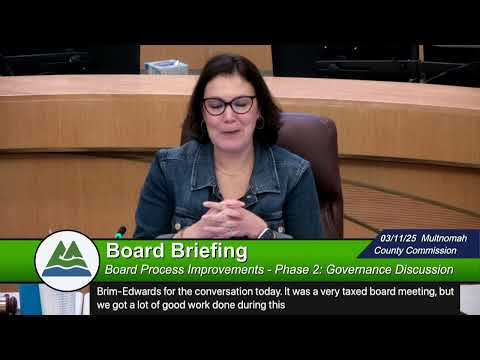
Commissioners reviewed a draft ordinance on March 11 that would require persons paid to lobby Multnomah County public officials to register and file periodic reports, and would establish limits on certain post-service employment and contracting by elected officials.
County attorney staff presented the draft as a "discussion draft," noting it pulls elements from ordinances used by Portland, Metro and other jurisdictions and is intended to increase transparency while remaining implementable. Jenny Madcore, county attorney staff, said the proposal defines "lobbying" as attempts to influence county legislative action or to obtain the goodwill of a county board member, and defines a "lobbyist" as a person or entity paid for that purpose.
Key points in the draft that drew commissioner attention included:
- A proposed activity threshold for registration tied to time spent in lobbying (a 5-hour-per-quarter threshold taken from Metro's code was presented as an example); commissioners asked whether that threshold should be higher or lower and requested input from department directors who commonly meet with outside parties.
- Reporting cadence and content. Staff proposed quarterly reports; commissioners noted the state and city regimes vary and asked whether an annual summary or a different schedule would be more useful.
- Expense reporting tied to certain expenditures, such as food, refreshments and entertainment, with discussion of a $50 threshold used in state ethics rules; commissioners asked how event tickets and widely attended fundraisers would be treated.
- Exemptions. The draft exempted acts by a public official in an official capacity and routine media contacts. Commissioners asked for explicit exemptions for responses to formal requests for proposals or qualifications and for factual information provided to a public official at the official's request.
- Calendars and public posting. Staff proposed posting a public calendar of official activities after each quarter; commissioners raised practical questions about implementation, privacy of personal calendar entries and technology requirements.
- Post-service restrictions and contracts. The draft would bar an elected board member for one year after leaving office from accepting employment or contracting in matters the board member previously influenced. Commissioners discussed whether that restriction should apply only to commissioners or also to staff, and asked whether the county already has adequate ethics laws to address revolving-door concerns.
Madcore and other staff suggested a phased implementation with outreach, education and graduated enforcement (education letter before fines), and noted penalties would be administrative and could include fines. Commissioners asked for a cost estimate and for a neutral implementing authority to manage registrations and compliance.
The briefing closed with a request for additional work: staff will collect input from department directors and potential regulated parties, refine thresholds and exemptions, estimate implementation costs and return with a revised draft for broader public discussion.
Ending: Commissioners and counsel agreed to continue refining the draft ordinance and to seek implementation options, outreach plans and cost estimates before returning to the board.