Get Full Government Meeting Transcripts, Videos, & Alerts Forever!
Get email alerts on the Assisted Reproductive Technology topic
No spam. Unsubscribe anytime.
Subcommittee debates IVF licensure, cryogenic-storage oversight; sponsor to revise amendment
Summary
A representative presented an amendment to set minimum licensing standards for assisted reproductive technology and embryo storage based on CDC guidance; medical witnesses urged caution on proposed limits and genetic-testing prohibitions. Sponsors said they will revise language and return the measure to committee.
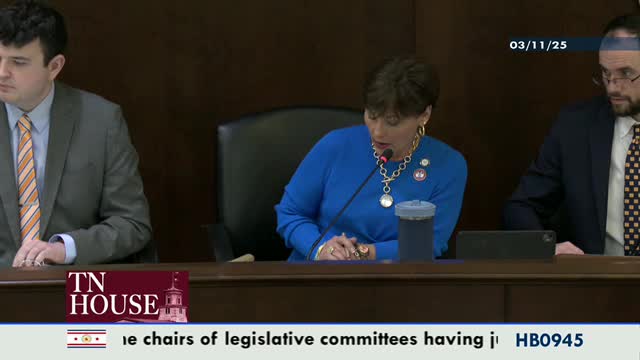
Representative Williams presented an amendment intended to create licensure standards for assisted reproductive technologies (ART), including in vitro fertilization (IVF) practice and cryogenic embryo storage, and to outline model agreements for patients and clinics. The amendment was offered with drafting code 004839 and was placed on the bill.
Williams said the proposal would set a licensure process analogous to physician licensing and would base minimum standards on CDC guidance. The sponsor said the goal is to preserve access to IVF while ensuring laboratory and storage standards and preventing situations that have disrupted services in other states.
Reproductive endocrinologist Dr. George Hill, identified in committee as representing the Tennessee Medical Association and founder of Nashville Fertility Center, testified that clinics and embryology labs already operate under existing oversight. He said physicians are board-certified in obstetrics and gynecology and sub-specialty reproductive endocrinology and that embryology labs are accredited by the College of American Pathologists and report outcome data to the CDC under the Fertility Clinic Success Rate and Certification Act of 1992.
Dr. Hill warned some proposed elements of the model agreement would be detrimental if adopted as written. He specifically said a blanket prohibition on genetic testing would prevent patients with known genetic mutations from avoiding serious disease and would hinder single-embryo transfer by removing the ability to identify chromosomally normal embryos. He and committee members discussed how freezing and thawing technologies, embryo grading and genetic testing affect outcomes.
Representative Williams said he intends to work with physicians and stakeholders and bring a revised amendment back to committee that reflects input. The committee added the amendment to the bill for consideration and did not record a final vote on the underlying licensure measure during the session.
Committee members requested clearer language on certification versus existing board qualification, potential duplication with federal reporting, and how abandoned or long-stored embryos would be handled; the sponsor and witnesses said some topics require further consultation and technical drafting.