Get Full Government Meeting Transcripts, Videos, & Alerts Forever!
Get email alerts on the Cip Hvac Staffing topic
No spam. Unsubscribe anytime.
Wake County Schools presents $2.97 billion, seven-year CIP; board debates HVAC systems, staffing and technology priorities
Summary
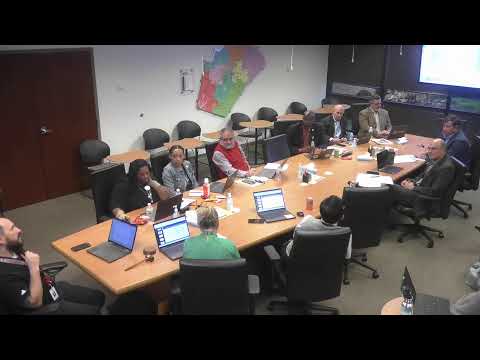
Wake County Schools staff presented an update to the seven-year capital improvement program that totals about $2.967 billion in bond funding and outlined shifts in new-school sites and funding; the board then focused on HVAC system choices, preventive maintenance and trade staffing shortages.
Wake County Schools staff presented an update to the seven-year capital improvement program (CIP) and an executive summary of new- and existing-school funding, then the school board spent substantial time debating HVAC systems, preventive maintenance and staffing to support district facilities.
Mark Cooney, program controls director with SB&C, said the CIP update covers fiscal 2026–2032 and includes new-school construction, existing-school renovation and program requirements. The presentation showed a seven-year bond-program total of about $2.967 billion and highlighted changes including site moves and additional funding needs for several new schools.
Cooney told the board the proposed funding shift includes moving funding for a large high school project (Mooresville High School) to the Davis Drive site and adding parking-deck and stadium funding to make the site a full-size high school; the program estimate for that project is roughly $176.4 million. Other changes cited included Marshburn Road Elementary (formerly an E-57 placeholder) and a new designation for Pool Road (E-28) with possible community partnerships.
Board members asked for detail on program contingencies, land-acquisition reallocation and how the plan accounts for market volatility and possible tariff-driven construction-cost increases. Cooney said the program contingency can cover only a portion of large price swings and that “we're going to have to sit come back to you and say, okay…we've got some real decisions to make as far as priority on schools” if escalation rises substantially.
The meeting then moved into a lengthy facilities discussion. Board members and staff debated HVAC technology choices — centralized boiler/chiller plants versus decentralized systems such as heat pumps — and how choice of equipment interacts with the district’s ability to maintain systems. A staff member said commissioning is standard for new schools and that the district has commissioning staff and external consultants to test HVAC systems before occupancy.
A stark staffing detail drew attention: a staff member reported the district currently has five plumbers to service its building portfolio of roughly 200 schools. “When there's a plumbing problem, in general, everything's an emergency,” the staff member said, explaining that low field staffing constrains preventive maintenance and quick repairs.
Board members asked whether the shortfall is a funding problem (not enough authorized positions) or a labor-market problem (inability to attract technicians). Staff responded both are factors: vacancies exist and regional competition and pay disparities reduce the candidate pool. The board discussed market pay studies the district is pursuing and said those results should inform any requests for additional positions or pay adjustments.
Several members urged the district to return with a focused analysis in about three months: an inventory of recurring failures, staffing gaps by trade, warranty coverage on recent new-school equipment, preventive maintenance practices and options for reallocating internal resources to shore up daily maintenance. One board member asked staff to quantify what preventive maintenance tasks could be performed by school-level custodial staff with modest training to reduce emergency loads on specialized trades.
Discussion broadened into capital priorities. A board member suggested the district examine its ongoing technology spending — currently shown in the CIP program requirements as roughly $27–30 million per year — and explore whether device counts, device-to-student ratios and instructional support staffing could be rebalanced to free capital dollars for life-cycle and security projects. Staff warned such choices require careful academic and operational analysis; district leaders said they would bring academic staff and budget managers into future discussions.
No formal votes on CIP changes were recorded in the meeting. The board asked staff to provide more detailed back-up materials on the proposed funding moves, a clearer picture of where bond and cash funding are being applied, and the market-pay study results as they become available.
The board also asked staff to return with more detailed project schedules and to identify near-term life-cycle priorities that could be advanced if funding is reallocated. Presenters and board members agreed that preventive maintenance staffing and clearer warranty management are central to reducing recurring system failures across the district.