Get Full Government Meeting Transcripts, Videos, & Alerts Forever!
Get email alerts on the Healthcare Workforce And Clinic Regulation topic
No spam. Unsubscribe anytime.
Public Health Committee approves substitute to Senate Bill 162 to regulate standalone ketamine clinics and modernize credentialing
Summary
The committee voted to advance a substitute to Senate Bill 162 that instructs the composite medical board to regulate standalone clinics offering off‑label ketamine and similar psychedelic treatments and directs modernization of provider credentialing/ licensing systems to speed hospital credentialing across facilities.
The Public Health Committee voted to approve a substitute to Senate Bill 162, advancing provisions that (1) give the state medical board authority to regulate standalone clinics providing off‑label ketamine and other psychedelic treatments and (2) direct the composite medical board to modernize credentialing and licensing processes for physicians, physician assistants and advanced practice nurses.
Supporters said the measure addresses two separate but related concerns: patient safety at emerging outpatient ketamine/psychedelic clinics and workforce shortages caused by slow hospital credentialing. Sen. Sandra Hufstedler, sponsor of the Senate portion of the measure, told the committee the bill “includes the bill that we passed the other day for the board of medicine to regulate these clinics that are popping up all over our state” and said the aim is to avoid problems similar to earlier pain‑clinic proliferation.
Hufstedler described a parallel effort to modernize credentialing. She said the composite medical board is customizing software already in use in other states and that no new procurement is required. “If you’re credentialed in one, if we’ve got the same criminal background check, you know, we’ve got the same paperwork ... you can be credentialed everywhere,” she told the committee. She said Georgia Hospital Association CEOs who worked with the effort are supportive and that hospitals will retain the right to add facility‑specific requirements through portal fields in the software.
Dr. Al, who addressed safety concerns raised about off‑label ketamine infusions, summarized the clinical rationale behind that portion of the bill: “Ketamine ... is a very powerful medication ... This is looking to bring up those safety standards.” He stressed that the bill does not interfere with on‑label use of ketamine in hospitals or with formal clinical trials.
During committee discussion, Representative Oliver asked whether vendor selection for the composite medical board’s software is being coordinated with vendor modernization at the secretary of state’s office. Hufstedler said the projects are not coordinated: the committee took a path intended to avoid duplicative licensing work by the secretary of state and described broader modernization efforts elsewhere in state government as separate but necessary.
Representative Cannon asked whether the bill limits regulation to standalone clinics. Committee members clarified the current language centers on standalone outpatient clinics; it does not change how hospitals use ketamine for on‑label procedures or formal clinical trials. Hufstedler said the composite medical board will develop rules for how a nonhospital clinic would qualify and operate under the new oversight.
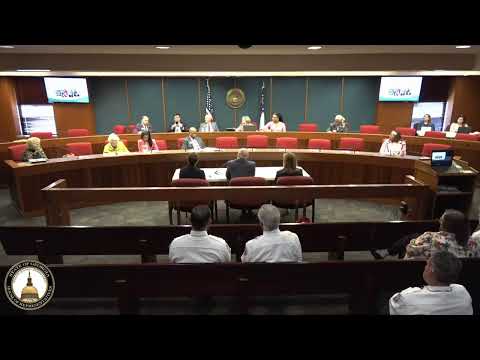
Representative Seebaugh moved that the committee give the substitute a do‑pass recommendation. A second was recorded but not named in the transcript; the committee approved the substitute by voice vote (ayes; no recorded no votes). The committee chair encouraged the sponsor to return if adjustments are needed in future sessions.
The substitute combines regulatory language for outpatient psychedelic clinics with provisions intended to shorten the time it takes hospitals to credential incoming clinicians, a change supporters said will make it easier to recruit health professionals from other states.
Votes at a glance: the committee approved a substitute to Senate Bill 162 on a voice vote; a formal roll‑call tally was not recorded in the transcript.
What the bill does not say or change: committee members and presenters emphasized the substitute does not limit on‑label hospital use of ketamine or interfere with clinical trials; hospitals retain discretion to set additional credentialing requirements.
The committee advanced the substitute to the next stage of consideration.