
Board approves sheriff's use of automated license-plate readers in Cupertino; one abstention
Get AI-powered insights, summaries, and transcripts
Sign Up Free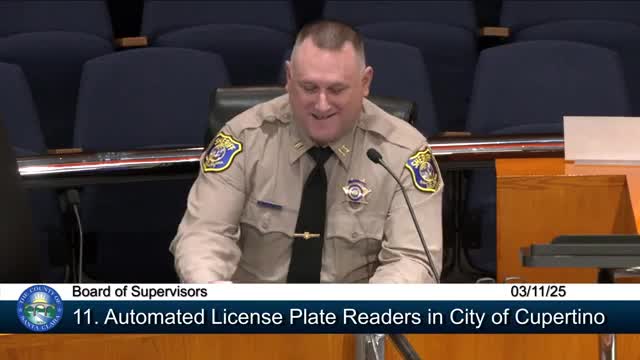
Summary
The Board of Supervisors authorized the sheriff's office to operate automated license-plate readers in the City of Cupertino under the city's request; one supervisor abstained citing prior policy violations.
The Santa Clara County Board of Supervisors on March 11 authorized use of automated license-plate readers (ALPRs) in Cupertino under the sheriff's contract for municipal services. The motion passed with four votes in favor and one abstention.
Captain Jason Brown of the sheriff's office presented the request, describing the equipment and noting the city-funded, city-requested nature of the installation. "My name is Captain Jason Brown, with the sheriff's office, here today to discuss the sheriff's office potential use of automated license plate readers within the city of Cupertino," he said.
Supporters on the dais said neighboring jurisdictions have seen operational benefits when data are shared across agencies. One supervisor said, "there's a lot of value to having the entire county have these readers and the police departments and the Sheriff's office being able to work in coordination." (Speaker attributed to a supervisor in the record.)
Supervisor Ellenberg said she has previously voted in favor with reservations but abstained on this vote because the county's annual surveillance use report documented past violations of the policy governing ALPR use; the violations were remediated but raised continued concern about misuse. "I am going to abstain today," she said on the record.
The vote recorded: Supervisor Abe Koga: Aye; Supervisor Young: Yes; Supervisor Ellenberg: Abstain; Vice President Arenas: Yes; President Lee: Aye. The motion carried 4-0 with one abstention.
Why it matters: ALPRs collect vehicle plate data that can assist investigations and interagency information sharing, but they raise privacy, data governance and policy-compliance concerns. The abstention highlights ongoing board-level scrutiny over surveillance policy adherence.