Get Full Government Meeting Transcripts, Videos, & Alerts Forever!
Get email alerts on the Labor topic
No spam. Unsubscribe anytime.
IHSS caregivers urge Yolo County supervisors to back higher pay and faster contract talks
Summary
Multiple IHSS caregivers and advocates urged the Yolo County Board of Supervisors on March 11 to prioritize a new union contract and higher wages, saying low pay forces many to hold multiple jobs, creates housing instability and threatens care availability for elderly and disabled residents.
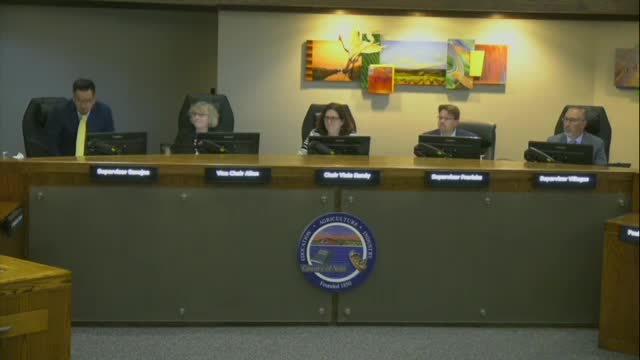
Several In‑Home Supportive Services caregivers and community advocates used the public comment period at the March 11 Yolo County Board of Supervisors meeting to press the board to support higher wages and a timely contract settlement.
Steven Payan, a caregiver and member of SEIU 2015’s bargaining team, told supervisors that many IHSS workers in Yolo County "are barely scraping by" and that half of caregivers spend more than half of their income on rent. "We're going to keep coming and coming and coming until we get what we deserve," Payan said.
Aurelia Walker, an IHSS caregiver and founder of the nonprofit Mike's Playground, said caregivers perform essential work that keeps older adults and people with disabilities safe and out of institutional care. She cited membership survey figures during her remarks: "Three quarters—76% of IHSS caregivers—work multiple jobs to make ends meet. Nearly half, 48%, experience constant food insecurity," Walker said, adding that more than half (53%) struggle to pay rent or mortgage and that some caregivers sleep in cars to make ends meet.
Rosa Espinosa, a former registry worker and current family provider, said she was not paid by the county for months of November and December work after her client’s IHSS authorization was changed. She described the job as "very difficult with a lot of responsibility and poorly paid" and urged the board to support contract negotiations.
Special‑needs parent Luis Salcedo described leaving employment to provide round‑the‑clock care for a disabled child and said the low wages available to caregivers made it impossible to hire outside help. "We needed to have two jobs to make ends meet," he said, and asked the board to support negotiation outcomes that would improve caregiver pay.
Former Woodland mayor Xochitl Rodriguez spoke in support of caregivers and highlighted the county‑level context: she identified the current IHSS wage in Yolo County as $17.25 an hour and contrasted that with a county living‑wage estimate she cited during the meeting. She urged the board to take "immediate, decisive action to ensure that nobody is left without the lifesaving care they need."
Board members thanked speakers and did not take a direct action on wages during the meeting; supervisors and staff later discussed the county budget outlook and the place of labor negotiations in long‑term fiscal planning. Several supervisors asked staff during the budget discussion about how labor negotiations would be reflected in the FY25‑26 projections and whether those amounts were included in base assumptions. Budget staff said negotiations are reviewed with the CAO’s office and included in the long‑term fiscal outlook when there is sufficient information to quantify expected costs.
Public comment on this topic was entered into the record and in at least one case delivered in writing by an outside organization that the clerk noted would be included as correspondence.
Quotes from the public record
- "We provide a crucial service and this should be a high priority in our county's budget," — Steven Payan, SEIU 2015 bargaining team member. - "Our community needs IHSS care workers, and IHSS workers need your support," — Aurelia Walker, IHSS caregiver and founder, Mike's Playground. - "We hope that you will support us in our negotiation because every worker deserves respect and fair wages," — Rosa Espinosa, IHSS provider.
The board did not set a date to act on IHSS wage levels or to formally intervene in the bargaining process during the March 11 meeting.