Get Full Government Meeting Transcripts, Videos, & Alerts Forever!
Get email alerts on the Permitting Multibenefit topic
No spam. Unsubscribe anytime.
Local managers urge permitting reform, multi‑benefit projects and more stormwater capture to reduce flood risk
Summary
Regional managers and stormwater advocates told the Assembly that permitting processes and regulatory resourcing slow flood projects, and that multi‑benefit and stormwater capture projects (including in disadvantaged neighborhoods) are cost‑effective tools to reduce flood risk and provide other community benefits.
Regional flood managers, stormwater advocates and city officials urged legislative action to streamline permitting, resource regulators for partnership, and expand multi‑benefit projects that combine flood protection with habitat, groundwater recharge and community amenities.
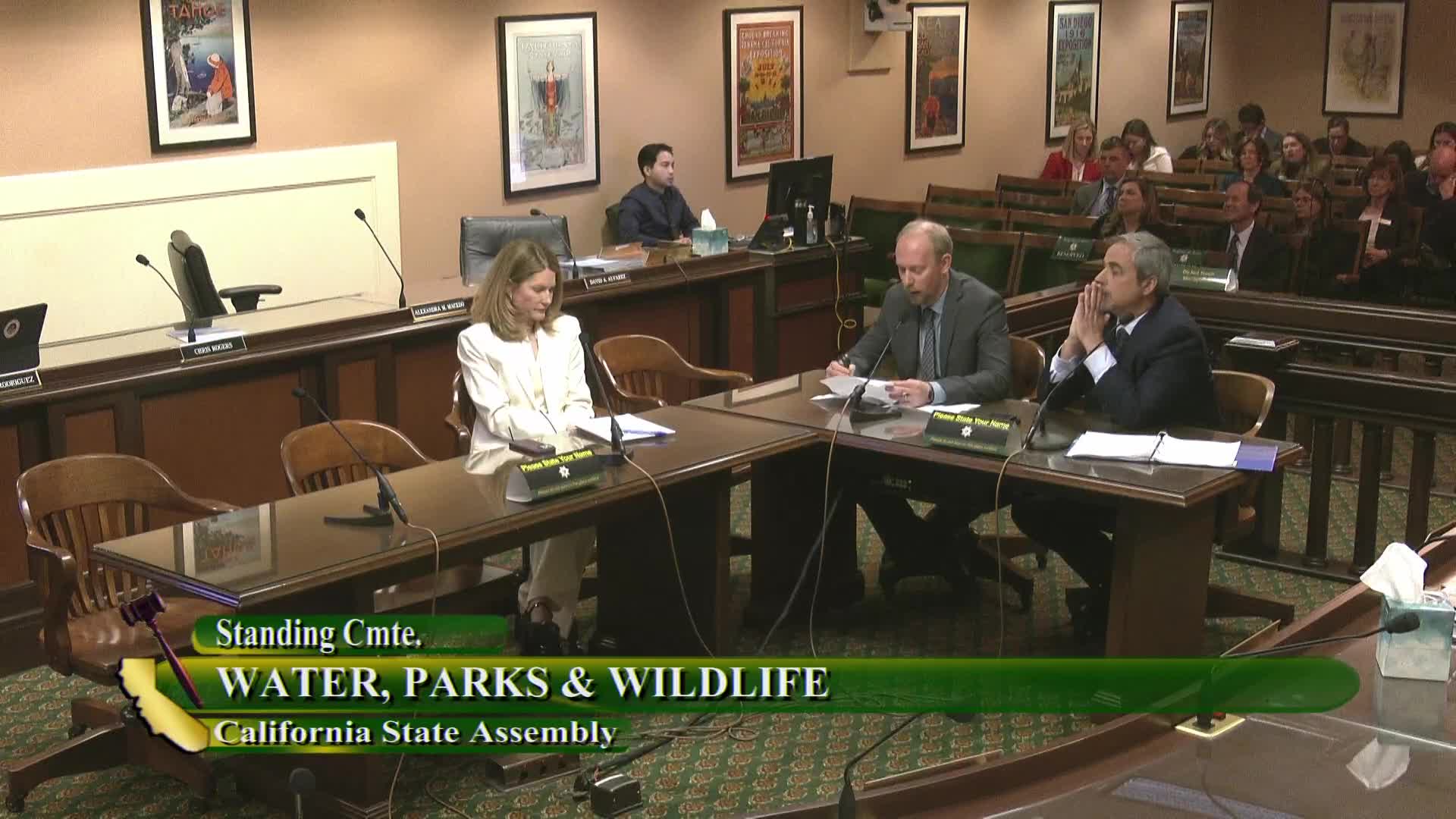
Mark Strudley, general manager of the Pajaro Regional Flood Management Agency, described the Pajaro Valley project as an example where geographic constraints force a combined approach. He said AB 876 (recently enacted for the project) used the Corps’ federal NEPA analysis to streamline state approvals, and he urged more statutory and funding support for regulator‑applicant collaboration rather than one‑way oversight.
Karen Cowan, executive director of the California Stormwater Quality Association, urged policy makers to treat ‘‘stormwater’’ as a resource. She said urban stormwater capture delivers a strong socioeconomic return, particularly if projects are located in neighborhoods lacking green space, and she urged legislative action to reduce barriers to capture and source‑control measures (for example, reducing plastic pollution at source instead of relying on downstream cleanup).
Jason Huley of the Riverside County Flood Control and Water Conservation District emphasized the changing hazard profile in Southern California — stronger monsoon and tropical moisture events, burn scars and urbanization — and recommended specific changes: fold mud‑and‑debris planning into fire emergency declarations; create a more tailored permitting pathway for climate resiliency projects; and ensure disadvantaged community grants can fund pragmatic upgrades (for some low‑income neighborhoods that need paving and drainage rather than parks).
Ken Hyatt, City Manager of Woodland, described local political obstacles: a ballot initiative had blocked a Corps‑authorized project and left the city seeking a more broadly supported alternative that will also reflect climate change in modeling. Panelists urged lawmakers to support regional planning, fund regulators so they can partner with applicants, and maintain flexible funding that allows practical, locally appropriate solutions.