Get Full Government Meeting Transcripts, Videos, & Alerts Forever!
Get email alerts on the Foster Care Legal Representation topic
No spam. Unsubscribe anytime.
Assembly panel backs bill to ensure attorneys represent expressed wishes of non‑minor foster dependents
Summary
AB 373 would require counsel for non‑minor dependents (ages 18–21) in California’s dependency system to advocate for the client’s expressed wishes rather than substituting the attorney’s judgment; the committee referred the bill to Human Services.
AB 373, which would clarify that attorneys for non‑minor dependents must represent their clients’ expressed wishes, cleared the Assembly Judiciary Committee and was referred to the Human Services Committee.
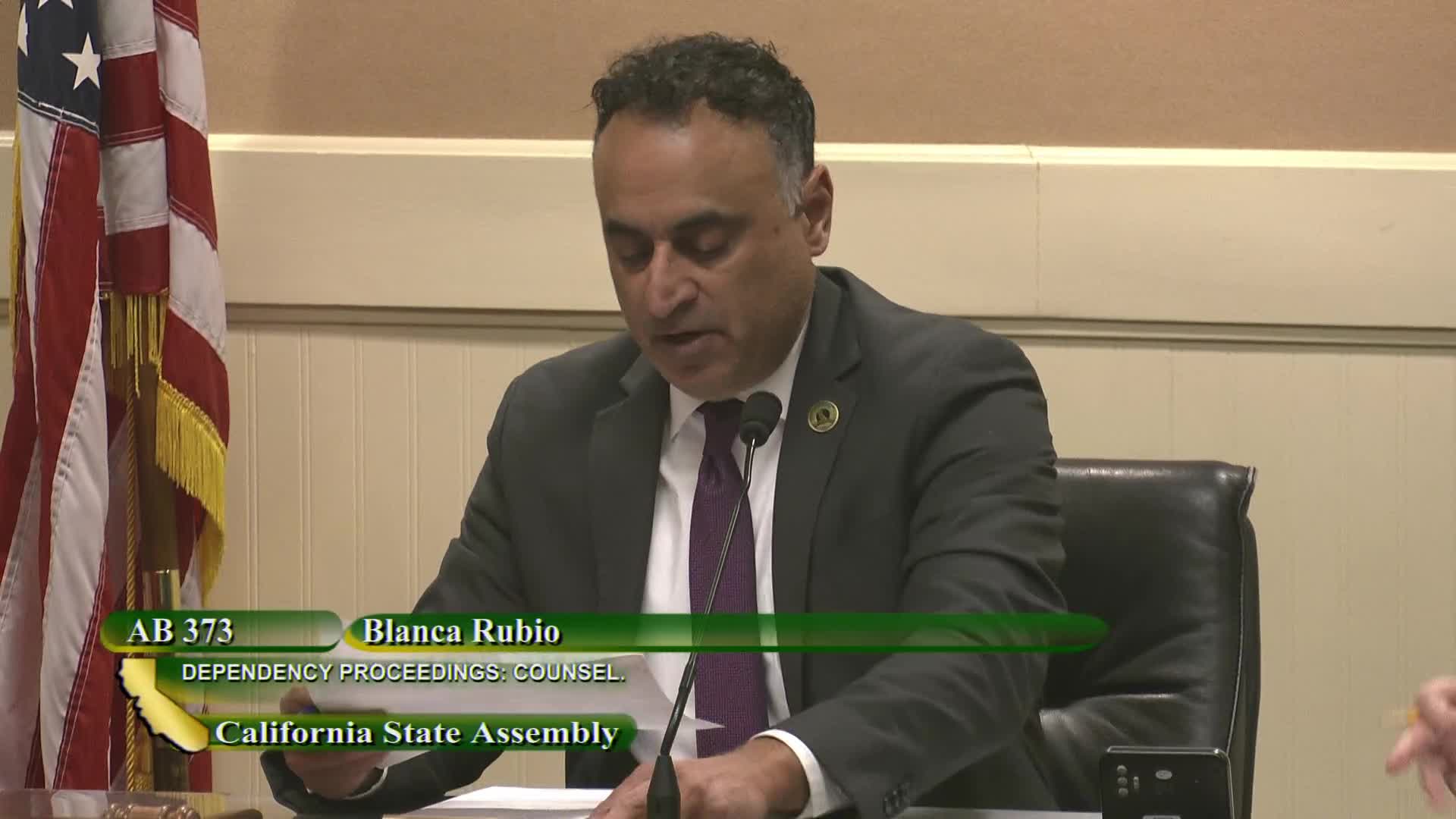
Assemblymember Rubio, the bill’s author, said the measure responds to the legal status of non‑minor dependents—young people aged 18 to 21 who remain in extended foster‑care programs—and would “give discretion to the non minor dependents by ensuring the legal rights of non minor dependents are fully respected.” Rubio told the committee that current law permits court‑appointed counsel in dependency cases to substitute their judgment for clients under certain statutory language and that AB 373 would remove that language for individuals who are legal adults.
Christopher Hernandez, introduced as speaking for California Youth Connection, said youth need attorneys who “are present, who check‑in regularly, and who actually know what the youth wants, not just what the system thinks is best.” Anne Quirk, policy attorney with the Children’s Law Center of California, said the bill is “very simple” and clarifies that extended foster‑care participants “retain all their legal decision‑making authority” under Welfare & Institutions Code section cited in the hearing (WIC 303 as discussed in testimony) and that counsel should not substitute their judgment for the client’s expressed position.
Committee members asked whether the rule applies only to court‑appointed counsel or to private counsel as well; the author and staff said the draft bill’s language refers broadly to counsel and staff would verify that the change applies to all counsel. Members also asked how a court would reconcile conflicting positions among the youth, county counsel, and a court‑appointed attorney; witnesses said the judge remains the ultimate decision‑maker and would consider all positions presented to the court.
After discussion, the committee voted to refer AB 373 to the Human Services Committee.