Get Full Government Meeting Transcripts, Videos, & Alerts Forever!
Get email alerts on the Sexual Assault Survivor Rights topic
No spam. Unsubscribe anytime.
Assembly committee advances bill extending time for sexual‑assault survivors to sue alleged perpetrators and enabling suits against institutions that covered up
Summary
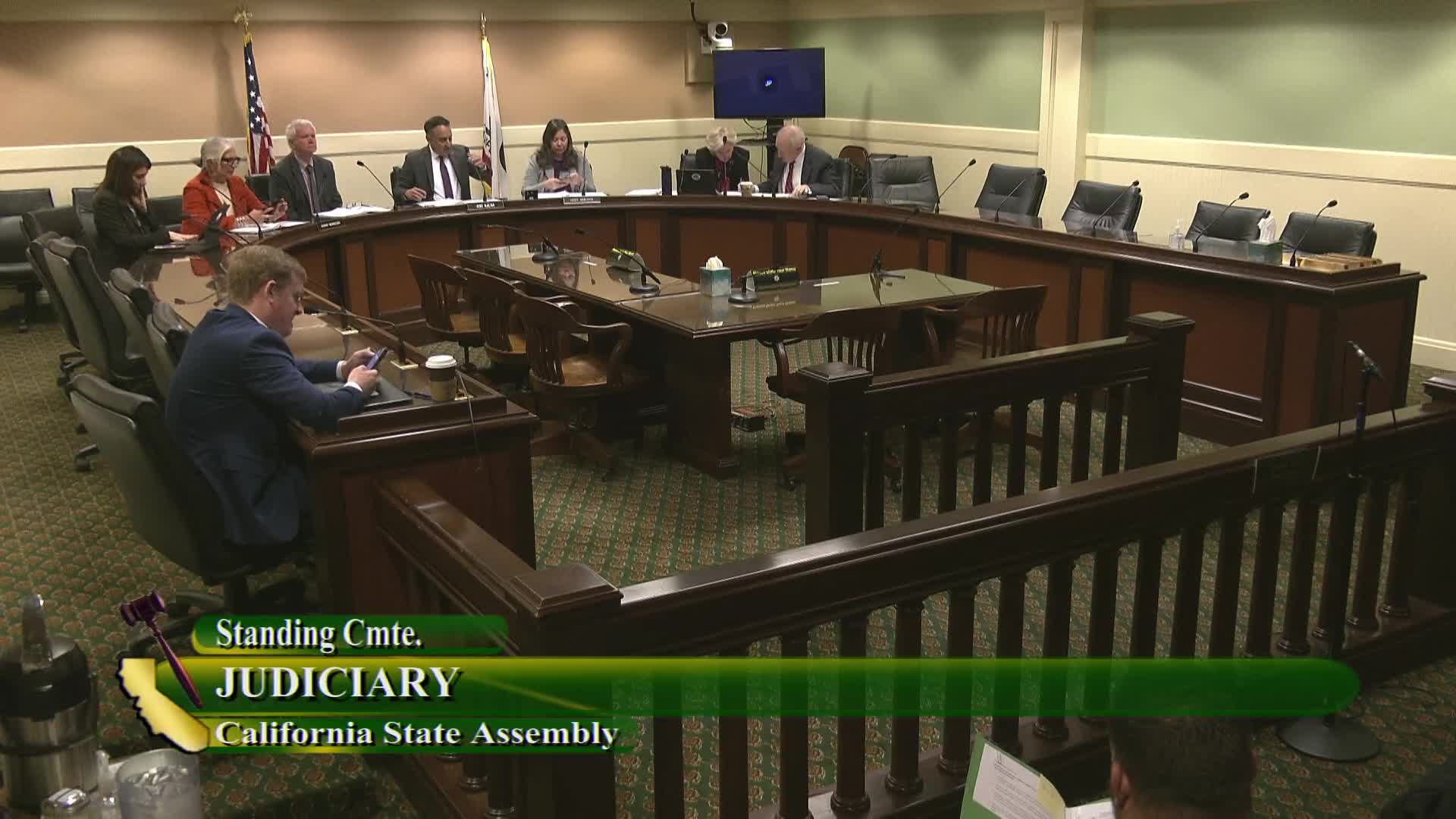
The Assembly Judiciary Committee voted to send AB 250 to the Appropriations Committee after testimony from a survivor and advocates that the bill would allow delayed civil claims when institutions concealed sexual assault.
AB 250, a bill to expand and clarify civil remedies for survivors of sexual assault, was advanced out of the Assembly Judiciary Committee on a party-line voice and roll‑call process and placed on call for final votes to Appropriations. The measure’s author framed it as a tool to hold both perpetrators and institutions that concealed assaults accountable.
The bill’s author told the committee AB 250 “will strengthen protections for survivors of [sexual] assault and ensure the ability to fully access the justice system.” The author and witnesses said that sexual assault “occurs every 68 seconds,” that assaults affect people of every gender and age, and that cover‑ups, retaliatory employment actions and nondisclosure agreements can prevent survivors from coming forward in time to seek relief.
Maya Alexander, who identified herself as a television producer and survivor, described two nonconsensual assaults she says occurred while working in the entertainment industry and said she signed a broad nondisclosure agreement that prevented earlier reporting. “It took time to process what has happened and to feel safe enough to come forward,” Alexander said, urging the committee to “vote to give women like me our day in court.”
Jessica Stender, identified as policy director and deputy legal director for Equal Rights Advocates, said the organization is a sponsor and that the bill recognizes that survivors often need significant time to come forward because of “psychological, social, and institutional barriers,” including institutional suppression of complaints. Stender said AB 250 “gives them an opportunity to achieve justice” and helps “expose patterns of abuse, prevent future harm, and create accountability within institutions.”
Committee members asked about the bill’s scope. One member raised concern that the bill, as drafted, applies to private employees and excludes public employees, noting public employees have different—sometimes internal—mechanisms for reporting misconduct. The author responded that the bill amends an existing statutory section that currently applies to private entities and that prior versions that included public entities were narrowed after cost analyses and concerns about fiscal impact on public agencies.
After public testimony and committee discussion, committee staff took a roll call and the chair announced the measure would be placed on call and advanced to Appropriations for further consideration. The committee recorded individual votes during the roll call and then later lifted the call and reported that the bill was out to Appropriations.