Get Full Government Meeting Transcripts, Videos, & Alerts Forever!
Get email alerts on the Third Party Recovery topic
No spam. Unsubscribe anytime.
Panel debates bill to let ASES recover Medicaid payments from third parties; agencies say federal law assigns role to Medicaid program
Summary
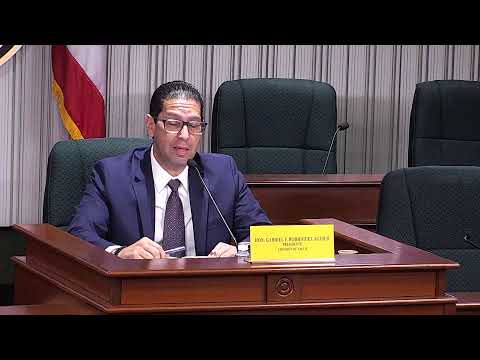
San Juan — During a March 11 hearing, the House Health Committee examined Proyecto de la Cámara No. 9, which seeks to strengthen the government’s authority to subrogate and recoup medical expenses paid under Plan Vital when a third party is responsible for the harm.
San Juan — During a March 11 hearing, the House Health Committee examined Proyecto de la Cámara No. 9, which seeks to strengthen the government’s authority to subrogate and recoup medical expenses paid under Plan Vital when a third party is responsible for the harm.
The bill would require beneficiaries to notify the plan of personal‑injury claims and would expand authority to reclaim funds paid for medical care when negligence or other liability is later assigned to a third party.
Why it matters: Witnesses agreed recovering third‑party payments can help program sustainability, but multiple agencies told the committee that federal Medicaid rules and existing program structures affect who may legally and practically carry out subrogation and recovery. The committee asked for legal opinions and operational details before moving the bill.
The Department of Health’s representative repeated the department’s position in its written testimony: "El departamento de salud y su programa de Medicaid no endosan el proyecto de la cámara nueve." The Health Department said it and the Secretary of Health are meeting with the Department of Justice to create a prosecutors’ unit and to define jurisdictional roles before endorsing a statutory shift in responsibilities.
ASES/CES witnesses argued the recovery function is typically performed by the Medicaid program (the state agency administering federal funds) and that the agency lacks the administrative systems and staffing to manage broad subrogation duties as drafted. Giovanni Maisonet told the committee: "La subrogación y recobro de fondos deben ser gestionados por el programa Medicaid y no por la CES." He added that implementing notice and recovery requirements would require significant investment in case‑management systems and staff training and could impose an administrative cost burden.
Representatives of other entities noted gaps in enforcement. The Association of Clinical Laboratories and other witnesses pointed to the Medicaid Fraud Control Unit (MAFUCU) and to a federally funded unit intended to recover funds, saying in practice those mechanisms have produced limited results. A lab representative said the unit was "formado con fondos federales, y desde que se formó ha sido totalmente, absolutamente nada," summarizing frustration with enforcement outcomes.
Committee response and assignments: Several lawmakers, including Representative Denis Márquez LeBrón and others, said they had not seen practical examples of Medicaid‑level subrogation successfully used in Puerto Rico and urged structural changes. The chair asked that the Department of Justice provide a written legal opinion and any analysis it has on jurisdictional authority for subrogation, and asked the Department of Health to supply documentation of interagency discussions and any existing recovery data. The committee gave agencies five business days to deliver requested information, and members said they will consider structural amendments—such as modeling recovery authority on the State Insurance Fund or centralizing recovery within the Medicaid agency—rather than transferring the duty to ASES/CES as drafted.
What was not decided: No vote or formal action occurred. Committee members discussed alternatives and possible redrafting to avoid duplication with the Medicaid program’s statutory responsibilities and to ensure compliance with federal law.
Ending note: Lawmakers signaled interest in pursuing recoveries that do not duplicate or conflict with federal Medicaid requirements; before further consideration the committee will review DOJ and Health Department materials and may request additional operational data on recovered amounts and the mechanics of existing recovery units.