
Emergency communications director outlines dispatch budget changes and staffing shortfall
Get AI-powered insights, summaries, and transcripts
Subscribe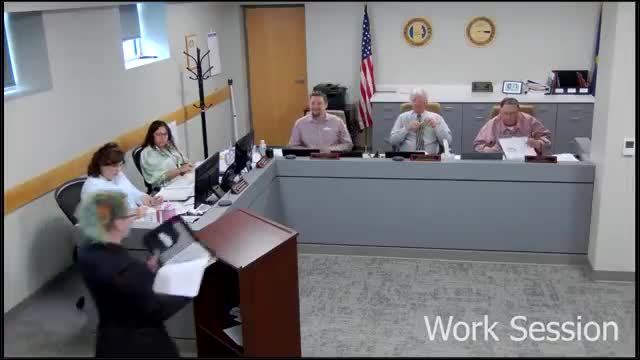
Summary
Interim emergency communications director reviewed the dispatch budget, staffing constraints, use of 9-1-1 fee fund reimbursements and priorities for training, public education and equipment maintenance.
Alyssa Botts, representing Dickinson County emergency communications, presented the dispatch (9-1-1) budget and explained adjustments proposed for 2026, staffing pressures and priorities for training and public education.
Botts said some expense lines will be moved to IT to increase transparency, that certain capital outlay items will be funded from the dedicated 9-1-1 fee fund (restricted to qualifying expenses) and that the department is working to limit "miscellaneous" expense lines in favor of clearer line-item budgeting. She said the department had moved $1,000 from capital outlay into public education to support evolving public messaging about 9-1-1 capabilities (for example, texting 9-1-1).
The presenter said the dispatch center currently operates with roughly six full stations (six call takers including supervisor, plus a trainee) and that 12-hour shifts make coverage difficult while training opportunities remain constrained by short staffing. Botts described mental-health and stress impacts of dispatch work and said some discretionary training and support items had been reduced because the center cannot currently send personnel to conferences due to low staffing.
Botts further described how the state-hosted 9-1-1 system works: the county pays per-seat fees to the state-hosted service, which offers automatic failover to neighboring centers during outages and shared mapping and call-data functionality. She said qualifying expenditures from the 9-1-1 fee fund are audited by the state and that most line items in the fee fund are reimbursable after invoice review, although a small number of items have been rejected in past audits.
Commissioners complimented the dispatch staff and asked clarifying questions about staffing, training plans and the county's interim director appointment; the administrator confirmed Alyssa Botts would serve as interim emergency communications director. No budget appropriation vote occurred during the presentation.