Get Full Government Meeting Transcripts, Videos, & Alerts Forever!
Get email alerts on the Brownfields Inventory topic
No spam. Unsubscribe anytime.
Committee advances bill to create state brownfield inventory and planning process
Summary
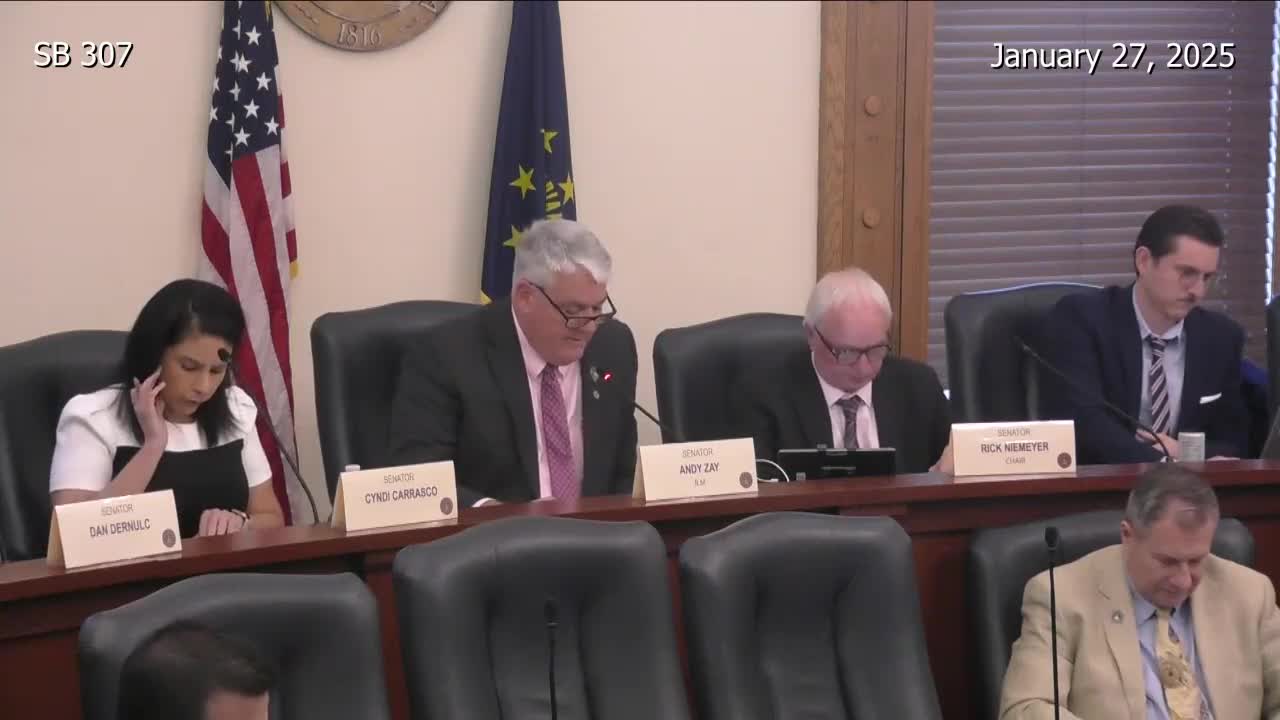
Senate Bill 307, a May provision to establish an environmental waste/brownfield inventory and develop a framework for future grants and strategic cleanup, advanced out of committee by unanimous voice/roll call. Sponsors said the inventory would help local communities prioritize sites and better position projects for federal funding.
Senate Bill 307, a measure to create an environmental waste (brownfield) inventory and lay the groundwork for a potential grant program, was advanced out of the Indiana Senate Environmental Affairs Committee by voice/roll call (recorded as 9-0).
Sponsor Senator Andy Zay told the committee the inventory is intended to give state and local officials a clearer, county-by-county picture of contaminated or potentially contaminated properties so communities can plan cleanups, pursue redevelopment and better position projects for federal Superfund and other funding. "Without a plan, without a strategy, it kind of goes from community to community in how we're going to approach and attack this broader issue," Zay said.
Testimony in support came from environmental professionals and redevelopment practitioners. Darren Rees of the Environmental Professionals of Indiana Council (EPIC) and president of SESCO Group said the inventory would surface sites that now come to light only when a transaction or regulatory action forces disclosure and would enable coordinated state support. Chris White, who has worked on brownfields contracts in the state's initial Indiana Brownfields program, said past efforts were "hit or miss" and a unified list would help identify "the worst of the worst" and prioritize remediation.
Sam Carpenter of Hoosier Environmental Council supported the inventory on public-health grounds, citing a local example in which a planned playground might have been sited on contaminated ground. Committee members discussed who identifies brownfields and how sites are listed; sponsors said the intent is a locally driven inventory that the state would aggregate and manage to assist prioritization and funding strategies.
The Indiana Finance Authority (IFA) flagged funding questions in prior meetings; committee materials referenced communications from IFA staff expressing concern about state capacity to fund remediation. Senator Zay acknowledged IFA’s concerns and said the bill is a starting point to define the problem before funding strategies are pursued.
Action: The committee moved and seconded the bill; roll call recorded committee approval (Jackson: Aye; Nesgotsky: Aye; Taylor: Yes; Zay: Yes; Baldwin: Aye; Bassler: Aye; Buck: Aye; Carrasco: Aye; Bush: Aye; Niemeyer: Aye). The clerk recorded: "Bill passes nine-zero" in the transcript. (Transcript roll call contained discrepancies on exact member list; the committee recorded a unanimous committee advance.)
The bill as advanced creates a process to inventory potential brownfield sites and is designed as the first step toward a longer-term state strategy and potential grant program; it does not itself create a funded state grant program. Sponsors asked that the inventory be locally driven and that state agencies coordinate to provide technical assistance and to help communities position projects for federal funding.