Get Full Government Meeting Transcripts, Videos, & Alerts Forever!
Get email alerts on the Grants And Housing topic
No spam. Unsubscribe anytime.
Holyoke—s community development office steadies HUD grants, adds community resource position tied to opioid funds
Summary
Office for Community Development told council Tuesday its FY26 budget is slightly reduced overall as HUD CDBG funding fell modestly; the office plans to add a community resource position funded by program dollars and will manage opioid settlement spending.
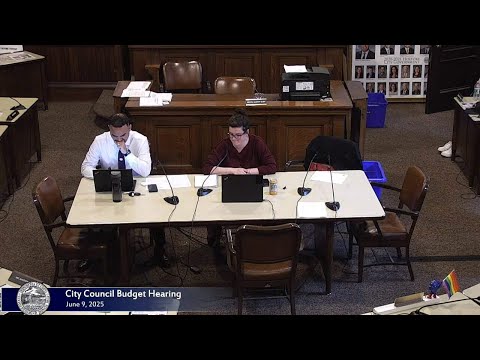
The Office for Community Development reported to the City Council on June 9 that its fiscal 2026 budget is largely funded by federal and state grants and is slightly reduced from the prior year due to final federal allocations.
Alicia, the department representative, told the council that the office—s overall budget is down about 1.25% year-over-year and that final FY25 HUD allocations (CDBG and HOME) arrived late in May, delaying the department—s internal budget work. The office expects about a 4.2% reduction in the annual CDBG allocation beginning July 1 and a roughly 1.3% increase in HOME funding.
The department said it plans to add a program-level position, described as a community resource advocate/manager, to provide services under HOME-ARP and the incoming opioid settlement program. "We are proposing to add 1 project position... the community resource advocate or community resource manager," the office said; the role would be funded from program dollars, not municipal general revenue.
Staff noted administrative limits set by HUD for the share of grants that can be used for planning and admin (CDBG admin capped at 20% of the entitlement, for example). Alicia also said the city has finalized a management plan for opioid settlement funds and will post a calendar and an application process for community groups and programs to seek opioid-related funding on the city website; the office planned to begin that public process shortly after the hearing.
Councilors asked about legal consultant costs tied to federal ARPA and other compliance questions; the office said it had increased outside legal consulting to help interpret complex ARPA compliance questions and to ensure the city meets federal requirements as some program guidance is still evolving.
The department also reported recent coordination with planning and with nonmunicipal partners to streamline public engagement for the city—s consolidated plan and other planning products.