Get Full Government Meeting Transcripts, Videos, & Alerts Forever!
Get email alerts on the Public Safety topic
No spam. Unsubscribe anytime.
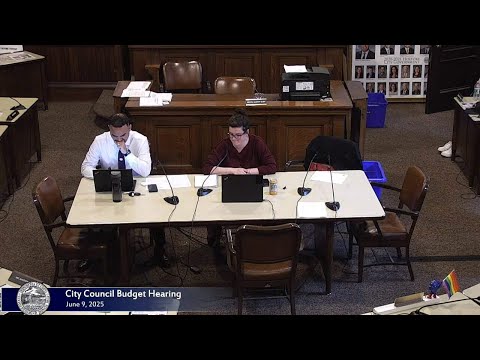
Holyoke police budget seeks more training and technology; council hears details on staffing, overtime and ShotSpotter costs
Summary
Police Chief told the council the department's budget includes a modest overall increase but requests higher training and technology spending to modernize operations; ShotSpotter and data subscriptions were discussed alongside staffing and overtime patterns.
Holyoke—s police leadership presented a proposed budget on June 9 that Mayorally increased overall spending modestly to reflect contractual salary increases and rising training and technology needs.
The police chief described a proposed 3% overall budget increase, noting a 2% salary component tied to contractual raises. He said the department has conserved funds in recent months: "I anticipate returning somewhere between $225,000 and $300,000 back to the city at the end of the year from overtime money that we've saved," he said.
Councilors discussed staffing levels and supervisory structure. The department has four captains who supervise divisions including detectives and shifts; the chief defended the current captain structure as necessary to provide senior leadership in off-hours and for high-stakes investigations. The council also discussed a decline in the number of officers reflected in the mayor—s proposed budget (from 98 to 92 in the line item as presented), which the chief said reflected vacancies that the department had not yet filled.
Technology and data subscriptions were a focal point. The chief and finance staff identified a data and maintenance line (object code 53010/513650 in chief—s submission) that funds outside data services; the mayor—s budget reduced that request to about $300,000 while the chief had sought roughly $513,650. The chief said ShotSpotter audio detection services are part of that category and estimated ShotSpotter costs at about $100,000 annually. He also warned the council that some data- and technology-related lines are underfunded and likely to require later transfers if the council approves a lower initial allocation.
Training was another major topic. The chief argued for higher investment in executive and specialty training for supervisors, saying competitive recruitment and retention required opportunities to send officers to high-level programs. "If we're gonna have a cutting edge police progressive police department, we're gonna have to train our people to that standard," he said, and added that higher-end programs can be costly but produce operational benefits and help retain personnel.
Councilors also asked for a statement of current asset-forfeiture balances; the chief agreed to supply the exact federal and state forfeiture account balances the next day to clarify what funds the department had on hand. Several councilors pressed for more detail on overtime and how special events and parade weekend expenses are tracked; the chief said a new scheduling system expected July 1 will let the department attribute overtime spending to specific events more precisely.