Get Full Government Meeting Transcripts, Videos, & Alerts Forever!
Get email alerts on the Pensions topic
No spam. Unsubscribe anytime.
Holyoke budget includes multimillion-dollar ramp-up to fully fund retirement plan by 2032
Summary
City officials told council Tuesday that Holyoke—s retirement contribution will rise sharply in coming years to meet a statewide schedule for full funding, increasing near-term costs for taxpayers but intended to eliminate long-term liability.
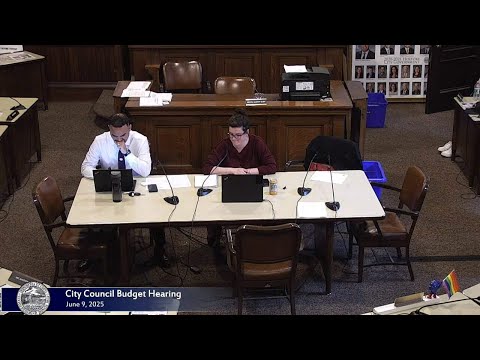
Holyoke City officials told the City Council on June 9 that the city is increasing its annual retirement contribution sharply in order to meet a state-mandated schedule to fully fund the municipal retirement system.
The retirement board presented figures showing a proposed total appropriation of roughly $13.1 million for retirement contributions in the coming fiscal year, including an $8 million component aimed at keeping Holyoke on track to be fully funded around 2032. "An important note: about $8,000,000 of this is to maintain our aggressive schedule to be fully funded the retirement account," a retirement board representative said during the hearing.
City and retirement board officials said the higher, near-term contributions will raise pressures on the annual budget but are intended to address long-standing underfunding. The board said Holyoke—s pension fund has performed well in recent years and that the city has reduced its expected long-term investment return from 7.25% to 7% for the next two years to be conservative. "Anytime we're above that expected benchmark we're doing good," the retirement representative said.
Councilors asked how the higher contribution would translate to the property tax rate. One councilor cited a staff figure that each 0.5 percentage point of the tax rate corresponds roughly to $600,000 in required revenue; under that framing, the additional millions in retirement funding are a substantial near-term fiscal burden for taxpayers. Councilors and board representatives repeatedly framed the contribution as a multi-year commitment: while the higher payments increase the city—s costs now, the board said they should eliminate a persistent, structural liability and reduce long-term volatility in pension costs.
The retirement board also told the council that recent investment returns improved the system—s standing and that Holyoke now ranks favorably among municipal retirement systems on several multi-year performance metrics, though board members repeated that state rules require the city to follow a fixed funding schedule.
City officials noted the limits of the council—s budget authority: the mayor's proposed budget already includes the required retirement contribution and the council can make cuts to discretionary items but cannot unilaterally omit the formally required retirement appropriation without creating legal and fiscal risks. Several councilors requested follow-up materials showing the multi-year impact of the schedule on tax rates and on future budgets.
Officials said they would provide more detailed figures and work with councilors on how the larger retirement appropriation will affect other budget priorities ahead of the council—s final vote.