Get Full Government Meeting Transcripts, Videos, & Alerts Forever!
Get email alerts on the Workforce Development topic
No spam. Unsubscribe anytime.
DHS freezes TGNC workforce grants and says Career Map expansion must wait for more data
Summary
DHS confirmed it froze three TGNC workforce development grants ($600,000 total) that had served about 50 youth, citing budget cuts and performance concerns; the agency said Career Map — an intensive, costly five-year workforce program — shows promise but needs more long-term outcome data before scaling.
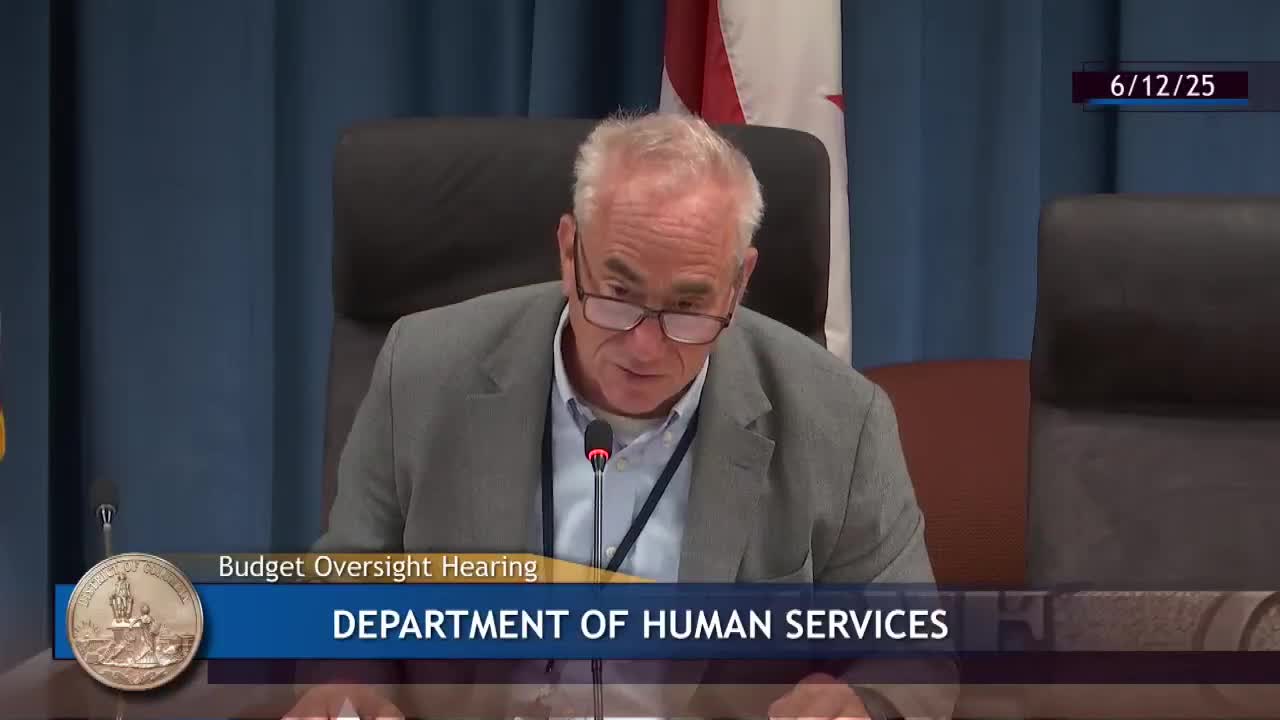
At the Committee on Human Service hearing June 12, DHS officials told councilmembers the agency froze three grants targeted to transgender and gender-nonconforming (TGNC) youth after a March mayoral directive requiring budget reductions. The department said the TGNC grants totaled about $600,000 and served roughly 50 participants before the work suspension.
Interim Director Rachel Pierre said the freeze was a “consensus decision” between DHS and the mayor’s office and OCA, and confirmed the department had reached out to the Department of Employment Services (DOES) to identify alternative service pathways for affected youth. “Across the 3 providers, only about 50 individuals were served,” Pierre said, and “we've reached out to…DOES so that we can help connect the young people who were connected to TGNC program to DOES programs.”
Committee members asked whether DHS sought a waiver to continue the grants; DHS said this funding suspension was unique and driven by trade-offs in a constrained budget year and that other core grants continued.
On Career Map, a multi-year employment-and-benefits-cliff protection model DHS runs as a five-year pilot, Pierre said it is “too early to tell” about long-term outcomes and that the program is expensive; DHS is evaluating results and said it may propose scaling in FY27 after more follow-up data. Pierre contrasted Career Map’s cost structure with DC Flex’s shallower subsidy and said DHS will return with cost comparisons.
DHS highlighted a successful local program—the Peer Case Management Institute in partnership with Howard University School of Social Work—that graduated a cohort of 40 residents trained with lived experience; 22 of those graduates had immediate employment outcomes and DHS budgeted to continue the cohort model.
Ending: DHS will not fund the TGNC grants within the DHS budget for FY26 and will coordinate with DOES to explore alternatives for the roughly 50 affected youth; the agency will return with data on Career Map costs and outcomes before proposing scale-up.