Get Full Government Meeting Transcripts, Videos, & Alerts Forever!
Get email alerts on the General Plan Land Use topic
No spam. Unsubscribe anytime.
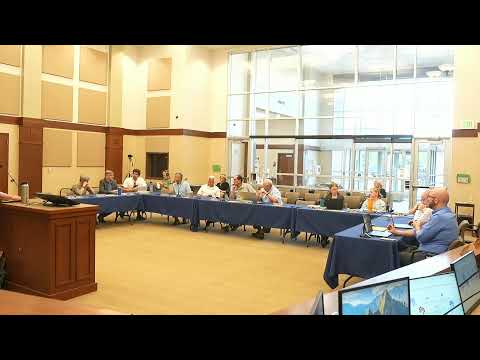
Highland leaders consider mixed-use town center, targeted housing and business supports in general plan workshop
Summary
Highland City Council and the Planning Commission met June 10 to review land-use options in the city's general plan, focusing on concentrating mixed-use development in the town center, expanding housing options for seniors and moderate-income residents, and strengthening business retention and events.
Highland City Council and the Planning Commission met in a joint workshop on June 10 to discuss updates to the city's general plan land-use and economic development policies, including where to allow mixed-use development, how to support moderate-income and senior housing, and measures to retain local businesses.
Consulting planner Rob (consultant) framed the workshop around a central theme he said emerged from prior public input: "connection" ' connection within neighborhoods, to public spaces, and to local businesses. He told the group that the plan update should emphasize a cohesive town center, improved walkability and targeted strategies for housing and economic development.
Why it matters: decisions in the general plan shape what can later be built, where developers will propose projects and which commercial corridors may attract tenants. Staff and the consultants cautioned that Highland's current market and nearby development influence what commercial uses are realistically supportable, while council members pressed for options that both protect the existing town-center identity and preserve future opportunities.
Most of the elected members signaled interest in concentrating higher-density or mixed-use development in and immediately around the town center rather than expanding the city's commercial footprint broadly. Consultant Fred Philpots of L.R.V. summarized the market constraints: "When you look at what's supportable for Highland, it doesn't really point to a lot of commercial development," noting competition from nearby Lehi and other market sites and warning that much of the city's future commercial demand is already programmed into approved site plans. City staff later said the city currently has roughly 127,000'0,000 to 130,000 square feet of planned commercial footprint in approved site plans.
The council discussed Highland Mains and other existing commercial nodes as the primary places for any additional commercial or mixed-use growth. Several councilmembers and consultants urged caution on design and phasing so that new retail or office development supports, rather than undermines, the established town-center businesses.
Housing options drew substantial attention. Councilmembers and consultants discussed detached accessory dwelling units (ADUs), so-called "flag lots," and age-restricted senior housing. Councilmember Chris and others said flag lots had limited support and that accessory dwelling units (especially detached ADUs) could open more affordable and flexible options for families and aging residents. Staff noted fire-access and frontage requirements would be handled at the ordinance stage rather than written in detail in the general plan.
On senior housing, participants said a distinction matters between "senior-targeted" and "senior-restricted" projects. One councilmember said, "The senior targeted simply does not work. So if we're going to get serious about senior, it's gotta be senior restricted," reflecting concern that market-driven "targeted" units may not deliver the long-term housing outcomes the city wants without explicit restrictions.
Business retention and activation were recurring themes. Consultants recommended focusing on events, wayfinding, streetscape improvements and business-retention surveys rather than expecting large amounts of new commercial square footage to appear quickly. A city staff member cautioned that the city lacks capacity for a large-scale economic development push on current staffing levels and said the part-time events coordinator would likely need to be full time to support the level of programming discussed.
Council members also raised local fiscal issues and sales-tax capture. Speakers noted that online and fulfillment-based retail and changes in how large retailers fulfill orders complicate local sales-tax capture; one councilmember said city sales tax receipts had grown from about $2 million five years ago to roughly $4.1 million now. The group discussed working with UDOT about the condition and future of UDOT-owned parcels along Timpanogos Highway that many said currently appear blighted and affect corridor character.
Next steps: staff and the consultants will refine the general-plan language to: emphasize the town center as the primary area for potential mixed-use/higher-density change; include a framework for moderate-income and senior housing strategies (including options such as overlays or targeted incentives); and add recommended implementation tasks (business-retention outreach, event programming, and staffing needs) for future policy work.
Votes at a glance: the meeting began with a consent agenda vote to approve minutes from March 12 and April 8, 2025; the motion passed unanimously by roll call.
(Reporting note: quotes and attributions above are drawn from meeting remarks by consultant Rob (consultant), consultant Fred Philpots (L.R.V.), councilmembers and a city staff member as identified in the meeting transcript.)