Get Full Government Meeting Transcripts, Videos, & Alerts Forever!
Get email alerts on the County Budget topic
No spam. Unsubscribe anytime.
San Bernardino County adopts $10.5 billion 2025–26 budget, boosts homeless services and hospital funding
Summary
The San Bernardino County Board of Supervisors unanimously approved the county’s $10.5 billion 2025–26 budget on June 10, reallocating one-time funds to homelessness programs, wildfire prevention and reserves while keeping staffing broadly flat.
The San Bernardino County Board of Supervisors on June 10 unanimously approved the county’s $10.5 billion recommended budget for fiscal year 2025–26, with board members and staff highlighting new one‑time allocations for homelessness, wildfire prevention and infrastructure reserves.
County Chief Financial Officer Matthew Erickson presented the plan, saying the recommended budget totals about $10.5 billion and includes a mix of one‑time and ongoing resources. “We published our budget book, our recommended budget book, which incorporated the entire conversation of our $10,500,000,000 budget,” Erickson said.
The nut of the plan reallocated previously proposed additional retirement contributions and other one‑time funds. Erickson told the board the package includes a previously identified $205 million in new general‑fund investments (largely one‑time), roughly $15.6 million in newly proposed ongoing spending, and reallocated one‑time dollars: $7.5 million for board priority programs, $7.5 million for a wildfire prevention reserve, $3 million for an infrastructure reserve oriented to road improvements, and $2 million to an existing community services upgrade reserve. The administration also proposed that $150,000 of a tourism allocation be used for broader tourism purposes.
Board members and the administration framed the changes as prudent given market volatility. Luther, the county chief executive, explained insurance and pension pressures affecting recent budgets and noted actions to limit volatility. “We are seeing a $13,100,000 increase year over year or about 33% increase in our total insurances related to liability, workers’ comp, medical malpractice, and other insurances,” Luther said during the public meeting when describing rising insurance costs facing the county.
Erickson and Luther also described larger programmatic changes inside the recommended totals. The Office of Homeless Services was allotted roughly $45 million in additional resources for housing creation, rental assistance and services for people living in encampments. Arrowhead Regional Medical Center is budgeted for a roughly $164 million increase to support an expanded range of medical services, including internal medicine, imaging and cardiology. Capital improvements fell in the recommended budget compared with the prior year—largely reflecting project cash‑flow timing—with a $125.9 million reduction in that category.
The administration described the county’s approach as intentionally cautious after several years of one‑time funding. Erickson noted the county set aside ongoing funds in prior years for retirement obligations and recommended a smaller additional contribution than previously discussed after May’s stronger market performance.
On staffing, Luther and Erickson said the county’s total budgeted positions are effectively flat for 2025–26 after several years of growth; Erickson estimated roughly 3,000 net new positions were added over the past three to four years but that current recommendations prioritize filling existing vacancies over large net increases.
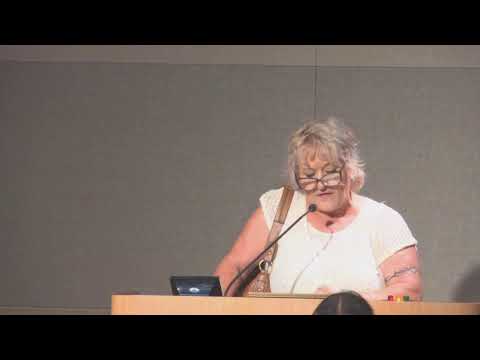
Public commenters and community advocates spoke during the budget hearing. Desiree Sanchez of the American Civil Liberties Union of Southern California and members of the IE Budget Advocacy Alliance praised funding for homeless services but urged the board to increase discretionary funding to the Office of Homeless Services; in her remarks she noted that a small share of the county’s discretionary general fund is currently allocated to that office. Interfaith organizer Ifeany Lockard thanked the board for funding and recommended broader community engagement during budget development.
The board voted to adopt the full recommended budget and then voted separately to approve the related fiscal year budgets for several dependent districts and agencies (listed below). All roll calls were recorded as unanimous approvals.
Votes at a glance (selected agenda actions taken June 10, 2025): - Item 136 — Adopt county FY 2025–26 recommended budget (San Bernardino County): Passed unanimously (5–0). Motion by Vice Chair Baca. (See action details below.) - Item 137 — Adopt FY 2025–26 budget for Big Bear Valley Recreation and Park District: Passed unanimously (5–0). - Item 138 — Adopt FY 2025–26 budget for Bloomington Recreation and Park District: Passed unanimously (5–0). - Item 139 — Adopt FY 2025–26 budget for board‑governed county service area: Passed unanimously (5–0). - Item 140 — Adopt FY 2025–26 budget for San Bernardino County Industrial Development Authority: Passed unanimously (5–0). - Item 141 — Adopt FY 2025–26 budget for In‑Home Supportive Services Public Authority: Passed unanimously (5–0). - Item 142 — Adopt FY 2025–26 budget for Inland Counties Emergency Medical Agency: Passed unanimously (5–0). - Item 143 — Adopt FY 2025–26 budget for San Bernardino County Fire Protection District: Passed unanimously (5–0). - Item 144 — Adopt FY 2025–26 budget for San Bernardino County Flood Control District: Passed unanimously (5–0).
Why it matters: the adopted budget sets county priorities for housing and health services and creates dedicated one‑time reserves for wildfire prevention and infrastructure work while signaling restraint on adding baseline staffing. The board’s allocations will fund county hospitals, homeless services and targeted capital projects in the coming fiscal year.
The board adopted the budget during a public hearing and then approved each dependent district budget and related recommendations separately. The administration said documents supporting the recommended budget were published in the weeks before the hearing; staff and department leaders thanked board members for questions that staff said improved accuracy before adoption.