Get Full Government Meeting Transcripts, Videos, & Alerts Forever!
Get email alerts on the Grants Management topic
No spam. Unsubscribe anytime.
Council presses DHS on slow grant execution as agency outlines reform plan
Summary
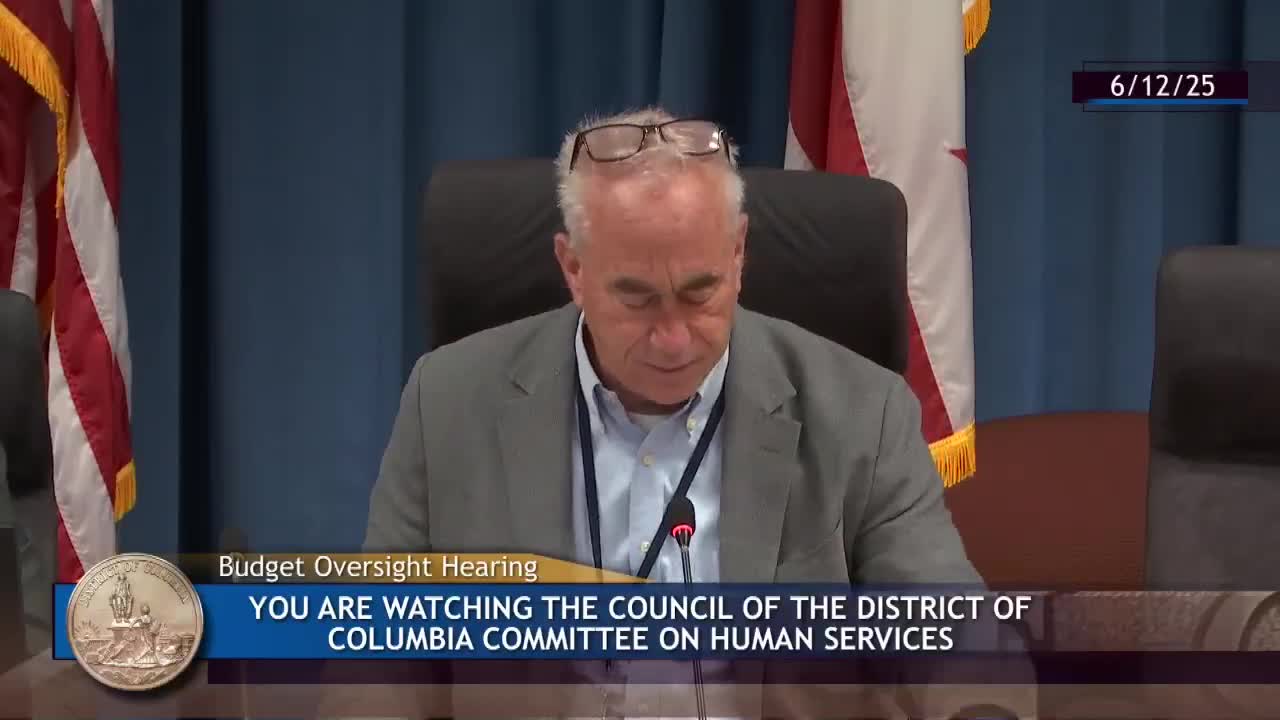
Councilmember Matt Fruman pressed Department of Human Services leadership on June 12 over persistent delays in processing provider grants that the agency says cover roughly 129 MOUs and “up to $400,000,000.”
Councilmember Matt Fruman pressed Department of Human Services leadership on June 12 over persistent delays in processing provider grants that the agency says cover roughly 129 MOUs and “up to $400,000,000.” Interim Director Rachel Pierre told the Committee on Human Service the department has launched a systems review and assigned a member of its executive team to lead the effort.
“our process is is not working very well,” Pierre said, acknowledging problems providers face when payments and contracts are delayed. She said the department is reviewing templates, insurance requirements and interagency legal and risk-review steps and will continue the work through the summer and into the fall after the budget is finalized.
Pierre told the committee the agency currently takes “about 87 days to to to execute a grant” and is aiming to shorten that timeline. The department plans to prioritize grants for providers that cannot “float” operations while they await reimbursement and to issue option-year grants in Q1 so providers can be reimbursed by December.
Officials described the key staff resource as an internal executive-team assignment begun in the last month rather than an immediate outside consultant contract. Pierre said the agency is reviewing whether the existing grants-management platform — implemented roughly five to six years ago — needs updating as part of the redesign.
Tanya Mortensen, DHS chief operating officer, and Hayden Bernard, fiscal officer, joined Pierre in answering questions. Bernard confirmed the agency has certain advance-payment authorities: “We do do advance payments for GWLs, Greater Washington. Right. Urban League. We do do some advance payments for them…” and Mortensen said the agency has used advance payments when it is necessary to pass rental funds through providers to landlords.
Councilmembers repeatedly raised staffing and budget limits that constrain faster reform. Pierre said the agency has vacancies in its grants-management shop and remains subject to a hiring freeze that limits immediate backfilling: “we are in the middle of a hiring freeze…so there's also personnel, that we need to…we don't have a full staff.” Fruman said shrinking the timeline could cost the city money but noted those costs might be less than the financial burden imposed on providers forced to float services.
Pierre said the department will “start earlier this summer even before the the budget is finalized” to update templates and begin process changes, and emphasized prioritization for providers who cannot finance operations while awaiting executed agreements. She said DHS hopes to get most grants executed by Q1 and to prioritize those with urgent cashflow needs.
Committee members said they will monitor the agency’s follow-up work and expect more details at next year’s performance oversight hearing and as the hiring freeze is lifted.
Ending: The committee did not vote on any legislation related to grants processing; members asked DHS to return with specific progress updates and any budget requests needed to accelerate the reforms.