Get Full Government Meeting Transcripts, Videos, & Alerts Forever!
Get email alerts on the Dhcf Budget Changes topic
No spam. Unsubscribe anytime.
DHCF outlines eligibility cuts, provider changes and Alliance enrollment cap in FY26 budget testimony
Summary
Deputy Mayor Wayne Turnage and Department of Healthcare Finance officials told the Committee on Health that the mayor's FY26 proposal relies on eligibility reductions, program design changes and provider rate adjustments to slow Medicaid and Alliance cost growth amid an estimated $1 billion revenue shortfall for the city.
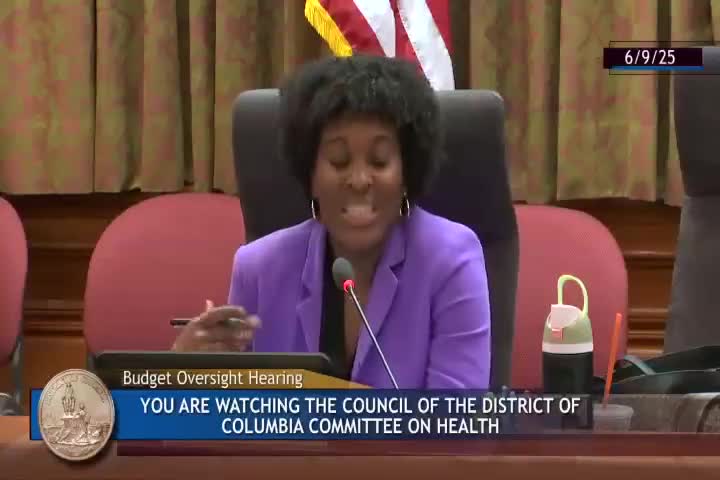
Deputy Mayor Wayne Turnage and DHCF officials presented the mayor's proposed fiscal‑year 2026 budget to the Committee on Health on June 9, framing the proposal as a response to steep projected revenue declines and rapid growth in local spending for Medicaid and the Alliance program.
Turnage described three "foundational pillars" for Medicaid cost containment — eligibility, benefits and provider rates — and said the administration's package of changes would produce $332,000,000 in local fund savings for Medicaid and Alliance combined, of which $142,000,000 would be reinvested and the net local savings would be $191,000,000. "The largest reductions were made in eligibility," he said, adding that about 88% of the local savings in the proposal came from eligibility changes.
Major elements described by DHCF
- Eligibility reductions: DHCF plans to reduce eligibility thresholds for certain optional populations and focus on beneficiaries at the higher end of eligibility ranges. Turnage and DHCF officials said these changes target groups such as childless adults and parent/caretaker relatives within specific income bands; DHCF estimated a point‑in‑time population of about 25,575 beneficiaries affected and roughly $42,800,000 in savings associated with some eligibility changes. Program eligibility was proposed to be reduced to 134% of the federal poverty level effective Oct. 1.
- Basic Health Plan option: DHCF officials coordinated with HBX on the BHP as an alternative coverage path for people who would lose Medicaid eligibility; DHCF said the BHP and qualified commercial coverage were central to decisions about who would move off Medicaid.
- Alliance program redesign: DHCF proposes moving Alliance beneficiaries who currently receive care through managed care plans to fee‑for‑service reimbursement and to set a hard enrollment cap effective Aug. 1. The cap is set at a forecast enrollment of 28,000 members (the agency said actual cap will be the enrollment on that date). DHCF said beneficiaries currently enrolled at the time of the cap could remain for FY26 but new entrants and returning members who left would not be admitted while the cap is in effect. The agency also proposed recertification every six months and face‑to‑face interviews for Alliance eligibility.
- Provider rates and program efficiencies: DHCF presented a mix of targeted provider rate changes and efficiencies. The budget includes $14.5 million in targeted enhancements (for example, dental and one‑time DSP wage enhancement for home health), but pauses or delays in rebasing for FQHCs and smaller reductions to some provider payments were also proposed. DHCF said it planned a $5,000,000 up‑front withhold from MCO capitation to drive performance improvements and estimated additional savings from maximizing drug rebates and shifting certain Medicare‑eligible costs to Medicare.
Rationale and risks
Turnage linked the package to a projection of nearly $1 billion in revenue loss over the four‑year financial plan and a 15% projected growth in Medicaid and Alliance spending without intervention. He acknowledged the changes would be controversial and said the administration tried to minimize impacts on access to care, including inviting all MCOs to participate in the BHP to preserve continuity where possible. "Should the council pass the mayor's budget ... there's much work to be done to ensure its effective implementation," he said.
Concerns raised in committee
Committee members asked how the changes would affect behavioral health services, long‑term care, and people in permanent supportive housing. DHCF said behavioral health for Alliance is largely provided through the Department of Behavioral Health and that roughly 2,000 individuals had used mental health rehabilitation services in FY24 among the populations under discussion; DHCF said it will provide data matches for populations in permanent supportive housing and follow up on gaps.
On long‑term care and durable medical equipment, DHCF said it was conducting a rate and program study and exploring bundled payment approaches to align services with needs and reduce improper utilization; officials said changes target waste and coding issues rather than intended service denials.
Next steps
DHCF officials said they expect intensive implementation work if the council approves the budget, including IT readiness and coordination with HBX for transfers to the BHP and with other agencies for recertification procedures. Several committee members asked DHCF to provide additional data on the numbers affected, behavioral health utilization and impacts on specific provider groups; DHCF committed to follow‑up analyses.
Speakers quoted in this report are identified in the meeting record and were sworn for testimony.