Get Full Government Meeting Transcripts, Videos, & Alerts Forever!
Get email alerts on the Public Safety Concurrency topic
No spam. Unsubscribe anytime.
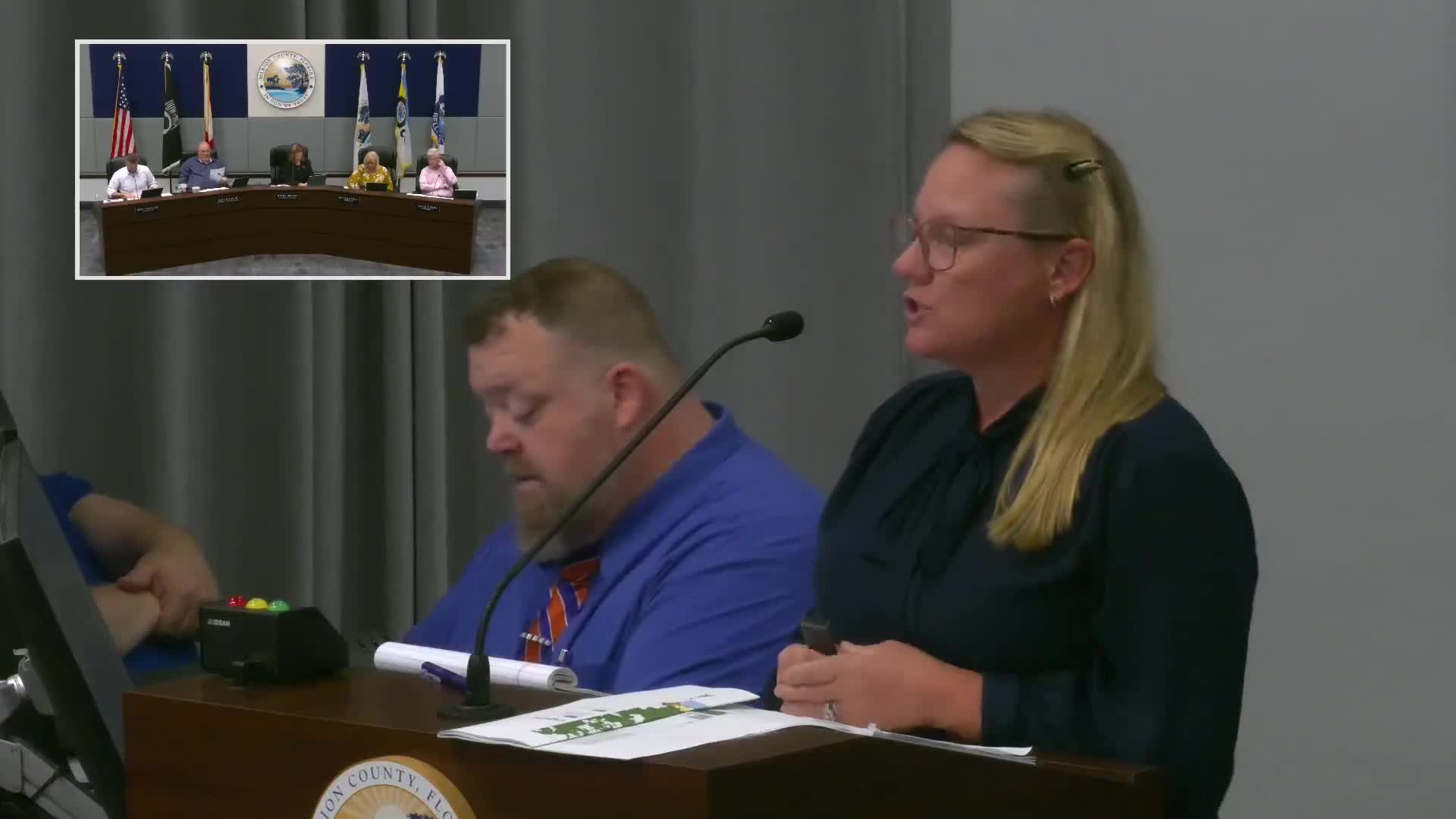
Marion County commissioners debate whether to add police and fire service level to comprehensive plan
Summary
County staff recommended not adding a formal level-of-service (LOS) standard for police and fire to the comprehensive plan, but commissioners asked staff to research whether comp-plan amendments can be denied when public safety services cannot be provided.
Marion County commissioners spent an extended portion of a workshop discussing whether the county should add a formal level-of-service standard for police and fire services to its comprehensive plan, with staff recommending no change and elected officials asking for follow-up research.
Blair Knighting, a staff member, told the Board that “none of [the municipalities in the area] are doing police or fire in their comprehensive plan,” and that her review with other Florida planners found such LOS provisions “are not really something that is done often.” She said the county already includes police and fire review in the PUD application process and recommended not adding a police-and-fire LOS to the plan at this time.
Commissioners pressed staff on whether an application could be denied if police or fire reported they could not serve a proposed development. Commissioner Curry asked how the county should proceed when an applicant’s proposal generates fire or police comments showing a need for “additional capital, additional building” or staff. In response, a staff member identified as Minter said the comp plan amendment phase is when the county would most effectively address such concerns, noting that granting a comp plan amendment gives entitlements that can be difficult to reverse.
The sheriff’s office also factors into the discussion. Commissioners and staff noted that the county’s reinstated impact fee covers capital costs such as stations but does not pay for personnel. Commissioner remarks and staff replies focused on whether impact fees, assessments, or development agreements could address both capital and ongoing personnel costs. Blair Knighting summarized that impact fees “only covers the capital” and that personnel costs remain a budget concern for the county.
No formal motion was recorded at the workshop on this topic. Commissioners asked staff to research the legal authority and procedural options — in particular how comp plan amendments and findings related to public health, safety and welfare interact with applications that municipal responders identify as unserviceable — and to return with more specific guidance.
The Board also discussed the practical effect of any new LOS policy and how it would interact with existing tools such as development agreements, impact fees and the county’s PUD review process. Commissioners emphasized the distinction between capital funding (impact fees) and operational personnel costs (not covered by impact fees), and noted that the county must consider court decisions and statutory changes when drafting plan language.