Get Full Government Meeting Transcripts, Videos, & Alerts Forever!
Get email alerts on the Labor Union Negotiations topic
No spam. Unsubscribe anytime.
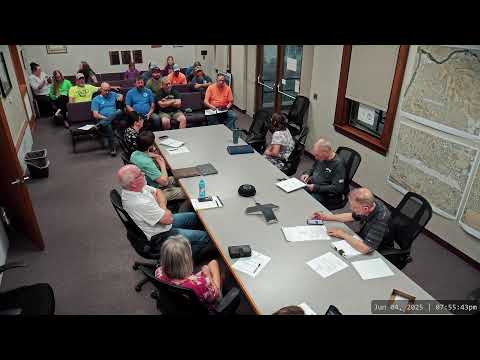
Lewiston City Council OKs short extension for AFSCME talks, reopens overtime and holiday pay
Summary
The Lewiston City Council voted to continue negotiations with AFSCME Local 1124 through June 25, 2025, and put overtime, holiday pay and the 40-hour workweek back on the table for further discussion after councilors and union representatives raised confusion over contract language and payroll practice.
The Lewiston City Council voted 5-1 on June 4 to continue negotiations with American Federation of State, County and Municipal Employees (AFSCME) Local 1124 through June 25, 2025, and to reopen discussion of overtime pay rules, holiday pay and the 40-hour workweek.
The action followed more than an hour of discussion in a special meeting during which council members, city staff and union representatives debated why talks had not concluded by a May deadline and how payroll and contract language treated on-call callouts, holiday work and overtime.
"No. We would never ask you to be open. And that is certainly not our goal. Our goal is to secure a contract and move on," said Brian, a union representative, when councilors asked whether the union planned to request an open-ended extension. City Attorney Jennifer Tingano said negotiations had been hindered by inconsistent interpretations of contract language within the union’s membership and by a lack of a unified set of proposed contract language from the union negotiating team. "There was a lot of confusion," she said.
Why it matters: the collective labor agreement now due to expire Sept. 30, 2025, governs pay and work rules for represented city employees. The council’s motion instructs negotiators to continue talks but directs them to revisit how the contract defines overtime and holiday compensation and whether callouts should be paid differently from scheduled work. Those issues affect payroll accuracy and the city budget as the council prepares its annual budget process.
City staff and union negotiators described several points of recurring disagreement. Union representatives said salary increases were largely resolved: the union reported accepting a city proposal of a 2% cost-of-living adjustment plus a 1% across-the-board salary increase. More contested were how callouts and holidays are defined and paid in practice — for example, whether a staffed employee who is called in multiple times during a short period should receive multiple minimum-callout payments, whether holidays are treated as 24-hour periods or as an employee’s standard workday, and how standby/standby-pay interacts with holiday compensation.
City negotiators said they had provided redlined language aimed at clarifying holiday and overtime pay for payroll purposes but that the union had not always returned firm counterlanguage at meetings. Jennifer Tingano summarized the problem to the council: "There are different employee groups within their union that interpret different provisions of the same contract differently," and that made progress slow.
Councilors repeatedly said they wanted clearer, administrable language. "If it was an extension, everybody just needs to really buckle down and not do one meeting a week," Councilor Forsman said, urging intensive follow-up meetings. Councilor Klein said she could support a short, two- to three-week extension to finish negotiations so budget planning could proceed.
The council’s motion directed negotiators to return with a concluded negotiation by June 25, 2025, and explicitly asked that the previously excluded items on overtime paid without first completing 40 hours of work, holiday overtime rates and related callout provisions be reexamined during the extension. The motion passed on a roll-call vote: Council President Cleaver, Councilors Forsman, Klein, Spickelmeyer and Schroeder voted yes; Councilor Wright voted no.
What did not happen: the council did not vote to terminate the collective labor agreement at the meeting; termination would require 120 days’ notice prior to the contract end date under the contract language cited by city staff, and the council did not take such action.
Next steps: negotiators for the city and AFSCME will meet under the new direction and report back to the council. The city clerk confirmed the meeting was being recorded and that minutes and the audio would be available to union representatives for review.
Concise context: Councilors also clarified at the meeting that the city’s personnel policy is governed by the council and can be updated through a multi-step internal review; several councilors and staff emphasized that some items in a contract can be implemented through personnel policy changes, while noting the tradeoffs between contract certainty and personnel-policy flexibility.
Ending note: With the June 25 deadline set, the council appeared to aim for a limited, rapid effort to resolve remaining language disputes and provide payroll clarity before more extensive budget work later in the summer.