Get Full Government Meeting Transcripts, Videos, & Alerts Forever!
Get email alerts on the Public Transportation Microtransit topic
No spam. Unsubscribe anytime.
LexTrans study finds microtransit can fill service gaps but will be costly to operate
Summary
Consultant and transit staff presented a microtransit feasibility study suggesting a prioritized pilot in a northwest zone; study warned microtransit is costly per trip, requires careful demand management and mixed funding.
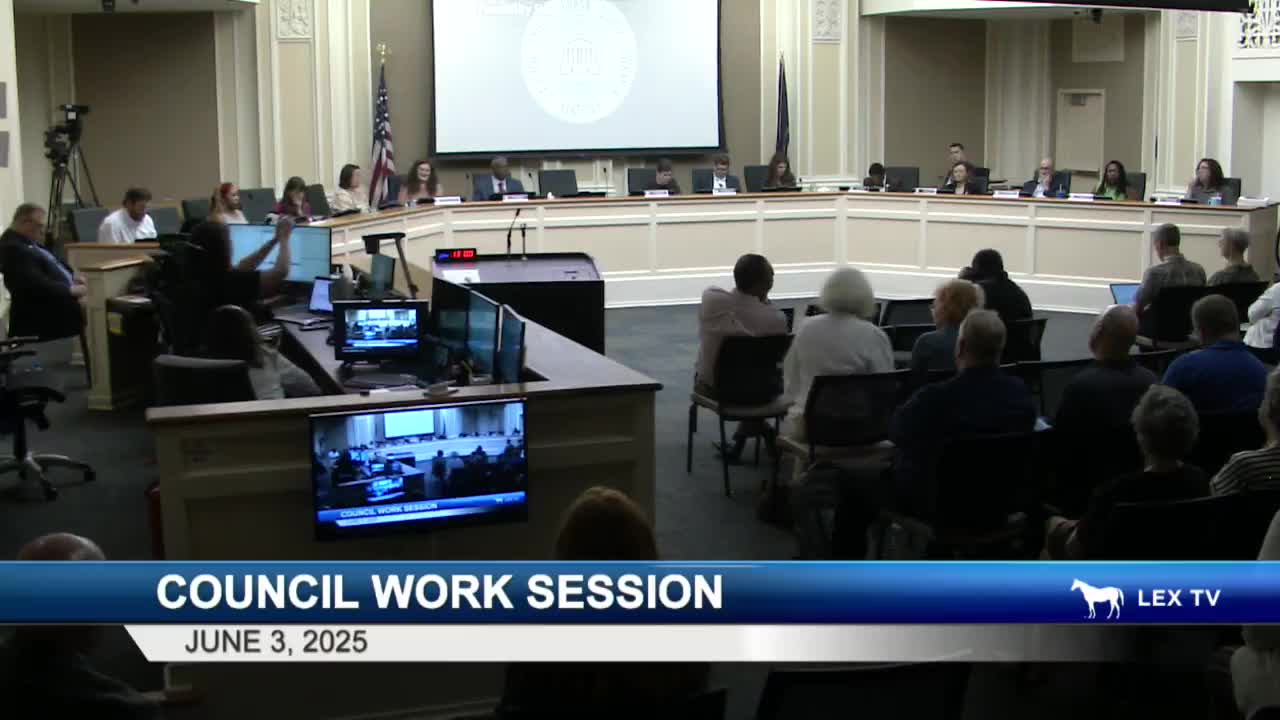
LexTrans and consultant NelsonNygaard presented a microtransit feasibility study to the Lexington Fayette Urban County Council on June 3, laying out pilot-zone options, ridership forecasts and likely costs for a two-year pilot.
Project lead George Meyer described microtransit as a flexible, on-demand shared-ride service that borrows ride-hail technology but must meet Americans with Disabilities Act requirements. "Microtransit can fill service gaps," he said, but "it's expensive" compared with fixed-route bus service: the study estimated a cost-per-passenger of about $60 for the proposed Northwest pilot zone and projected roughly 19,500 riders annually under the study—s assumptions.
Why it matters: the consultant said microtransit could extend transit to low-density areas where fixed routes are inefficient and could provide first-mile/last-mile connections into the fixed-route network. But staff and outside case studies warned of upper limits on capacity, the need to control demand, and the importance of multi-year funding to sustain service.
Details: the study screened several zones and prioritized a Northwest Zone for an initial pilot. That pilot was modeled with two vehicles operating year-round from about 6 a.m. to 8 p.m., a turnkey hourly operating assumption of roughly $95, and an estimated two-year operating cost of about $2.4 million. The consultant proposed a rider fare around $3 per trip; at that price the study estimated fare revenues of about $60,000 annually, yielding a low farebox recovery (about 5%). Typical performance metrics shown were about 1.9 passengers per vehicle-hour for microtransit versus much higher productivity for fixed-route service.
Questions from council members focused on service type (curb-to-curb versus hub-based pickup), rider experience, ADA accessibility, use cases for trips within and between zones, procurement approach and funding. Council members asked whether the $250,000 already allocated by council would run the pilot; multiple presenters said that amount would cover only a few months of operating cost under the study assumptions and that additional local or grant funding would be required for a multi-year pilot.
Funding options described included federal formula funds (currently allocated to paratransit and maintenance), competitive federal grants, local funding and partnerships (including colleges or employers), and small supplemental revenues such as advertising and fares. The consultant said some agencies had used TNC (Uber/Lyft) partnerships or combined contractors that operate both paratransit and microtransit; those models can reduce costs but have limitations around evening demand and disability accommodations.
What happens next: staff said a phased pilot and careful procurement would be necessary steps. Recommendations included starting with a multi-year pilot (two to three years preferred), conservative policies to avoid overpromising, an education campaign for riders, and rigorous monitoring with six-month evaluations.
Ending: council discussion acknowledged trade-offs: microtransit can expand coverage but at higher per-trip cost than fixed-route buses, so any pilot would require continued local investment or grant support and careful design to avoid overwhelming limited capacity.