Get Full Government Meeting Transcripts, Videos, & Alerts Forever!
Get email alerts on the Homelessness Shelter topic
No spam. Unsubscribe anytime.
Council hears proposals after study showing rising homelessness; mayor to form task force
Summary
A consultantstudy and extensive public comment highlighted a jump in Lexington's homeless population and a gap in shelter capacity. Mayor led announcement that a mayor's task force on homelessness will begin work this fall; city staff and providers urged creation of low-barrier shelter and service hub.
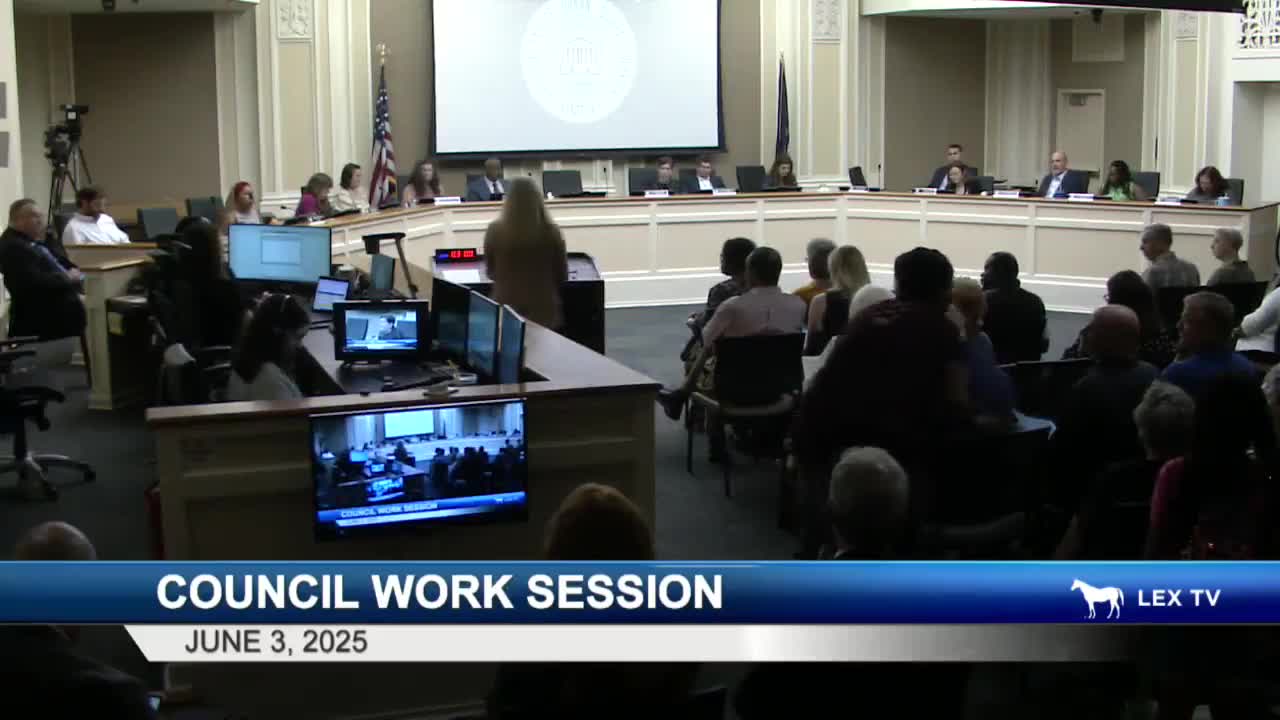
A consultant presented the Lexington Emergency Shelter Study of 2025 on June 3, telling the Lexington Fayette Urban County Council the city—s homeless population has risen sharply and shelter capacity is insufficient. "From 2023 to 2025, it's increased 13%," said Ed Holmes, the consultant who led the study, and "the homeless population has increased since 2020 by 34%," he added.
The study, and more than an hour of public comment by service providers and residents, framed the shortage as both an immediate public-safety and public-health issue and a long-term housing challenge. "We don't have enough beds," said Abby Latimer, a palliative social worker and assistant professor, urging the council to support "a safe, accessible, and supportive campus that includes a low-barrier shelter." Other speakers representing shelters, outreach programs and advocacy groups described barriers faced by older adults, people with disabilities, families, LGBTQ people and people with pets.
Why it matters: presenters and providers said repeated reliance on temporary winter shelter and hotel placements is expensive and unstable, and that a year-round solution with on-site services could better connect people to permanent housing. Ed Holmes—s analysis estimated an ongoing gap between demand and capacity: the study reported a point-in-time shelter population of 810 against an inventory of 498 beds, and projected that by 2030 the city could face a need north of 1,200 shelter beds under current trends.
Details: Holmes walked the council through location and design criteria for a permanent, low-barrier resource campus and showed illustrative reuse sites the consultant screened, including a vacated health facility and the former Eastland Bowling Alley. He presented cost comparisons: the city currently spends roughly $2 million a year on temporary winter-shelter measures; a year-round shelter system would require a larger one-time capital outlay and multi-year operating funds. Holmes said a permanent system would offer "wraparound services of case management, health care and support" and could reduce repeated yearly expenditures on temporary accommodations.
Councilman Charlie Lanter, commissioner of housing advocacy and community development, described the study as informational and announced the mayor will appoint a "mayor's task force on homelessness" to start work in the fall and return recommendations to council. "The study doesn't lock us into anything," Lanter said; he encouraged council members to consider common ground and pragmatic next steps.
Public-comment themes: speakers who provide direct services outlined repeated gaps. David Shadd of the Hope Center said congregate shelters do not meet the needs of many clients with mobility or health issues and called the feasibility study an opportunity to "look at the gaps and find a way as a community to fill those." Community Action Council—s Marty Jones described year-round and seasonal shelter pilots and said programs with dedicated case-management staff yield higher housing exit rates than short-term hotel placements.
Concerns and constraints: council members and residents raised neighborhood saturation, siting and zoning questions. Several council members emphasized the need to avoid concentrating services repeatedly in the same neighborhoods; others urged rapid action because of rising counts and potential cuts in external funding. Staff and presenters said funding sources would likely be a mix of local, state and federal grants and that multi-agency partnerships would be necessary.
What happens next: the mayor's task force will convene this fall and develop recommendations on siting, funding and operations; the council and staff said they expect further public engagement through the task force and follow-up presentations. The study and public comments together set a framework for identifying preferred locations and funding priorities but do not authorize a specific shelter project or purchase.
Ending: Service providers in the room urged the council to act on a combination of shelter capacity and supportive services, while neighborhood leaders and some council members asked that siting avoid overconcentrating already-impacted neighborhoods. The mayor and staff will present the task-force structure and timeline as the issue moves into the fall work plan.