Get Full Government Meeting Transcripts, Videos, & Alerts Forever!
Get email alerts on the Property Assessment topic
No spam. Unsubscribe anytime.
Residents Fault Vision Reassessments; Board Acknowledges Errors and Promises Follow-up
Summary
Multiple residents at the May 27 Prince George County Board of Supervisors meeting criticized Vision, the third‑party assessor, for unexplained valuation changes and data errors. Board members acknowledged some corrections are underway and said staff will continue to work with Vision and residents.
Several residents at the Prince George County Board of Supervisors meeting on May 27 urged the board to address widespread errors and insufficient explanation in new property reassessments performed by Vision, the county's contractor for the 2024‑25 revaluation.
Why it matters: Citizens said unexplained model variables and incorrect parcel data have caused large, sometimes sudden increases in assessed values. Board members and staff acknowledged active corrections and said they are weighing next steps as the county finalizes its FY2026 budget.
James Keller, a property owner at 1357 Butler Branch Road, told the board the materials Vision provided to the public lacked key documentation. “How can we possibly make our case if we don't know what the variables are, how they were derived, and how they were used?” he said, arguing that Vision’s sales file contained land data only and omitted improvement values.
Several other speakers provided examples they said show systematic errors. Justin Noblin, 8724 Centennial, said his work with staff and Vision has produced corrections to thousands of parcel records and that “they have corrected several thousand that we pointed out 2 weeks ago” (referring to acreage and defaulted values). Layla Myers said Vision promised on‑site inspections of up to 1,200 parcels but inspected “about 100 properties,” and urged the county to press the contractor for more transparent documentation.
Speakers also pressed the board on remedies. Rick Tetherton and William Steele urged the county to involve local appraisers, realtors and other citizens with property expertise in reviewing and correcting neighborhood foundational values; Steele proposed forming a citizen task force similar to the earlier strategic‑plan process.
County staff and board members acknowledged the scale of the problem and described steps already taken. County Administrator Michael Stokes (referred to in public discussion as “Mr. Stokes”) and Finance Director Laura Drury reported that Vision and county staff were working to update assessments and correct obvious data errors. Drury told the board that updated estimates of real property revenue had already been reduced from earlier projections and that ongoing corrections could still affect FY2026 revenue.
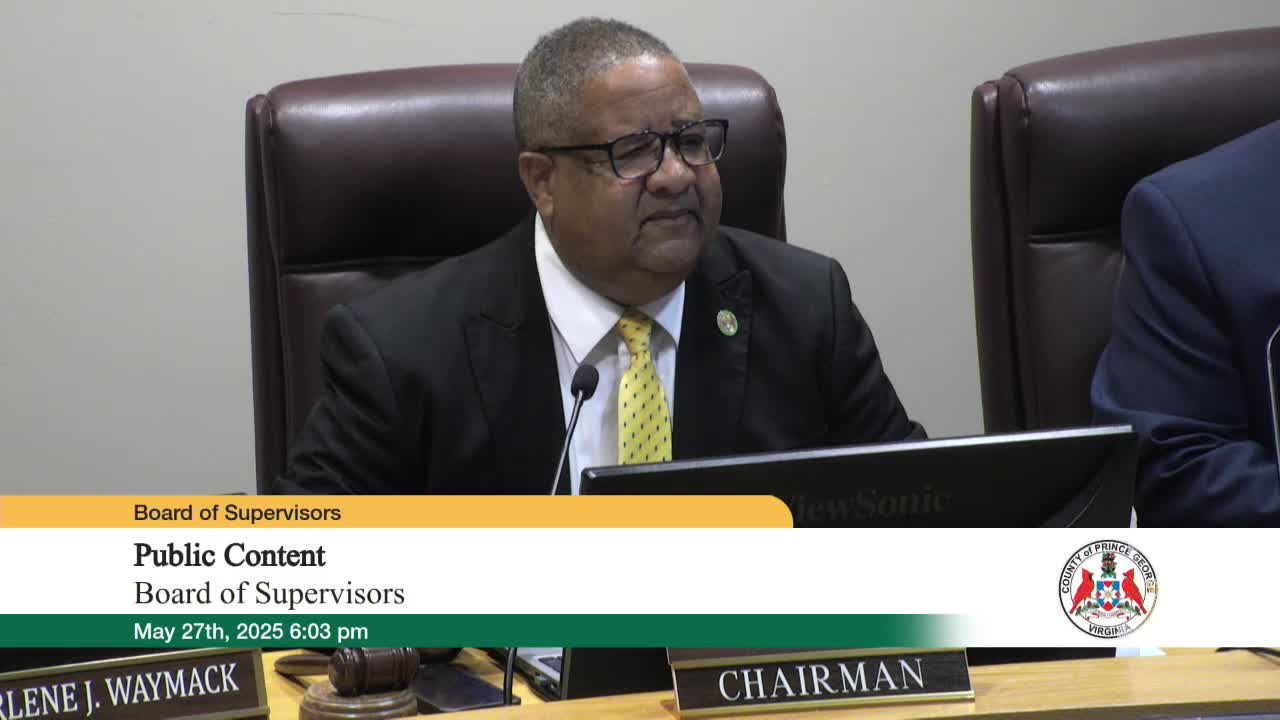
Board members said the public’s concerns were being taken seriously. Chairman Floyd Brown said the reassessment work has kept him awake and that staff are continuing to adjust values as errors are found. Several supervisors supported inviting local experts and setting up additional citizen participation to speed accurate corrections.
What was not decided: No formal policy change or binding resolution against Vision was adopted at the meeting. Residents asked the board to postpone adopting tax rates until corrections are complete; some supervisors encouraged more time but the board later set the FY2026 tax rate at 82 cents per $100 of assessed value in a separate vote that night.
Clarifying details: Speakers and staff gave specific examples: Noblin said staff corrected “2,200 parcels” based on citizen input; some neighborhoods were described as having foundational (land‑price) values that differed dramatically from adjacent subdivisions; Vision’s contract start date was referenced by speakers as March 2024 and Vision’s advertised on‑site inspection figure was discussed as up to 1,200 parcels but reportedly far lower in practice.
Next steps noted by staff: continue correcting parcel records, pursue additional public engagement and consider formal mechanisms for residents to review the data used in valuations.
Ending: Residents said they will continue to press the board until the reassessment errors are resolved and until they receive clear explanations of the methodology Vision used to compute assessments.