Get Full Government Meeting Transcripts, Videos, & Alerts Forever!
Get email alerts on the Parks And Recreation topic
No spam. Unsubscribe anytime.
Consultant says Brentwood racket facility could reach strong long‑term revenue but will run deficits early
Summary
Sports Facilities Advisory presented a pro forma for a proposed Brentwood racket facility—seven tennis courts, eight pickleball courts and supporting spaces—showing high long‑run revenue potential but multi‑year operating shortfalls and upfront capital costs not covered by operating revenue.
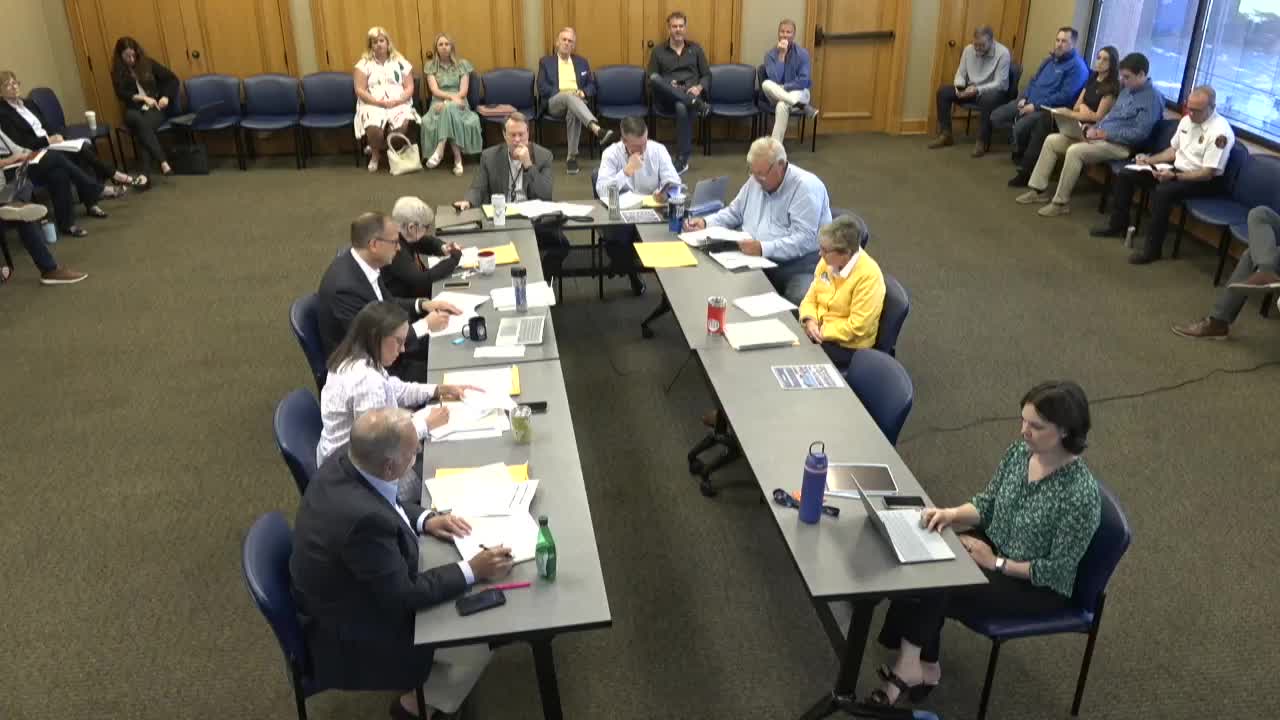
A consultant told the Brentwood City Commission at a June briefing that a proposed indoor racket facility would be a high‑performing local amenity over time but would likely require multi‑year operating support and separate funding for capital costs.
Greg Weiskarver, with Sports Facilities Advisory, presented a pro forma based on seven tennis courts, eight pickleball courts, flexible meeting spaces, a small concessions area and office/support space. “It is not my job to talk you into or out of constructing anything,” Weiskarver said, adding his role was to “give you useful and accurate information so that you can make the best decision possible.”
Weiskarver said the study’s footprint is about 86,000 square feet at maximum use and includes conservative parking and programming assumptions. The capital estimate shown in the report totals about $17,000,500 including contingencies and escalation; the presentation identified roughly $2.7 million of that as contingency/escalation and an additional $750,000 identified for owner’s‑representation services that could be removed if the city chooses not to contract those services. Weiskarver also said typical FF&E (furniture, fixtures and equipment) in the model is about $1.2 million and suggested procurement could reduce that by roughly 20–25 percent under an aggregate purchasing contract.
The pro forma differentiates construction and startup “soft costs” from operating start‑up expenses, including pre‑opening staffing and marketing. Weiskarver said operators typically place a general manager on site about 12 months before opening to start membership sales and bookings; his firm models a ramp period and warned that most comparable sports facilities produce operating losses during the first one to three years. “In our experience, less than 5 percent have a positive EBITDA in year one,” he said.
Weiskarver characterized the facility as primarily a local, membership‑driven asset rather than a regional event generator. “This is a local use facility, primarily membership based,” he said. The firm’s base operating model projected revenues and costs across multiple streams (lessons, courts, memberships, concessions) and compared the ad hoc committee’s earlier assumptions with SFA’s own methodology; Weiskarver said the ad hoc report’s year‑one EBITDA of about $700,000 is unusually aggressive and that SFA’s model does not generally show that level of bottom‑line performance in year one.
City Manager Jason (last name not specified) stressed that the pro forma shows operating results alone and does not include debt service or capital repayment for construction. He and other commissioners asked about the timing of break‑even and required contributions for long‑term capital renewal; city staff noted the SFA pro forma does not build in capital replacement contributions, and commissioners estimated a rough annual reserve target of about $450,000 would be needed over time to fund 25‑year renewals. Using the consultant’s forecast, staff estimated cumulative operating deficits before full capital‑reserve contributions of about $1.8 million across the early years of the model.
Weiskarver said his firm models low, mid and high scenarios and projects long‑run revenue growth driven by utilization, but cautioned growth assumptions for pickleball would eventually moderate: “Pickleball won’t grow at the rate it’s growing right now. It can’t. But we don’t believe it’s going away.” He also said the competitive analysis in the study accounts for known, currently operating local facilities; announced but unbuilt projects were not incorporated into the baseline unless they were already operating.
Commissioners and staff agreed to place the pro forma on a future briefing agenda for deeper review. The consultant and staff offered to provide more line‑by‑line breakdowns of revenue, cost of goods sold and operating expense allocations on request.