Get Full Government Meeting Transcripts, Videos, & Alerts Forever!
Get email alerts on the State Legislation topic
No spam. Unsubscribe anytime.
State lawmakers brief San Mateo on water, housing and clean-energy bills; warn of tight budget
Summary
Assemblymember Diane Papan and Sen. Josh Becker updated the San Mateo City Council on pending state legislation including housing, water and utility bills, and cautioned that the May revise reflects a multibillion-dollar shortfall that could limit funding for local priorities.
Assemblymember Diane Papan and Sen. Josh Becker told the San Mateo City Council on May 19 that they are pursuing bills on environmental protections, housing planning and utility reform while warning that the governor’s May revise projects a significant budget shortfall.
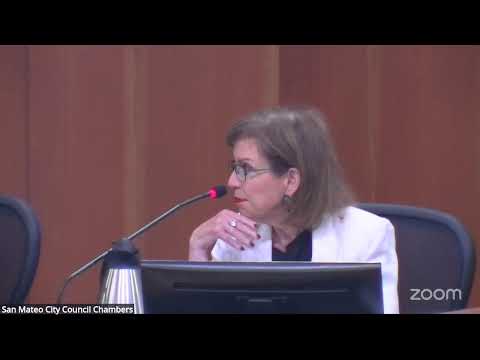
Papan, who represents the 21st Assembly District and chairs the Assembly Water, Parks and Wildlife Committee, highlighted a portfolio of bills she is carrying, including measures she described as addressing toxic chemicals in personal-care products (AB 60), provider education on menopause (AB 360), a strategic plan for geothermal energy (AB 526) and streamlining of the regional housing needs assessment timetable (AB 650). “My focus has really been on environmental protection, public health, renewable energy, and community engagement,” Papan said.
Papan also noted that Proposition 4, the $10 billion climate resilience bond that she co‑authored, passed and is expected to fund projects such as sea‑level‑rise defenses, but she warned some items the governor proposed cutting from the budget are being treated as if they will be made up with bond funds rather than as added resources.
Both lawmakers urged vigilance about the state budget outlook. “It projects now instead of a slight surplus … we now are expecting a deficit of about $12,000,000,000,” Papan said, adding the figure could be higher and that program funding and Medicaid expansions are at risk.
Sen. Josh Becker, who chairs the Senate Committee on Energy, Utilities and Communications and the Bay Area Caucus, framed his remarks around transportation, homelessness and utility modernization. Becker described a package of bills on utility rate reform — what he called an omnibus “OPUS” bill — aimed at updating rate‑making and creating incentives for load flexibility and a more regional grid. “We have to use our existing grid more effectively,” Becker said, noting the goal is to reduce the amount the state spends to serve short, high‑demand hours each year.
Becker also outlined bills to address unsheltered homelessness, referencing legislation that would advance a planning checklist to help jurisdictions reach “functional zero.” “We now know that we can end unsheltered homelessness,” Becker said, adding the bill would ensure jurisdictions have declared shelter crises and used appropriate building code appendices when applicable.
Becker described health‑care proposals to limit prior‑authorization delays, saying that if a procedure is approved 90% of the time it should not require repeated prior authorization. He also highlighted a pilot project, the Equity Express bus, which blends physical and mental health services and telehealth to reach farmworkers and underserved rural communities, and said he is seeking ways to scale similar models.
Council members thanked both lawmakers and asked questions about local priorities that surfaced in the presentations — notably the vehicle license fee reimbursement (VLF) for San Mateo County, Caltrain grade separations and Quiet Zone status. Papan and Becker said they support efforts that would preserve or restore VLF funding and said they would continue to advocate on the county’s behalf.
Council members and staff asked for follow‑up on specific bills and funding timelines. Becker and Papan repeatedly noted the budget environment will drive which measures can advance through appropriations this year.
The council did not take a formal position during the presentations; later in the meeting it voted on two state measures (see separate article on council action and votes).