Get Full Government Meeting Transcripts, Videos, & Alerts Forever!
Get email alerts on the School Millage Elections topic
No spam. Unsubscribe anytime.
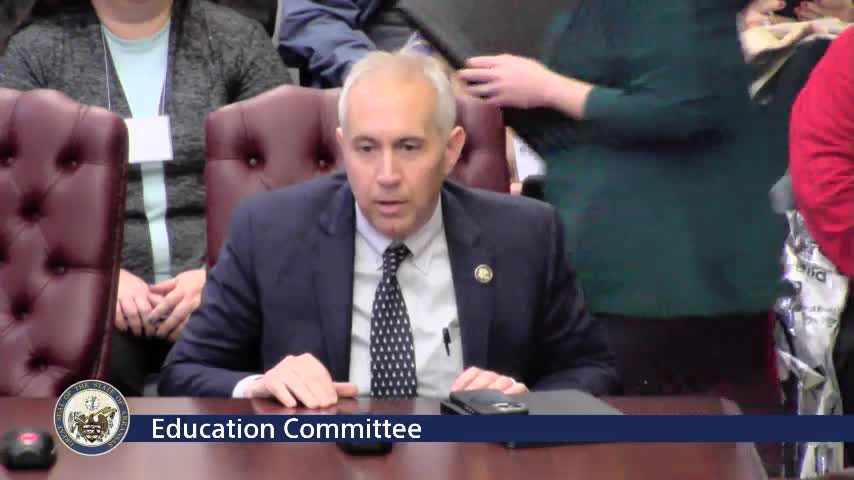
Senate committee advances bill to reduce cost of unchanged school millage elections
Summary
Senate Bill 135 would allow districts to minimize the expense of an election when a millage rate on the annual school election would not change, following a process similar to existing rules for unopposed school-board candidates.
Senate Bill 135, presented by Sen. Justin Boyd with assistance from Lindsey French of the Association of Arkansas Counties, would create a process for school districts to avoid holding a full costly election when a millage on the annual school election is unchanged and will not alter tax rates.
Supporters said the bill would preserve transparency while avoiding unnecessary use of election resources. Boyd said a Fort Smith Public Schools example — an entire election conducted where the millage was not changing — showed the current constitutional requirement can produce what he called an “inefficient” use of taxpayer dollars.
Lindsey French told the committee the bill follows a process already used for unopposed school board candidates and had input from county clerks, the State Board of Election Commissioners, Secretary of State staff and local election coordinators.
Committee members asked technical questions about who would cast the district’s vote when a designated elector does not appear. Sen. Dodson and Sen. Davis questioned whether a fallback county election official would be authorized to cast a vote for a millage that affects only a specific district and whether that official must be a qualified elector within the school district. Committee members indicated they would request a technical clarification or amendment to ensure the designee meets the required voter qualifications.
The bill’s sponsor said the measure would not remove public access: the process requires a school-board resolution and preserves a public result and transparency while reducing the administrative cost of an otherwise unchanging ballot measure.
After questions and discussion and no public opposition at the committee, the committee approved SB 135 by voice vote. Committee members requested staff confirm and, if necessary, amend the language to address the qualified-elector fallback before final passage in the legislature.