Get Full Government Meeting Transcripts, Videos, & Alerts Forever!
Get email alerts on the Separation Of Powers topic
No spam. Unsubscribe anytime.
Jacksonville council presses general counsel over separation-of-powers opinion tied to Meridian vote
Summary
City council members criticized an Office of General Counsel opinion they say raises separation-of-powers questions after the council approved Meridian-related legislation; General Counsel Fackler defended the legal analysis and said some issues may have to be resolved in court.
Council Member Salem said the City Council voted on Meridian-related legislation without knowing the Office of General Counsel had already identified a potential separation-of-powers problem, and warned the city could face litigation and large legal bills.
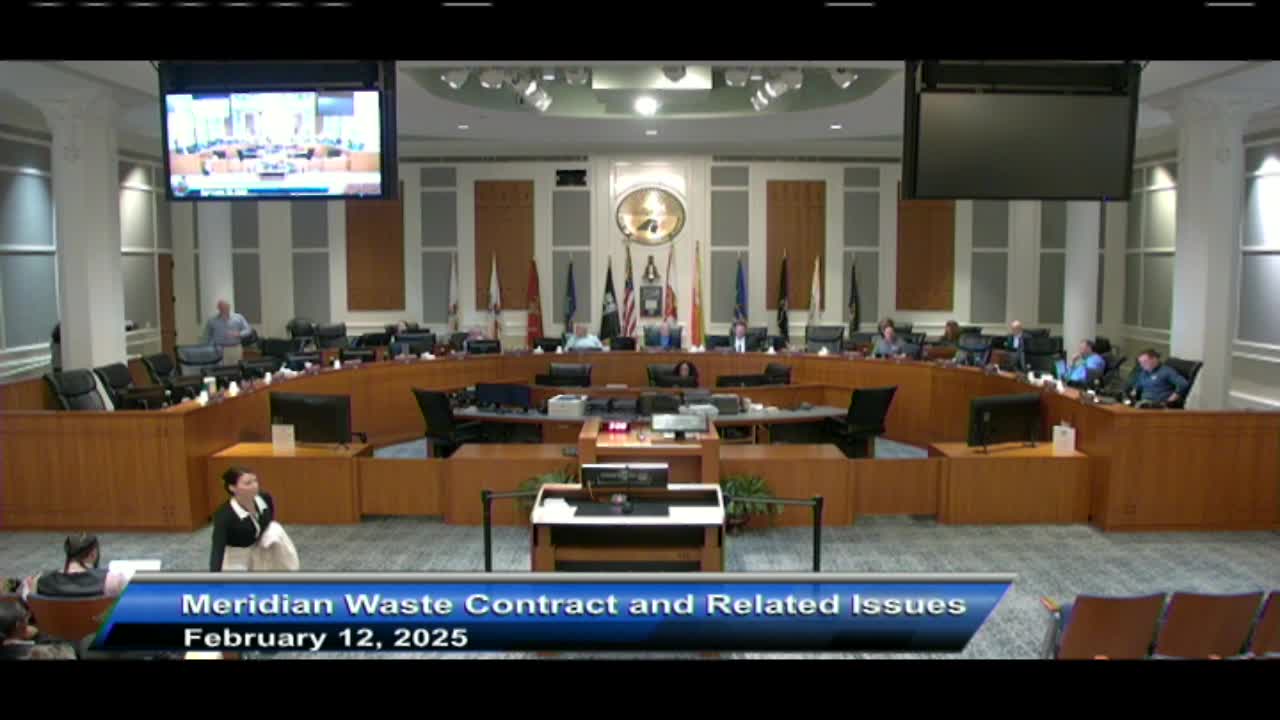
The meeting, called by Council Member Salem to discuss the OGC memo and the Meridian matter, focused on a Jan. 24 legal opinion from the Office of General Counsel and the role that OGC plays in advising both the council and the mayor’s office. Council members pressed General Counsel Fackler for why the separation-of-powers concern was not disclosed before the December vote on the Meridian matter and for clearer guidance ahead of the upcoming budget process.
Why it matters: Council members said the opinion upends decades of local practice by inviting either branch to “throw a flag” on past ordinances or contracts and have the OGC decide on a case-by-case basis. Council members said that uncertainty could slow government work, invite lawsuits and increase costs to taxpayers. Several members demanded clearer, earlier legal notice when issues arise and asked whether the council can rely on a single OGC office that represents the consolidated government.
"I feel like, we have walked into a lawsuit by that vote," Council Member Salem said, describing the council's surprise that the separation-of-powers issue might have been discussed by OGC before the December vote. General Counsel Fackler responded that separation-of-powers questions had been discussed internally in his office in recent months and that, in some instances, he had been instructed not to provide unsolicited advice. "My office is representing the city council. Of course," Fackler said when asked whether his office represents council interests.
Fackler told the council the opinion rests on the charter as the controlling law and that the charter—rather than code language—governs separation-of-powers questions. "Charter controls over code," he said, emphasizing that conflicts require fact-specific analysis. He identified two local examples related to the list of 41 instances auditors will review: the ASM/SMG management contract for entertainment facilities and the city’s external auditor procurement, both of which have involved council modifications and mayoral signoff in prior cycles.
Council members repeatedly raised budget concerns tied to the mayor’s line-item veto and the risk of "impoundment"—an executive refusal to spend appropriated funds—during the coming budget season. Council Member Dimon asked whether the mayor could effectively ignore council appropriations; Fackler said impoundment doctrine is fact-specific and that the office will try to provide parameters but could not give a single bright-line percentage.
Several council members urged more proactive and transparent communication from OGC. Council Member Diamond and others said they want OGC to alert them earlier when legal issues could expose the council to lawsuits or expensive litigation. Council Member Gay likened the opinion’s approach—letting parties raise separation-of-powers challenges as they see fit—to stopping a football game repeatedly with challenge flags, a comparison several members echoed.
Members also questioned the practical effects of the opinion on existing contracts. Fackler said previously executed contracts remain valid and cannot be immediately undone by the opinion, though he acknowledged the legal landscape could change if a court rules otherwise on a specific challenge.
Several speakers proposed procedural fixes to reduce surprises: asking OGC to surface dissenting legal views, using earlier executive-legislative mediation processes contemplated in the charter, or setting clearer budget guidelines to limit impoundment disputes. Council Member Miller and others urged rethinking the consolidated-government model where one legal office represents multiple entities and suggested stronger, earlier engagement with council-focused attorneys.
Fackler said he would consider new avenues, including re-examining the opinion if the council or others present substantive legal arguments he had missed. He also noted that a court ruling adverse to OGC's view would become binding precedent and change the office's legal framework going forward.
The item on Meridian was deferred to align with the mayor’s decision period so the council would have information about whether the mayor signs the Meridian legislation before debating a separate resolution. No formal vote or ordinance change was taken during the meeting.
Looking ahead: Council members asked OGC for clearer guidance on separation-of-powers issues and for timely, explicit notice when OGC believes a charter conflict may arise. Several members said they would seek parameters on impoundment and line-item veto practice before the budget cycle.
Ending note: The council scheduled no immediate vote; Salem said he had deferred related committee action so the council would have the mayor’s decision on Meridian before considering a resolution about OGC’s opinion.